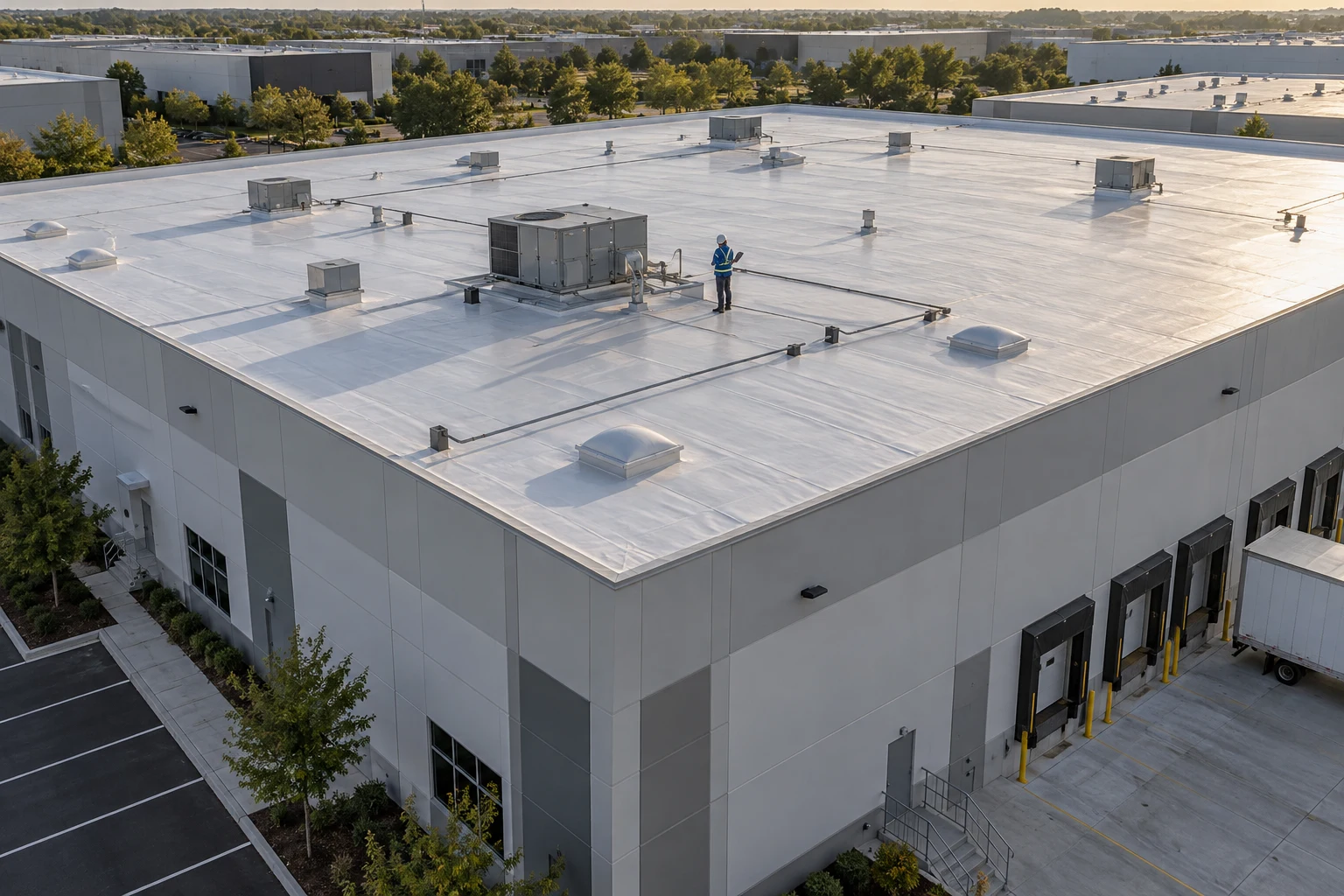
Decide What Must Be Removed
Replacement planning begins with the existing assembly. Wet insulation, deteriorated materials and unsuitable roof layers can affect what needs removal. A proposal should explain which components remain and which are replaced rather than relying on the word replacement alone.
The supporting conditions also matter. If investigation identifies damage beyond the visible roof covering, that finding can change the work. Concealed conditions should be addressed through an appropriate assessment and clear provisions in the project scope.
Revisit Roof Details
A replacement creates an opportunity to review flashing, drains, edge conditions and transitions around equipment. New field material still needs sound connections at these points. Existing elevations or altered equipment curbs may require particular attention when the assembly changes.
Drainage concerns should be identified explicitly. Some projects need more than a new membrane to improve water movement. The scope must distinguish the roof covering from any work needed to address low areas, outlets or related design conditions.
Sequence The Work Around Operations
Commercial replacement may involve material delivery, removal and temporary protection while portions of the roof are being worked on. Access and staging need coordination with the building's use. Inform us about occupied areas, production schedules and delivery routes before a work plan is finalized.
No website can promise that every replacement will leave operations uninterrupted. The assessment and proposed sequence should identify the relevant impacts so the property can prepare for them.
Request A Defined Comparison
Share any available roof records, known leak history and the reason replacement is being considered. We can discuss whether the findings justify that scope and what alternatives, if any, remain practical. The estimate should connect the recommendation to the actual building conditions.