Ceiling Tile Stains
Brown rings spread across tiles near a wall or column after a monsoon storm.
Open Seam Or Lap
Heat cycling pulls a weld or adhesive lap apart, and wind-driven rain gets under it.

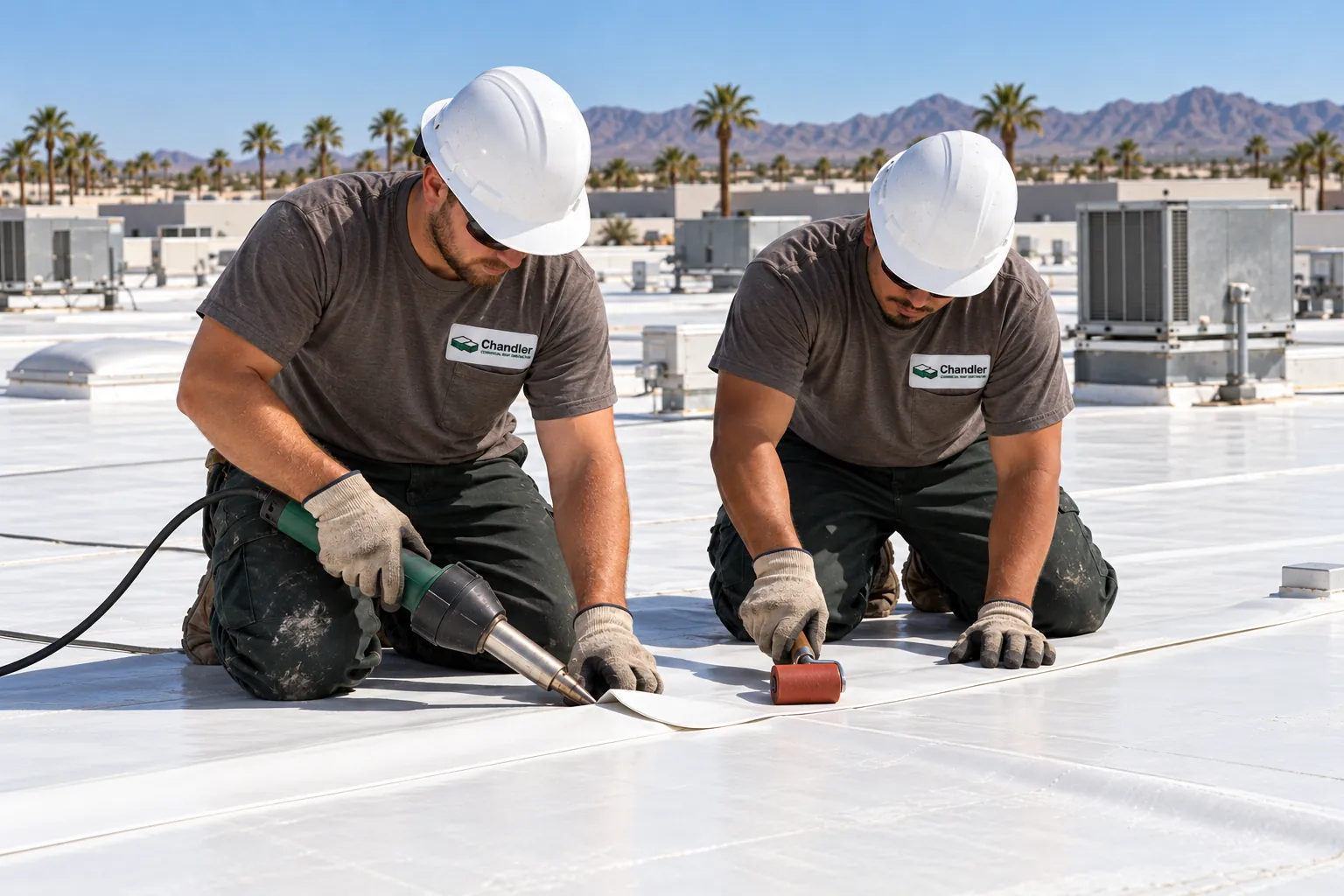
TPO, EPDM, Industrial, Metal
As a Chandler commercial roofing contractor, we install, replace, and repair TPO, EPDM, industrial, and metal roofs on warehouses, plants, offices, and retail centers.
Most roof problems show up indoors first. Each row pairs what staff notice inside with the roof detail we usually find above it.
Brown rings spread across tiles near a wall or column after a monsoon storm.
Heat cycling pulls a weld or adhesive lap apart, and wind-driven rain gets under it.
Upper offices stay warm even with the rooftop units running hard all afternoon.
A chalky, crazed membrane surface has lost its white finish and soaks up heat.
Storage areas smell damp for days after rain, with no drip anyone can find.
Water trapped under the membrane soaks the insulation boards, which feel soft underfoot.
Water lands near supply diffusers or runs along ducts above the ceiling grid.
Flashing around an HVAC curb has lifted or split where it turns a corner.
Staining runs down the inside face of an exterior wall below the roof edge.
Outflow winds pried up edge metal or coping and opened the top of the wall.
Puddles form under a drain line or in one low corner of the ceiling.
Dust and palm debris hold water on the roof until it finds a weak seam.
Pick the roof that matches your building to see where each system fits, what it handles well, and when another option makes more sense.
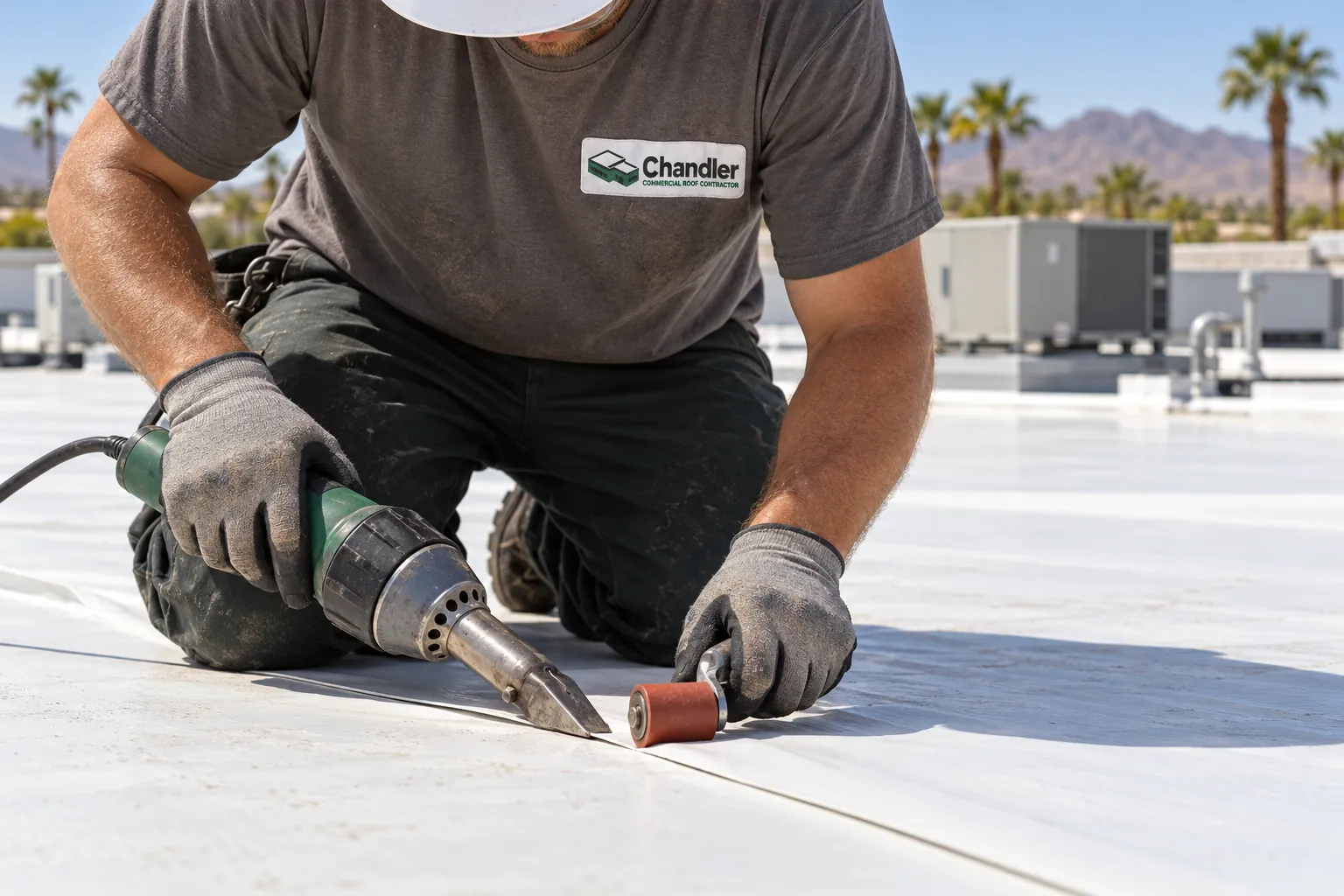
TPO is a white sheet laid in wide rolls and fused at the seams with hot air. On big tilt-up decks it means fewer seams to watch, and the white surface sends back much of the summer sun.
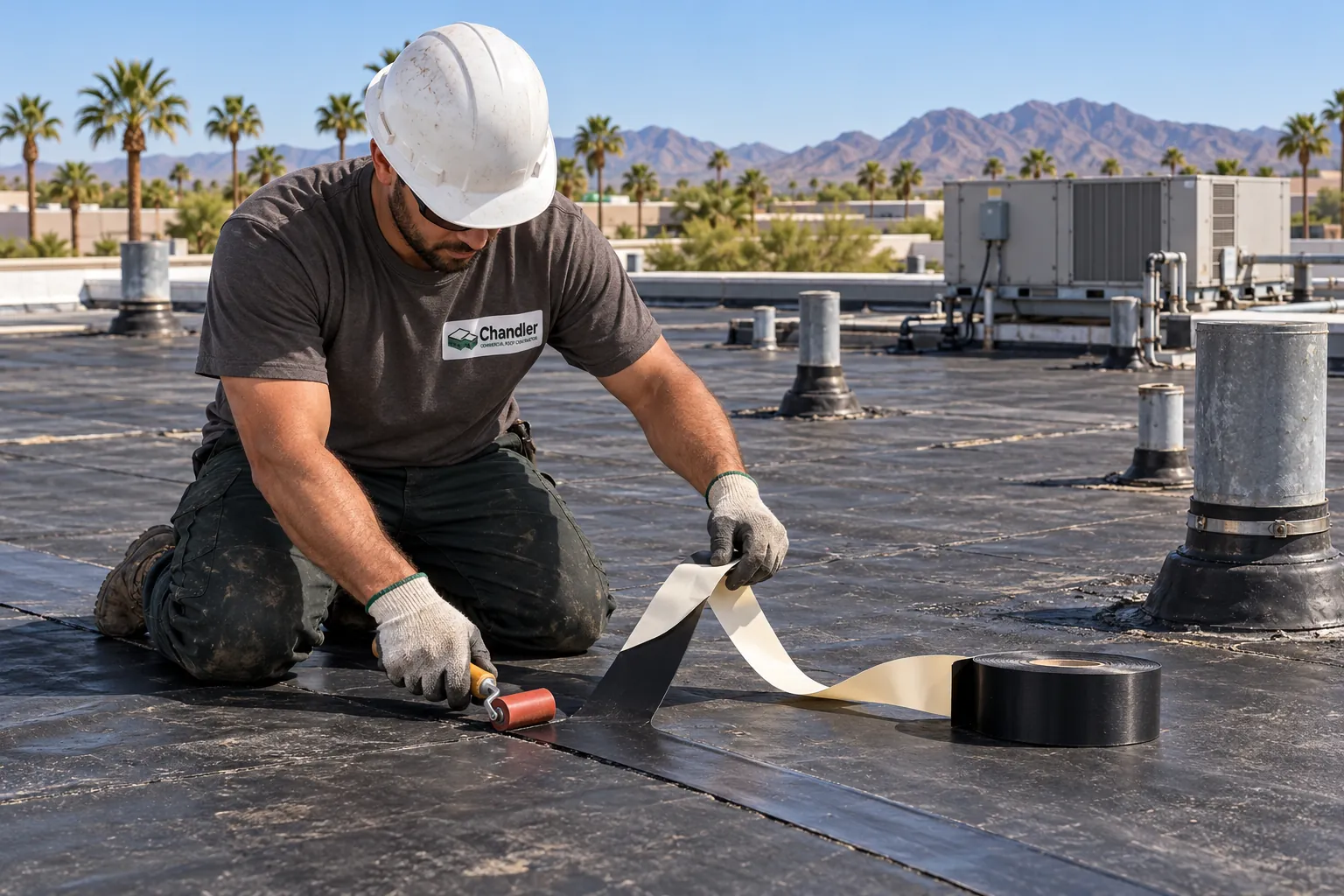
EPDM is a synthetic rubber sheet that stays flexible through hot days and cool nights. It handles roofs crowded with vents, curbs, and pipes, and older EPDM can often be repaired at seams and flashings instead of torn off.
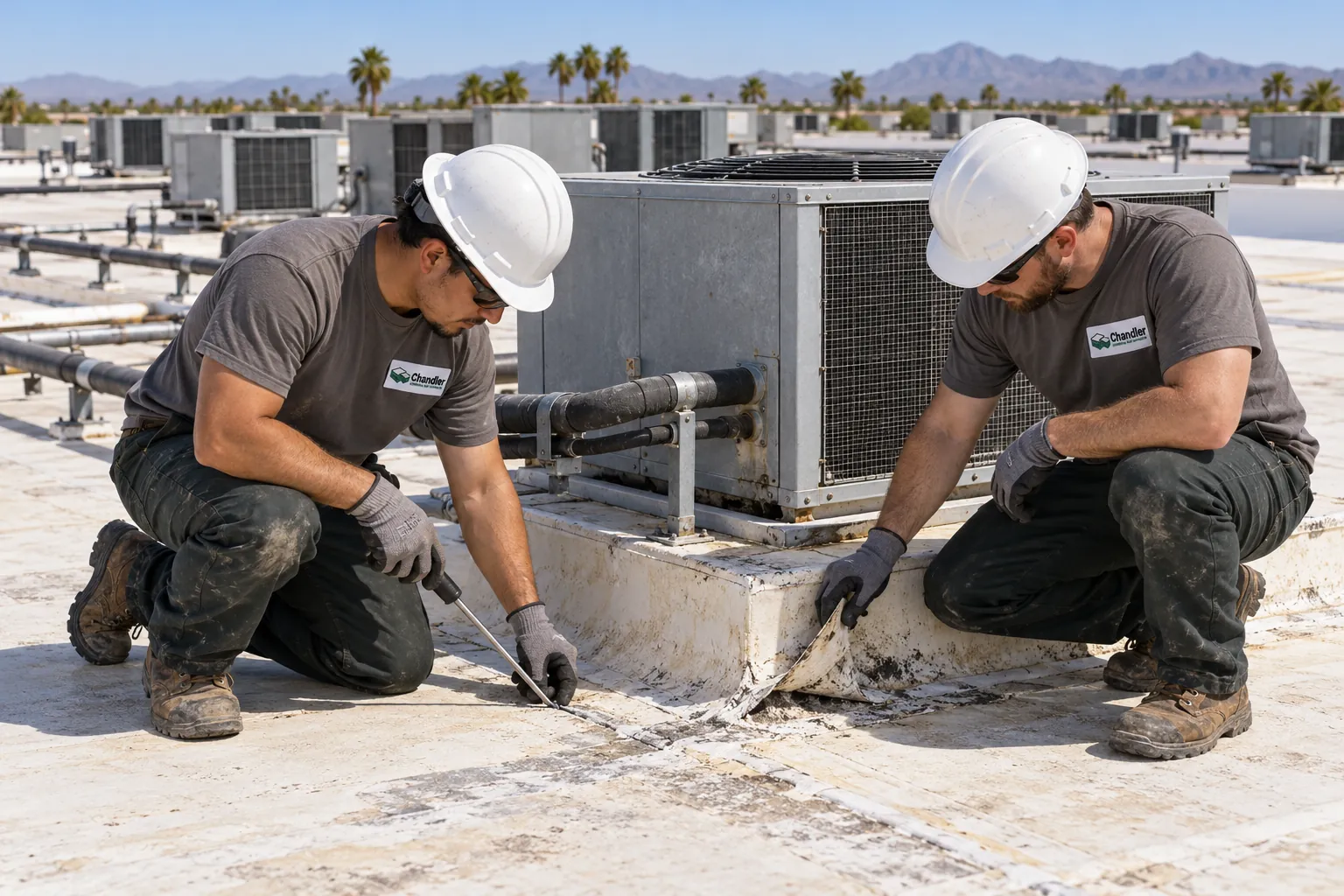
Industrial roofs carry exhaust stacks, process piping, and heavy units over production floors. We phase tear-off so no section sits open overnight, and we plan noisy or dusty work around shifts with the facility manager.
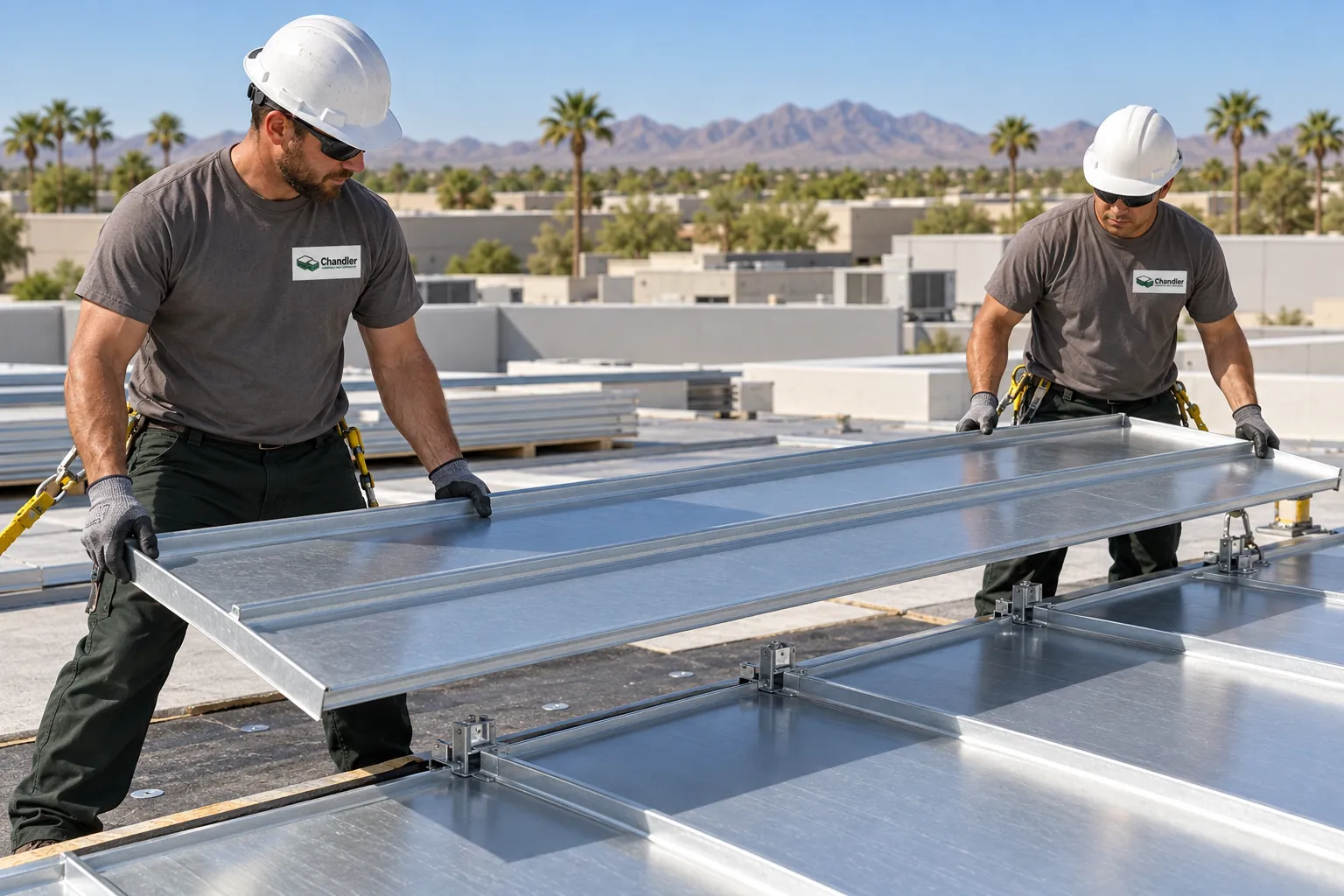
Metal roofs shed monsoon rain fast and suit pre-engineered shops and storage buildings. Heat movement loosens fasteners and opens laps over time, so most of the work is fastener replacement, resealing, or new standing-seam panels.
We make that call from the deck and insulation underneath. These signs show which way a Chandler roof usually goes.
Call and tell us which wall the water is running down and whether the edge metal is loose. We will set up a roof inspection.
(623) 310-0186Call UsBenefits depend on the system and the building. These are the ones Chandler owners and facility managers ask about most.
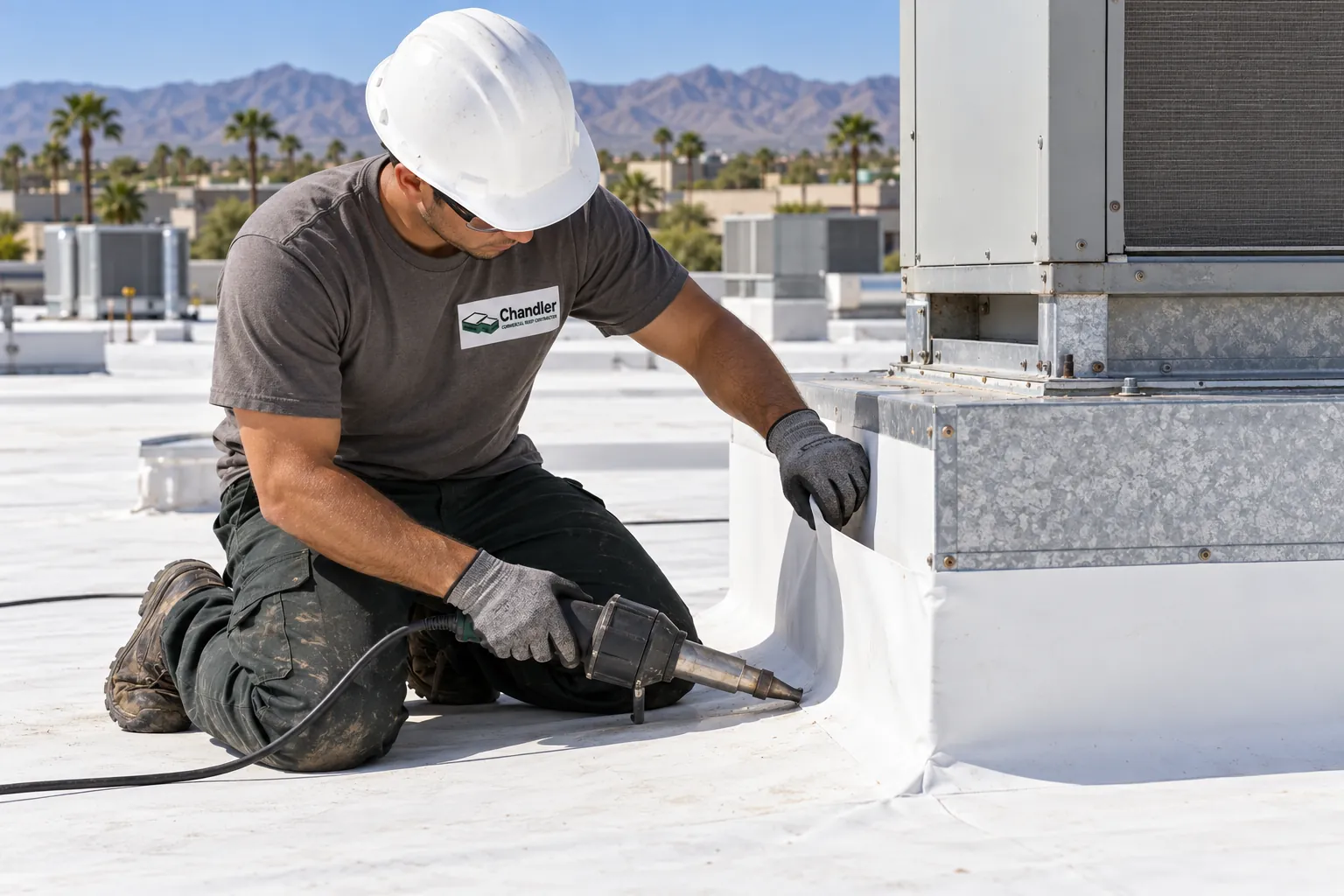
Heat-welded TPO seams and taped EPDM laps hold up against wind-driven rain better than tired adhesive seams.
A white TPO membrane or a light metal finish reflects much of the sun, so the deck under it runs cooler.
Sealing curbs, pipes, and edges keeps water out of the insulation boards and protects their value.
Tapered insulation and cleared scuppers move water off the deck instead of leaving ponds that age the membrane.
Inspection photos and dated notes show what was done to each roof section, which helps with insurance questions later.
Every job follows the same five steps, from the first walk on the roof to the last seam check.
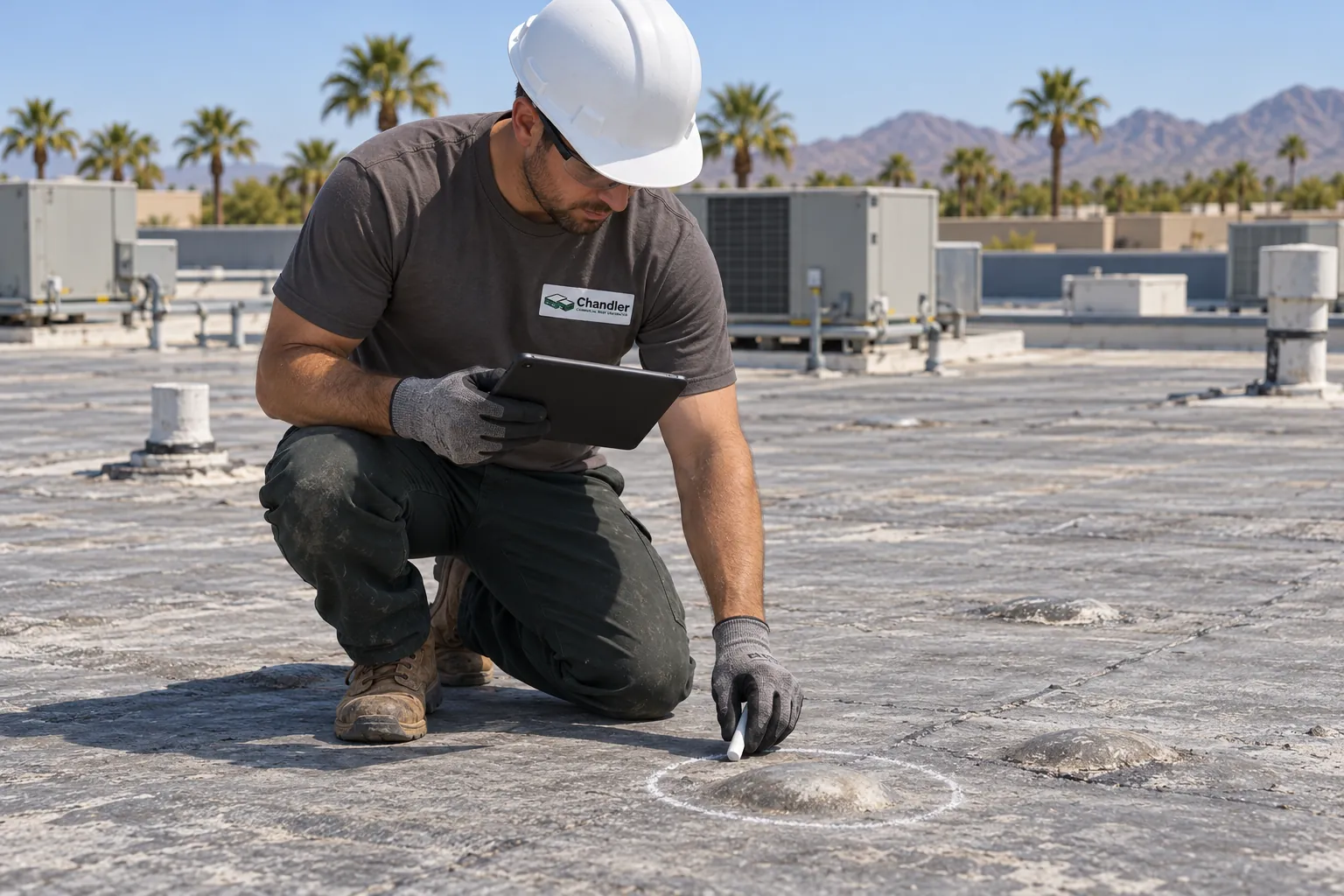
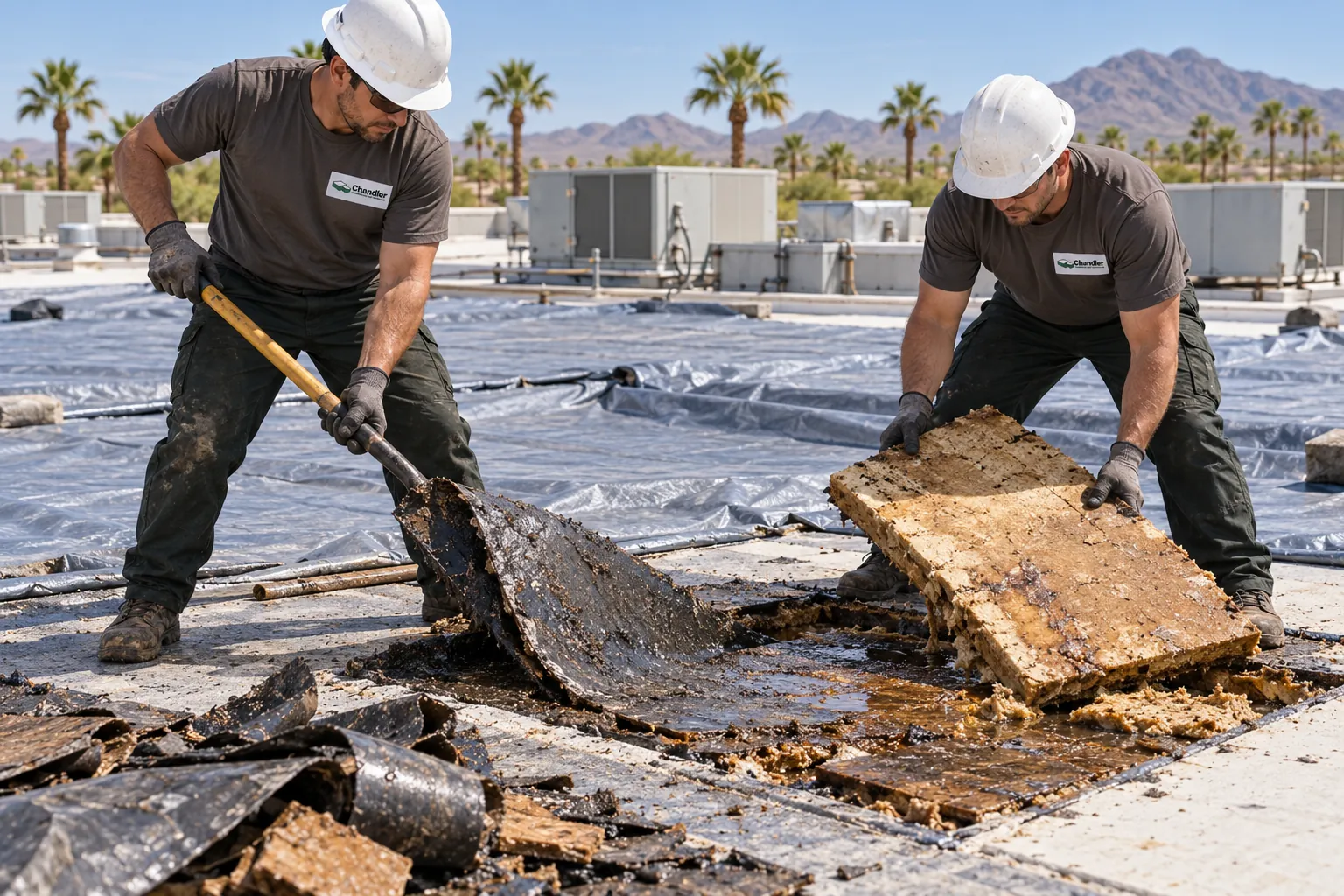
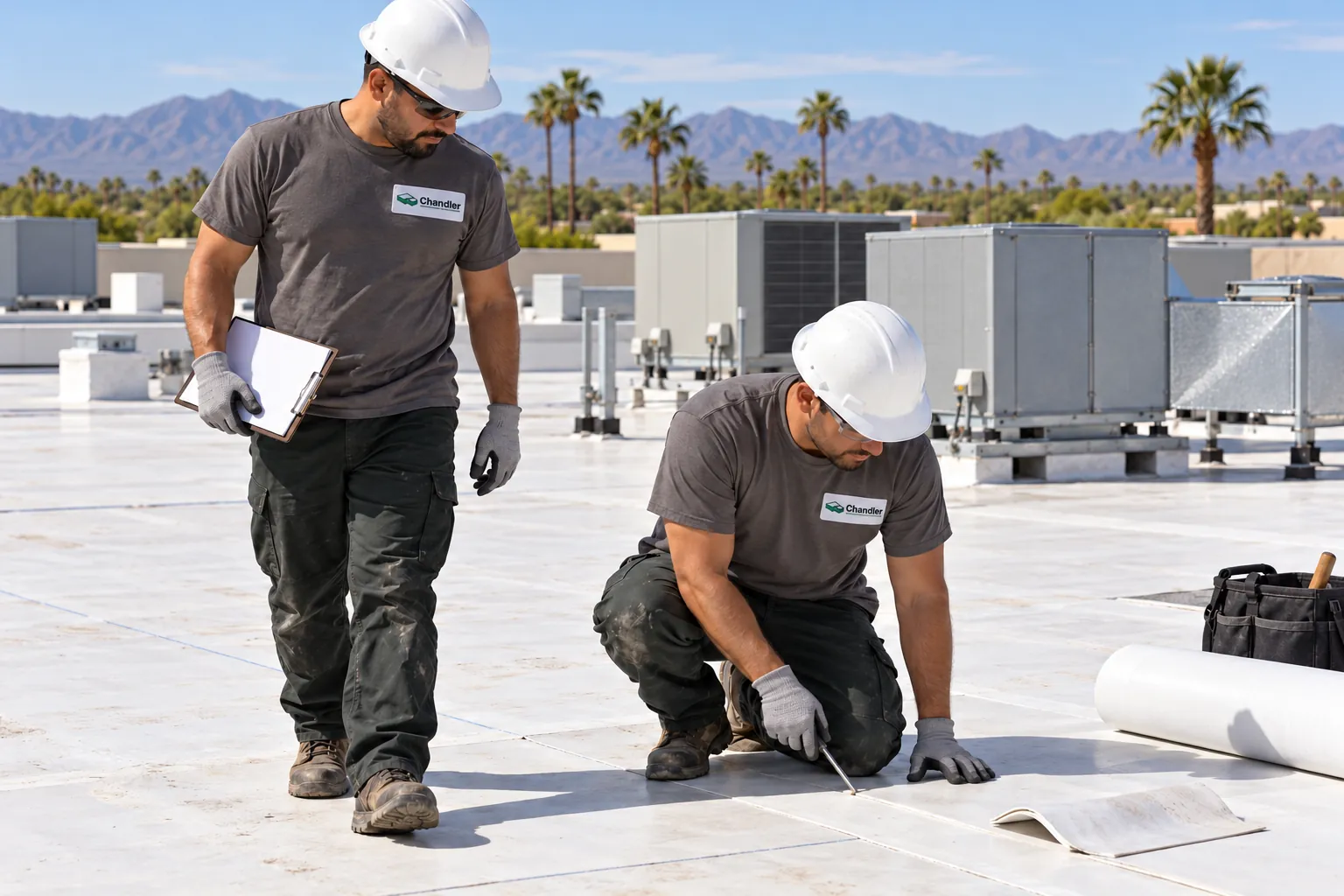
We walk the whole roof, photograph blisters, open seams, and loose flashing, and check every drain and scupper. Core cuts and a moisture meter show whether the insulation is dry before anyone talks about repair or replacement.
You get the findings with photos and a plain list of what can be repaired, what needs replacing, and which roof system fits the building. The price follows from that scope.
Crane lifts, deliveries, and dumpsters are set away from entrances and loading docks. Noisy tear-off days are scheduled with your facility manager, and HVAC intakes get covered when dust could reach them.
Crews tear off one roof section at a time and close it watertight before they leave. Insulation is fastened, the membrane or panels go down, and every curb, pipe, and edge is flashed.
A final walk checks each seam with a probe, clears debris from the drains, and records the work in photos. You keep the notes for maintenance visits after each monsoon.
We cover Chandler and six nearby areas in the southeast Valley. Pick a town to see the buildings and roof issues we focus on there.
Tilt-up warehouses and flex buildings west of Loop 101, where big TPO decks and dock traffic shape the job.
Semiconductor, aerospace, and tech campuses where roof work is planned around production air and shift changes.
Retail centers and medical offices where work is staged suite by suite under Town of Gilbert permits.
Pre-engineered metal shops and storage buildings, permitted through the town in both its Maricopa and Pinal County portions.
Newer shopping centers where added rooftop units need their curbs flashed into the existing roof.
Clubhouses and community buildings in unincorporated Maricopa County, roofed in sections around daily use.
Short answers to what owners ask before a roof job. The full list is on our roofing FAQ.
They wear it from two directions. Months of sun dry out and crack the membrane surface. Then monsoon outflow winds, which NWS Phoenix says can top 50 mph, test every loose edge and open seam at once.
Most storm leaks we trace start at lifted edge metal, clogged drains, or seams that heat had already weakened.
We do both. We install TPO, EPDM, and metal roofs on Chandler commercial buildings, replace worn-out systems, and repair seams, flashings, edges, and penetrations on roofs that still have life left. The inspection decides which one fits, and we explain why in writing.
Four things matter most: roof size, how much wet insulation has to come out, the system you choose, and how many curbs, pipes, and edges need flashing. Access, crane lifts, and phasing around tenants add to it. We price the work after the inspection, once those quantities are measured.
Size and phasing decide it. A small retail roof is a short job, while a large plant roof is split into sections done in sequence around shifts. We give you a section-by-section schedule after the inspection, and weather, crane bookings, and permit timing can move it.
Yes. A new HVAC unit needs a curb set into the roof and flashed so it ties into the existing membrane or panels. We cut in, flash, and seal the curb, then check that condensate lines drain away from nearby seams.
Clear the drains and scuppers, look for loose edge metal and coping, and check the seams near rooftop units. NWS Phoenix starts the monsoon season on June 15, so a spring inspection gives time to fix small problems before the first storms arrive.
Tell us about the building and the problem you see. We will inspect the roof and lay out the repair and replacement options.
Leave a name and number and we will call you back about your commercial roof.
Or call now: (623) 310-0186