Drips Along A Purlin
Rain drips in a straight line under one purlin after a storm.
Backed-Out Screws
Screws have backed out and their washers have cracked, so each hole lets water in.
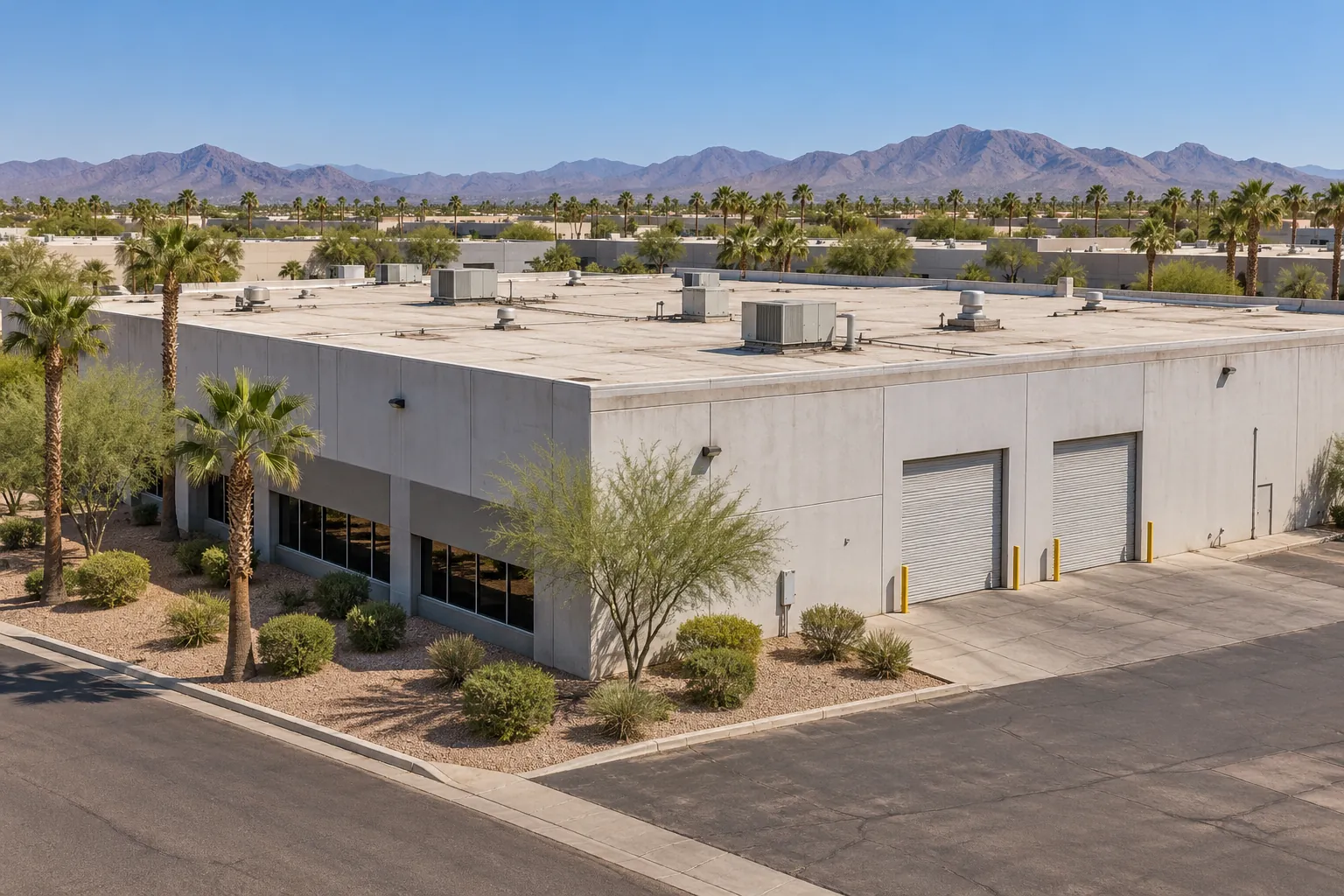
As a Queen Creek commercial roofing contractor, we repair and replace metal roofs on pre-engineered shops and storage buildings, and we roof the low-slope buildings beside them.
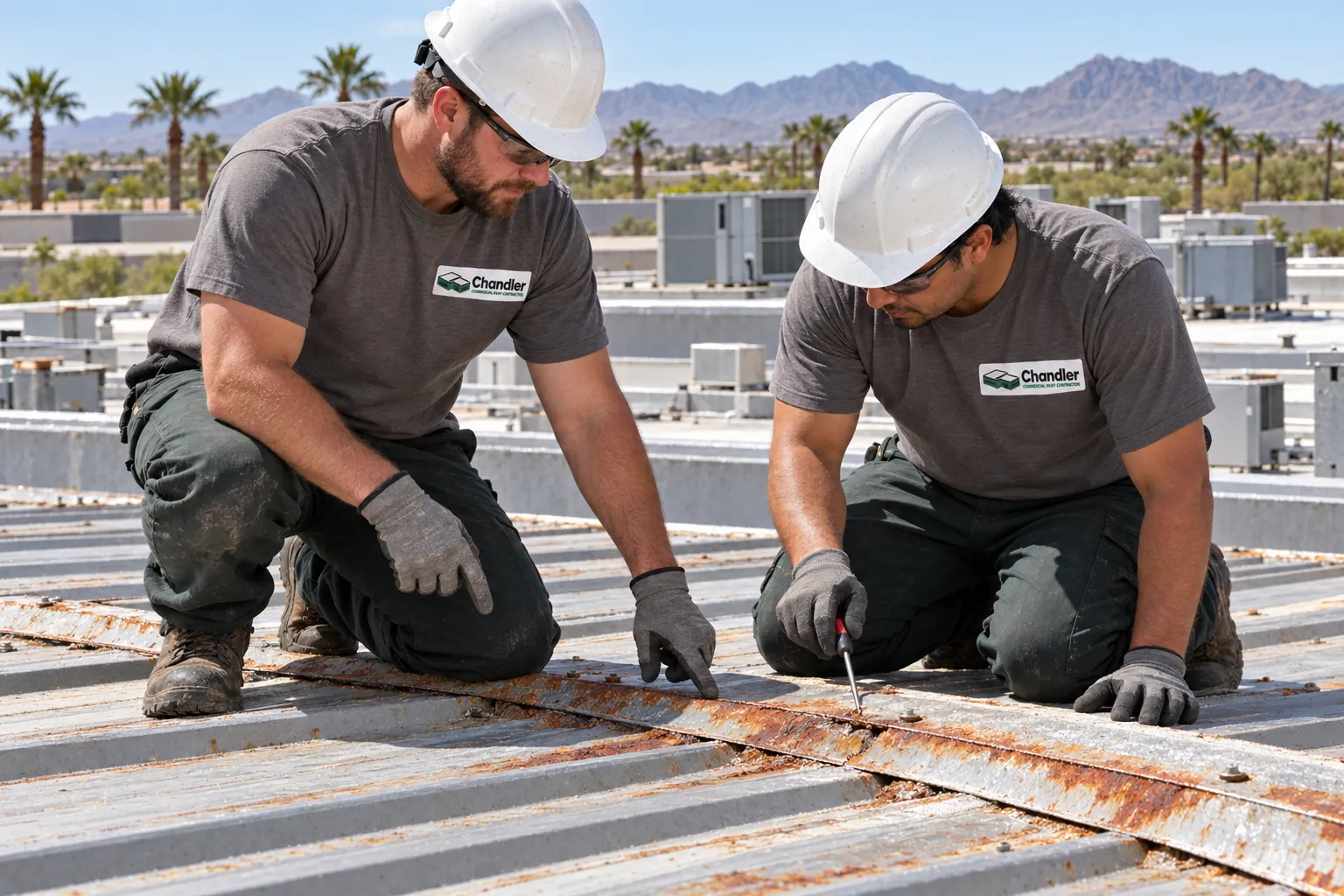
Pre-engineered metal shops and storage buildings move every day in the heat. Panels expand in the afternoon and shrink at night, and over years that loosens fasteners, wears out washers, and opens the laps where panels overlap.
We fix that at the fastener and the lap, or install new standing-seam panels where rust has gone through. The Town of Queen Creek issues building permits for both its Maricopa and Pinal County portions, so one office covers the job.
Metal roofs show they are loosening long before a panel lifts. These pairs connect what you see in the shop to the panel detail above.
Rain drips in a straight line under one purlin after a storm.
Screws have backed out and their washers have cracked, so each hole lets water in.
Light shows through small holes in the roof when the shop lights are off.
Rust has eaten through where two panels overlap and trap moisture.
Puddles show up along one sidewall where the roof meets the wall panels.
Eave trim and closures have pulled loose, and wind drives rain past the panel ends.
Winter mornings leave water on stored equipment even without rain.
Gaps in the facing under the panels let warm air reach cold metal and condense.
Staff hear panels rattle or flex when monsoon winds hit the building.
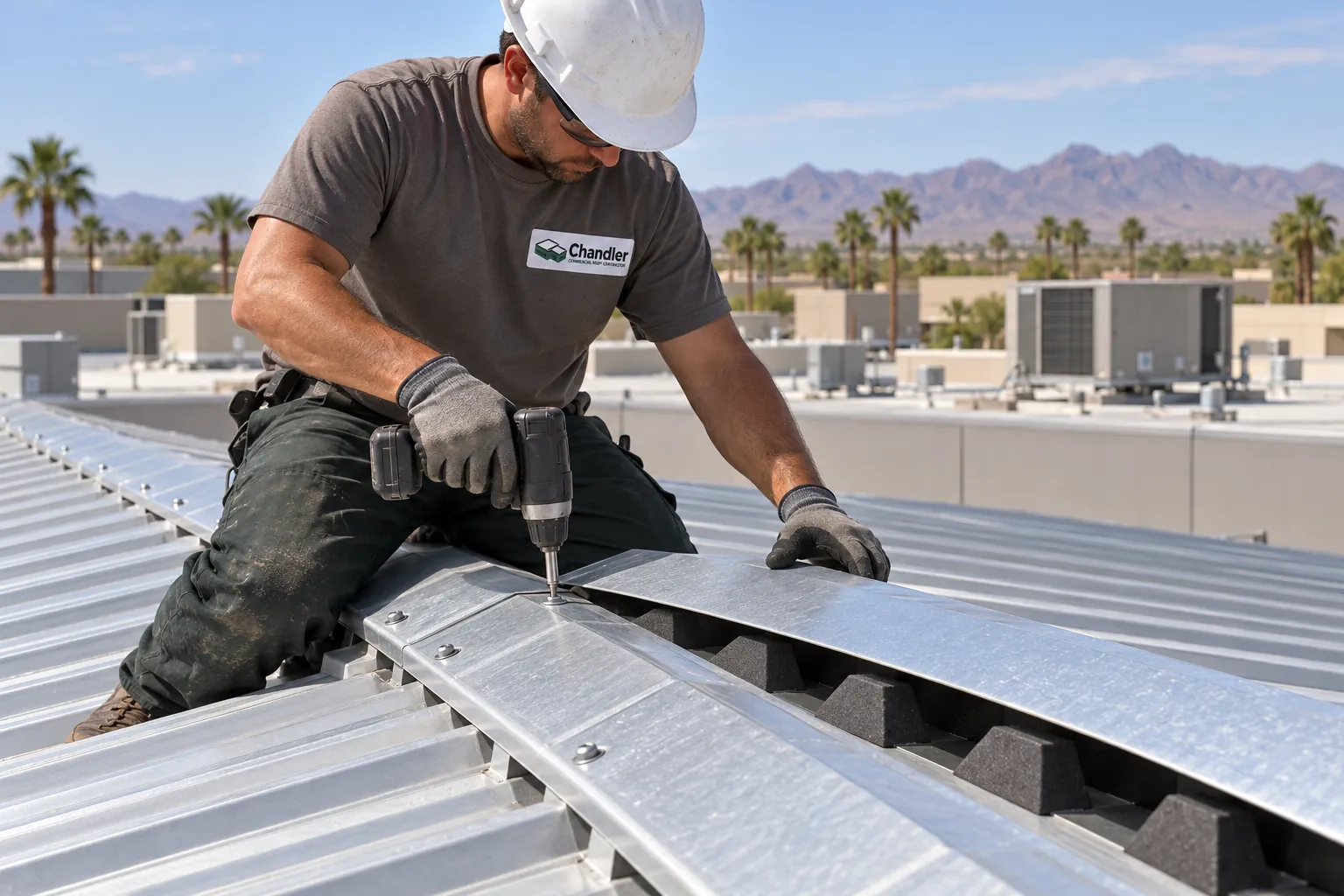
The ridge cap has loose fasteners and split sealant, so wind lifts it at the ends.
What Queen Creek shop and storage owners get from fixing a metal roof at the fastener, the lap, and the trim.
Tight fasteners and sealed laps keep rain off vehicles, tools, and stock stored under the panels.
Sloped metal panels shed monsoon downpours quickly when the eave trim and gutters are clear.
Metal roofs commonly last 40 years or more with care, so fastener work protects a long-lived roof.
Light-colored or coated metal finishes reflect sunlight, which helps a shop under the roof stay cooler.
Resealing laps and swapping washers keeps the existing panels in service while the metal itself is solid.
Two systems cover most Queen Creek shop and storage roofs. The inspection decides which one fits each building.
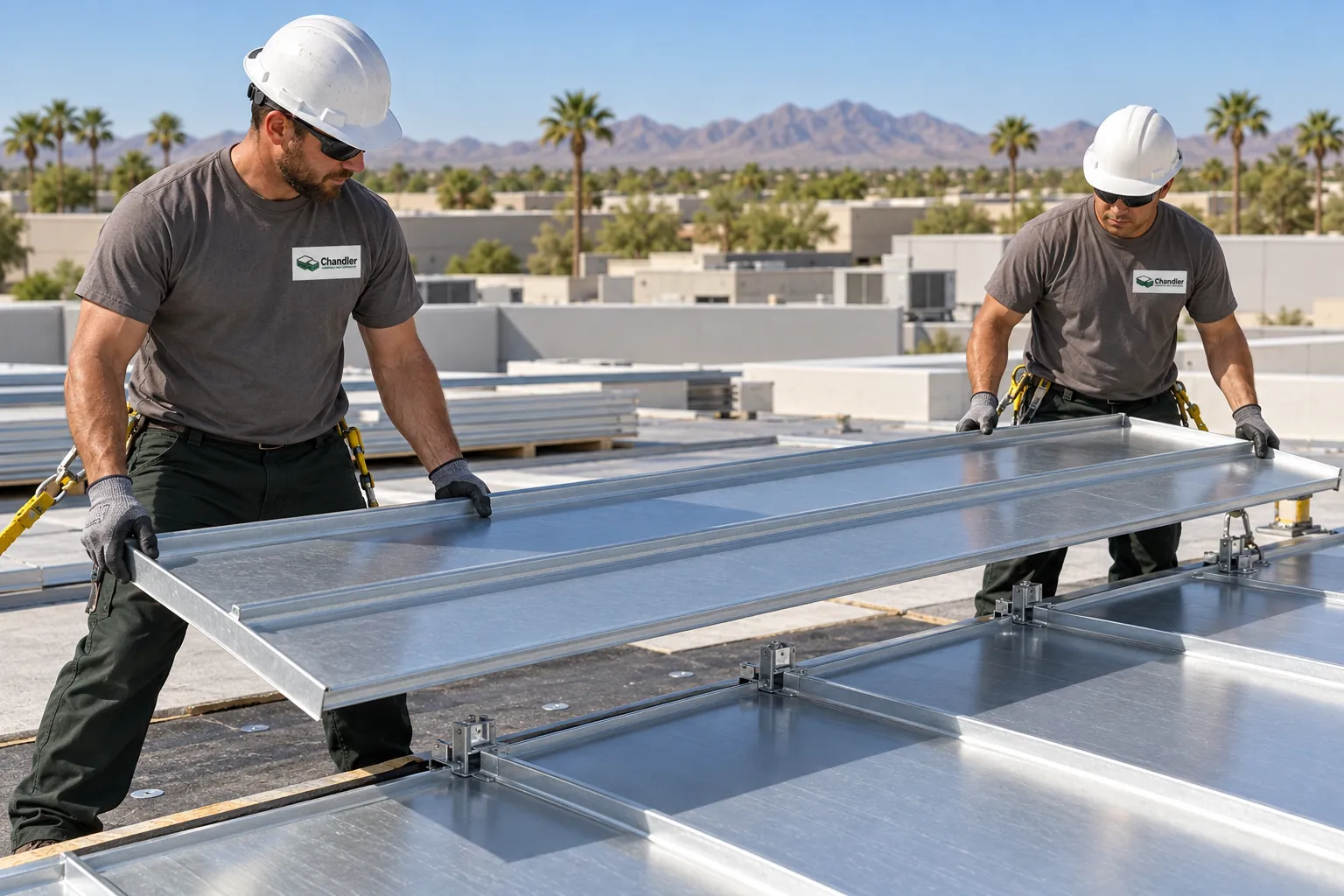
Standing-seam or through-fastened panels match the frame of a pre-engineered building. We repair fasteners, laps, and trim on existing roofs and install new standing-seam panels where rust has gone through.
Best for: Shops, storage, and pre-engineered buildings
See commercial metal roofing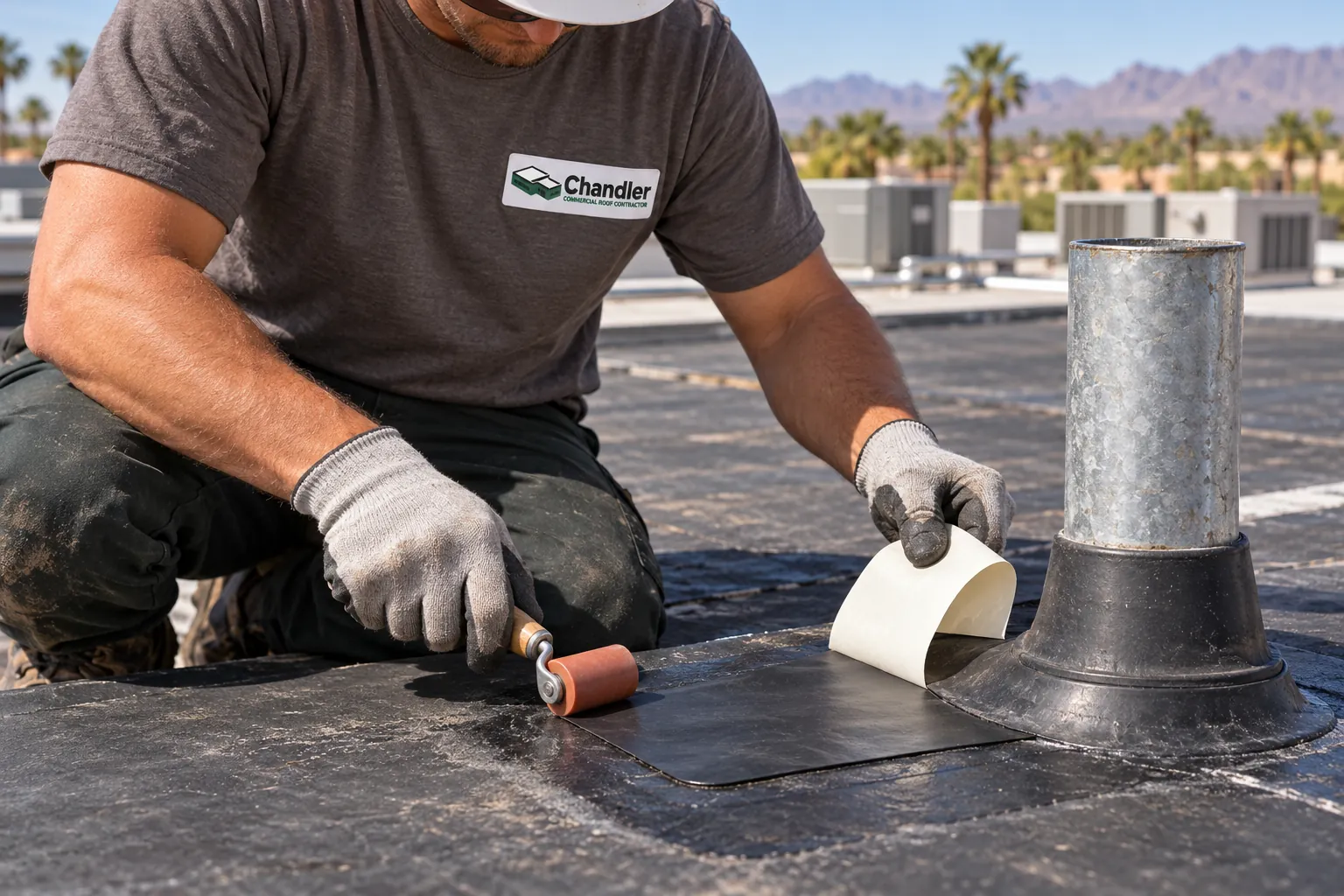
Low-slope office or flex additions next to a metal shop often carry an EPDM roof. The rubber sheet bends with the joint between the old building and the addition and takes pipe and vent changes well.
Best for: Flat additions and offices beside metal buildings
See EPDM roofingCall and tell us roughly how old the roof is and where the drips land inside. We will check the fasteners, laps, and trim on that section.
(623) 310-0186Call UsFive steps for a Queen Creek metal shop or storage roof, from the first fastener check to the closeout photos.
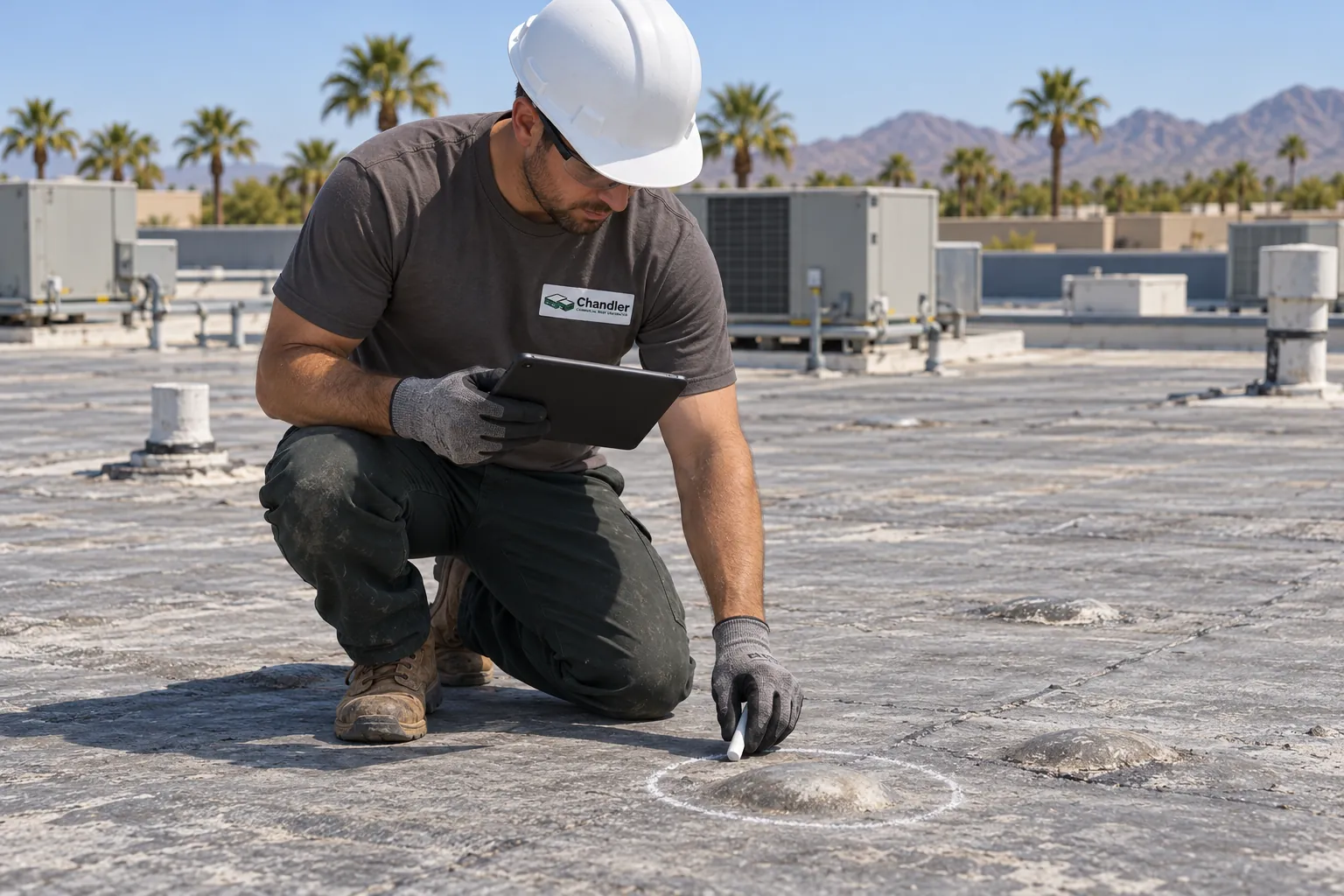
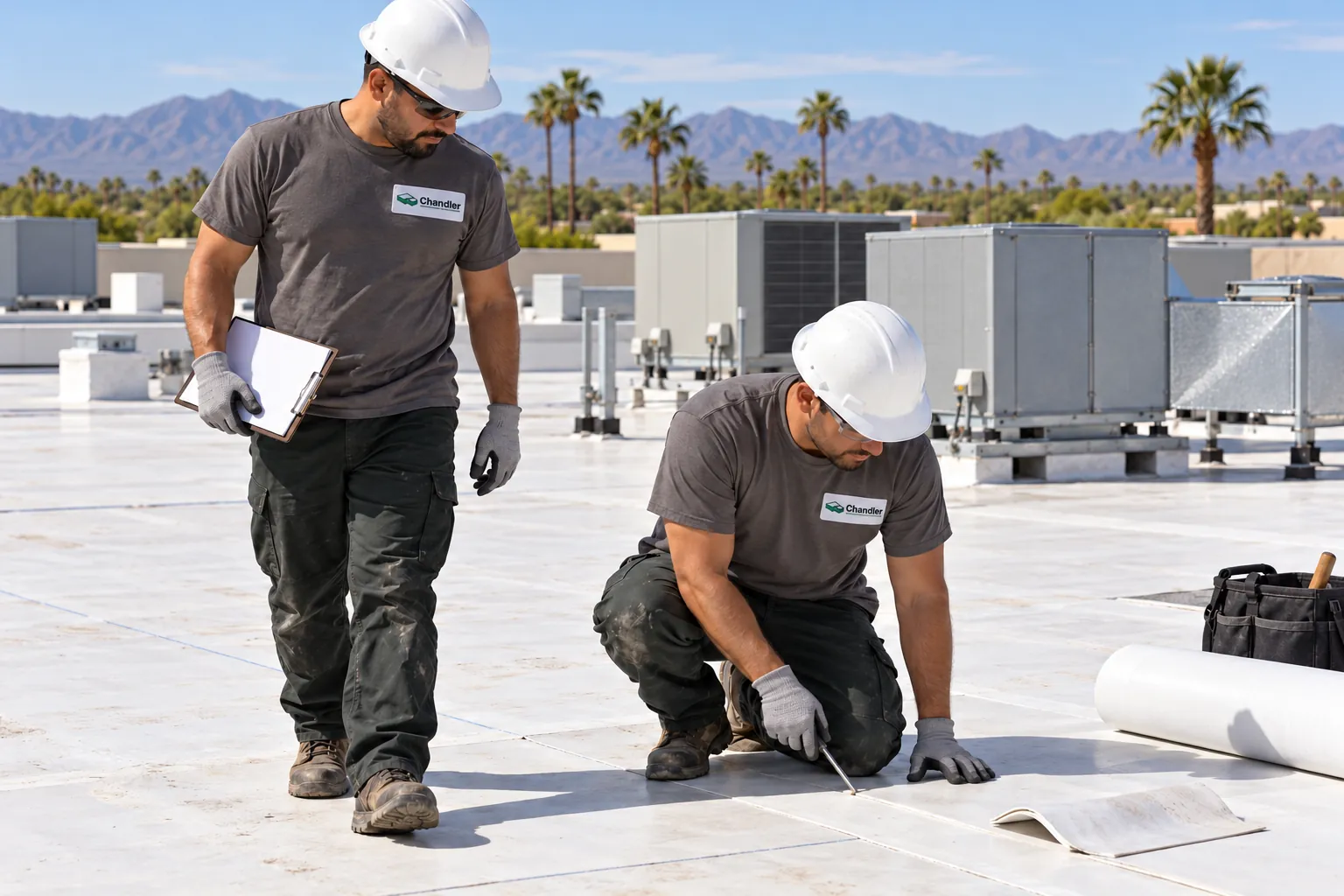
We walk the panels along the purlin lines, test fasteners by hand, look for rust at laps and cut edges, and check the ridge cap, eave trim, and gutters. Inside, we note where drips and daylight show.
Worn screws and cracked washers are counted by roof section, so the price reflects the real quantity. Rusted panels are marked for repair or replacement on a roof plan.
Roofs with solid metal get new fasteners and resealed laps. Panels that have rusted through are replaced, or the whole roof moves to standing seam when most of it is past repair.
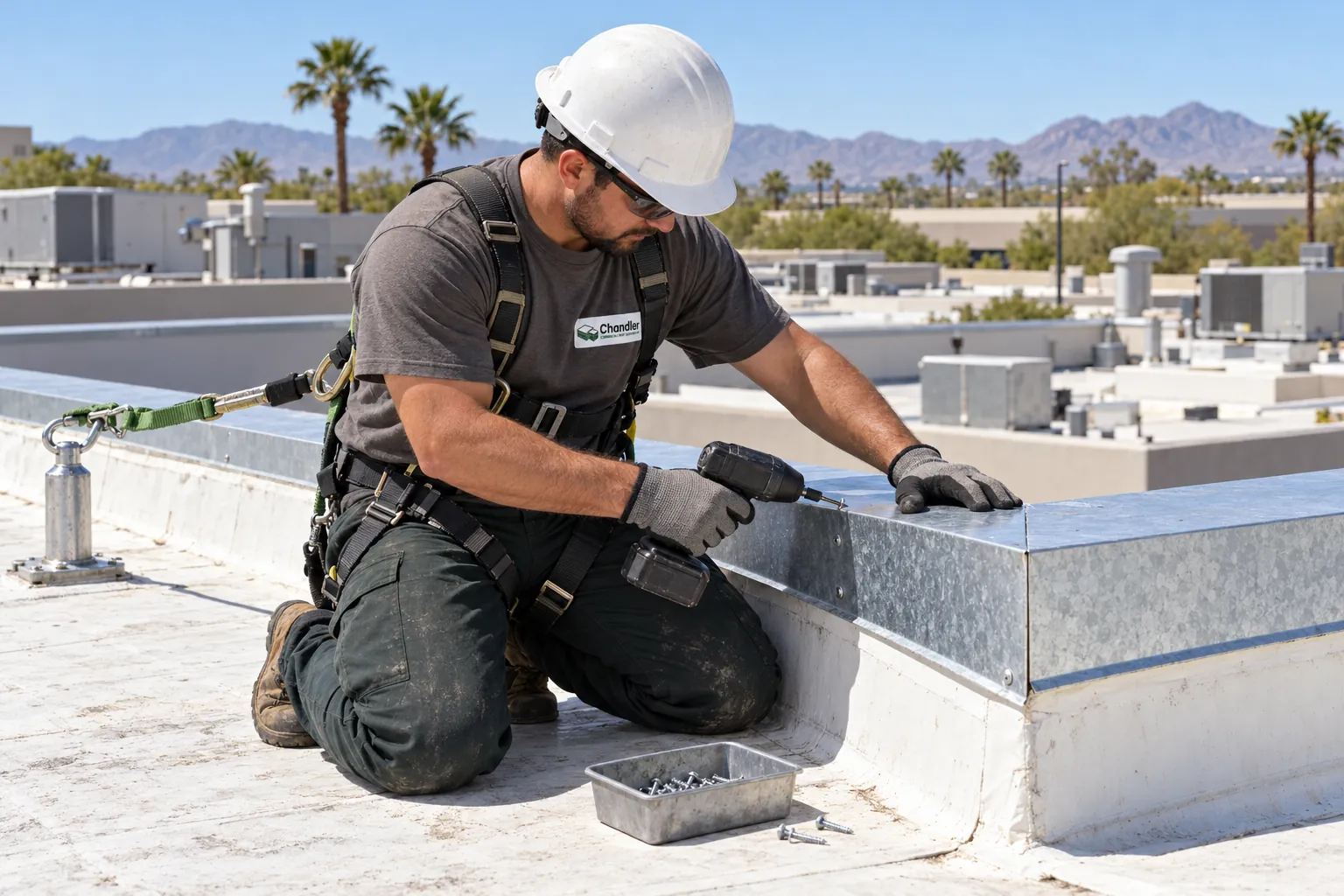
Old sealant is cleaned out, laps are resealed, and the ridge cap and eave closures are refastened. Rust at cut edges is cleaned and treated before anything is closed up.
A final pass checks every fastener row, clears the gutters and drip line, and documents the roof in photos for a yearly fastener check.
Queen Creek sits at the southeast edge of our coverage. These nearby areas are the closest.
Just south, where some building services moved to agreements with Pinal County in July 2026.
Strip retail and medical suites roofed one tenant space at a time.
An unincorporated Maricopa County community whose clubhouse roofs follow county permits.
Large tilt-up warehouse decks where wide TPO rolls cut the number of seams.
Answers for owners of metal shops, storage buildings, and the low-slope buildings beside them.
With proper installation and routine care, metal roofs commonly last 40 years or more. On the flat roofs nearby, TPO runs about 20 to 30 years and EPDM about 25 to 30 years.
Actual life varies with drainage, foot traffic, and upkeep. On metal, loose fasteners, failed sealant, and rust at cut edges are what shorten it.
The Town of Queen Creek Development Services Building Safety division handles building permits in both the Maricopa County and Pinal County portions of town. Check the town Building Safety page before work starts, since requirements and fees change.
Replace the screws when the panels are solid and leaks come from backed-out fasteners or cracked washers. A full replacement makes sense when rust has eaten through panels across much of the roof or the laps keep failing after resealing. The inspection counts both before we recommend either.
On some buildings, yes. A retrofit system sets new panels on clips or framing over the old ones, which avoids tearing off a working roof over stored stock. It depends on the frame, the old panel profile, and local permit rules, so we check all three first.
That is usually condensation. Warm, moist air inside meets cold metal at night and forms water on the underside of the panels, and torn insulation facing or open eaves let it happen. We check the insulation and closures during the inspection so you know whether it is a leak or condensation.
Plan on a check each spring before monsoon season and again in the fall. Heat cycling works screws loose a little every year, and catching a few early keeps water from spreading into the insulation and purlins.
Yes. Many shops have an office or flex addition with a low-slope roof, and we cover those with EPDM or TPO. The joint where the addition meets the metal building gets its own flashing, so movement between the two stays sealed.
Tell us the building size, how old the panels are, and where it leaks. We will inspect the fasteners and laps and price the repair or replacement.
Leave a name and number and we will call you back about your commercial roof.
Or call now: (623) 310-0186