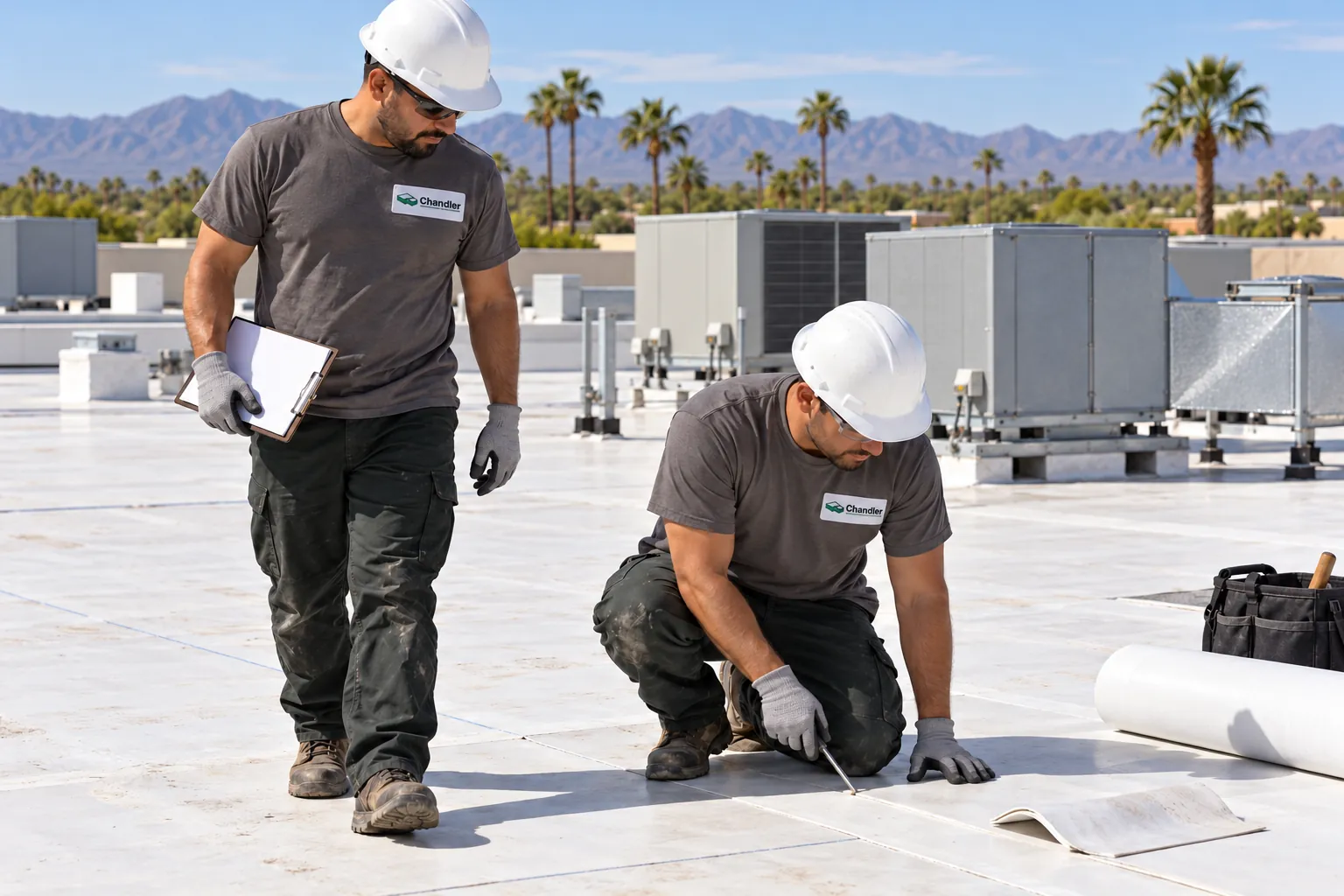
Two roofers walking a membrane roof with a clipboard, one checking a seam

Chandler Commercial Roofing Services

Our commercial roofing services in Chandler cover four systems: TPO, EPDM, industrial roof assemblies, and metal panels. We match each one to how your building is used.

Four Roof Systems We Install In Chandler

Each card covers what the system is, the buildings it fits, and where to read more about the work.

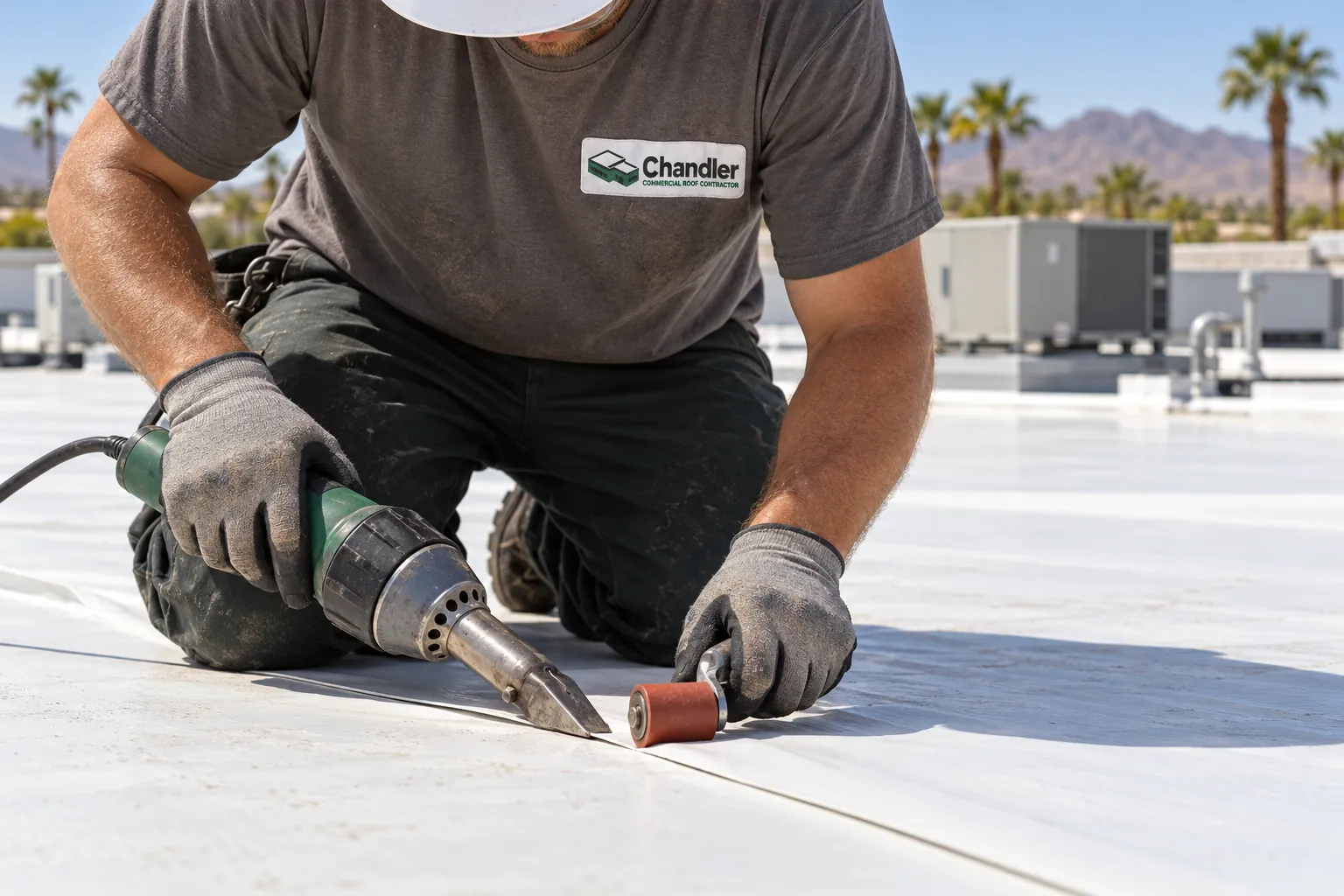
Gloved hands rolling a hot-air welded TPO seam

TPO Roofing Contractor

White TPO sheets are heat-welded at every seam, so a large warehouse deck ends up with fewer laps to fail. We install new TPO, recover dry roofs, and repair split welds and loose flashings.

Best for: tilt-up warehouses, retail centers, and medical offices

TPO roofing contractor services
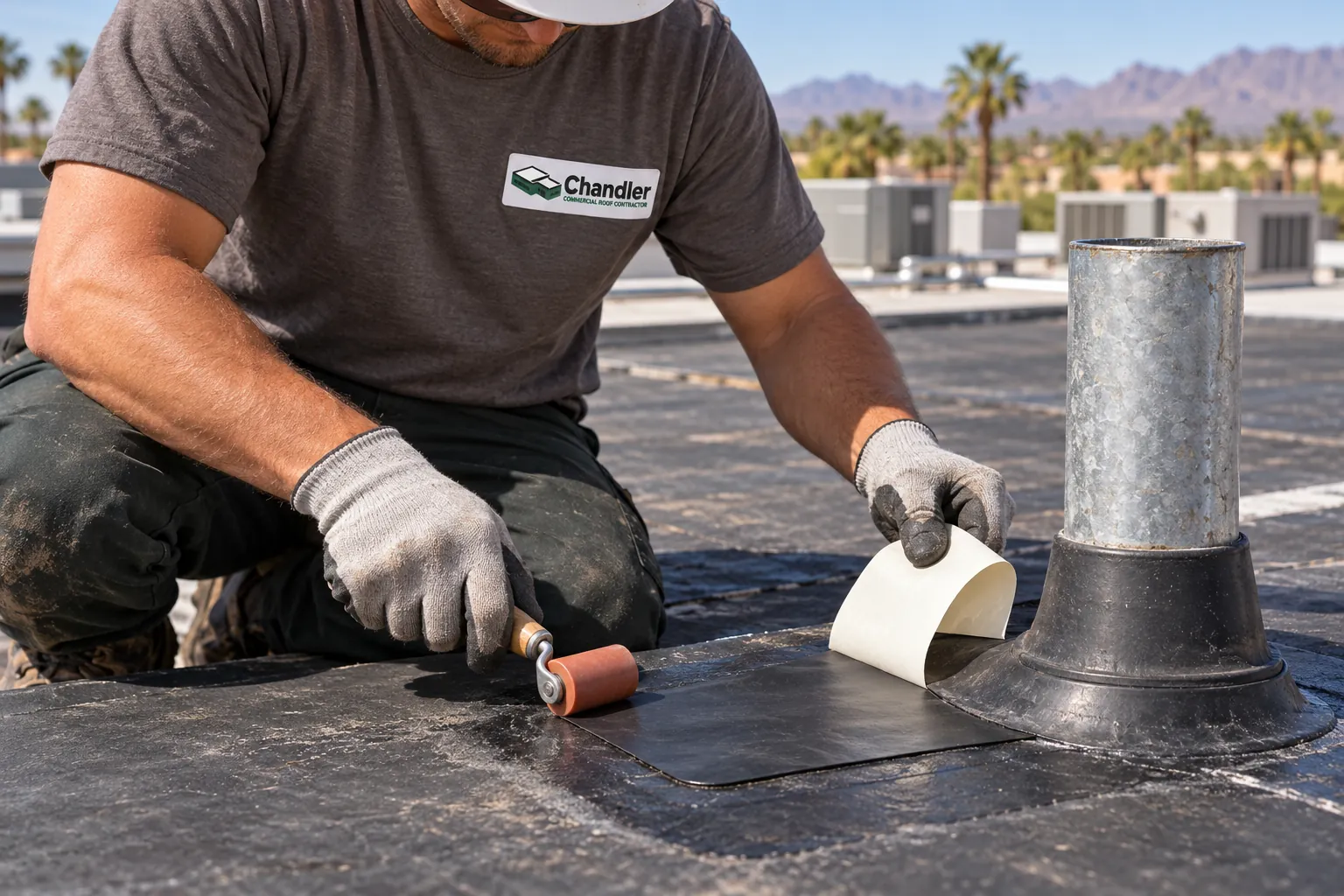
Roofer rolling a cover-tape patch onto aged black EPDM beside a pipe boot

EPDM Roofing Contractor

Rubber EPDM bends with moving joints and wraps tightly around pipe boots and vents. Many aging EPDM roofs on flex suites need new seam tape and cover strips at penetrations, with full tear-off saved for wet sections.

Best for: flex suites and office roofs with many penetrations

EPDM roofing contractor services
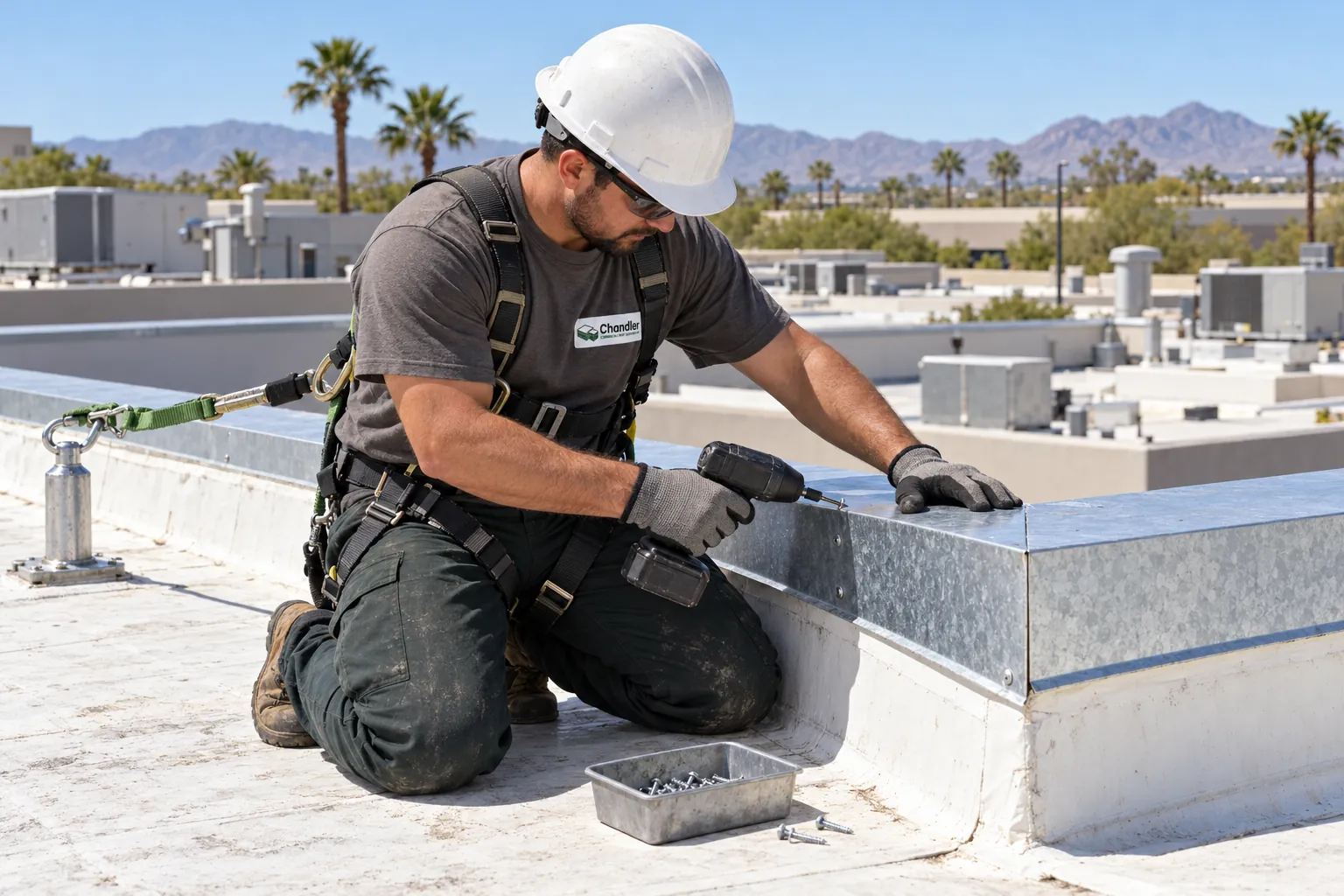
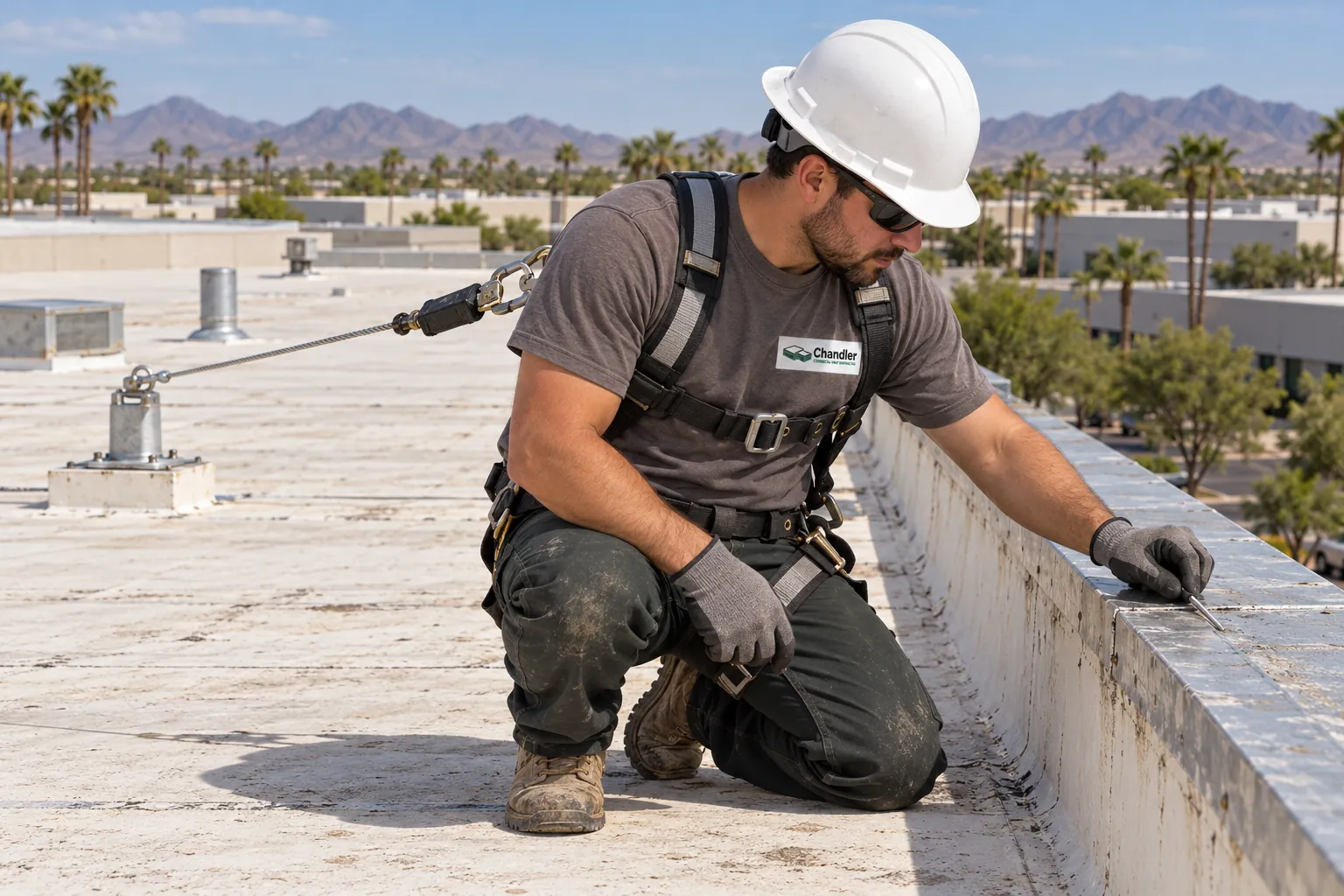
Roofer tied to a fall-protection lifeline checking edge metal on an industrial roof

Industrial Roofing Contractor

Plant roofs get phased tear-off, walkway pads along service routes, and sealed curbs around exhaust fans and process piping. Fall-protection points and crane lifts are planned with the facility manager before anyone climbs up.

Best for: manufacturing plants and cleanroom buildings

Industrial roofing contractor services
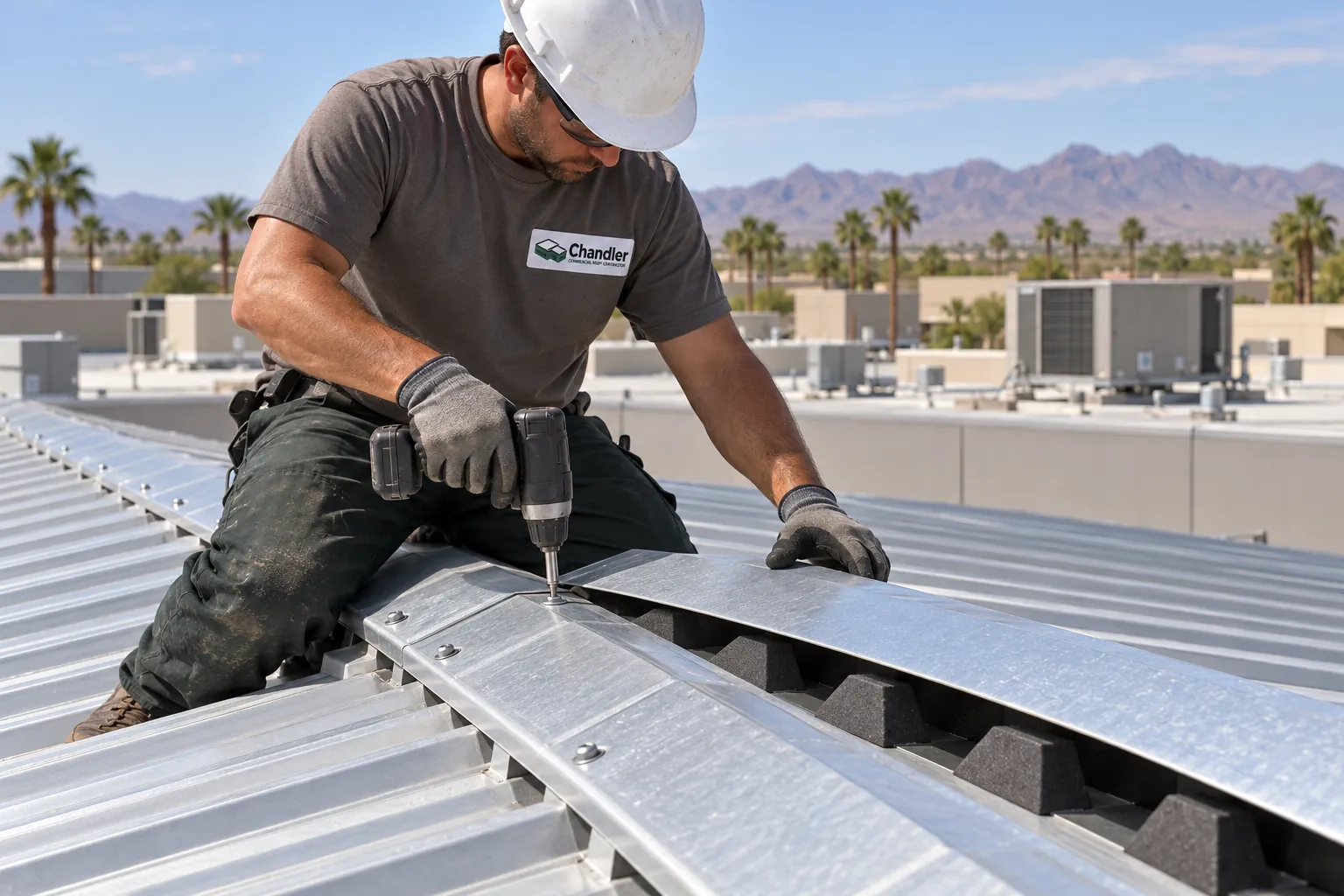
Roofer fastening a ridge cap over foam closures on a ribbed metal roof

Commercial Metal Roofing Contractor

Through-fastened panels loosen as the metal moves in summer heat. Washers get replaced, laps and ridge caps resealed, and panels past repair give way to new standing-seam metal.

Best for: shops, storage buildings, and pre-engineered frames

Commercial metal roofing contractor services

Matching A Roof System To Your Building

Building use, rooftop equipment, and foot traffic narrow the choice fast. This table pairs common Chandler building types with the systems we install on them.

Roof systems matched to Chandler building types
BuildingUsual systemReasonRooftop traffic
Tilt-up warehouse or distribution centerTPOWide rolls cover big decks with fewer seams, and the white face reflects sunLight, mostly HVAC service visits
Flex suite or light industrial unitTPO or EPDMBoth take new curbs well when tenants change HVAC unitsModerate, rising with tenant turnover
Manufacturing plant or cleanroom buildingFully adhered TPO, or EPDM with walk padsStands up to heavy units and daily service crewsHeavy, so walk pads mark the routes
Retail center or medical officeTPO, or a coating over a dry existing roofWork moves suite by suite to limit downtimeLight, apart from rooftop units
Pre-engineered shop or storage buildingStanding-seam or through-fastened metalTies into the existing steel frameLow, mostly fastener checks

Unsure Which System Fits?

Tell us the building type, the roof size, and what sits on the roof. We can talk through the options on the phone before the inspection.

(623) 310-0186Call Us

From First Walk To Final Seam

The same five steps apply whether the roof is TPO, EPDM, or metal.

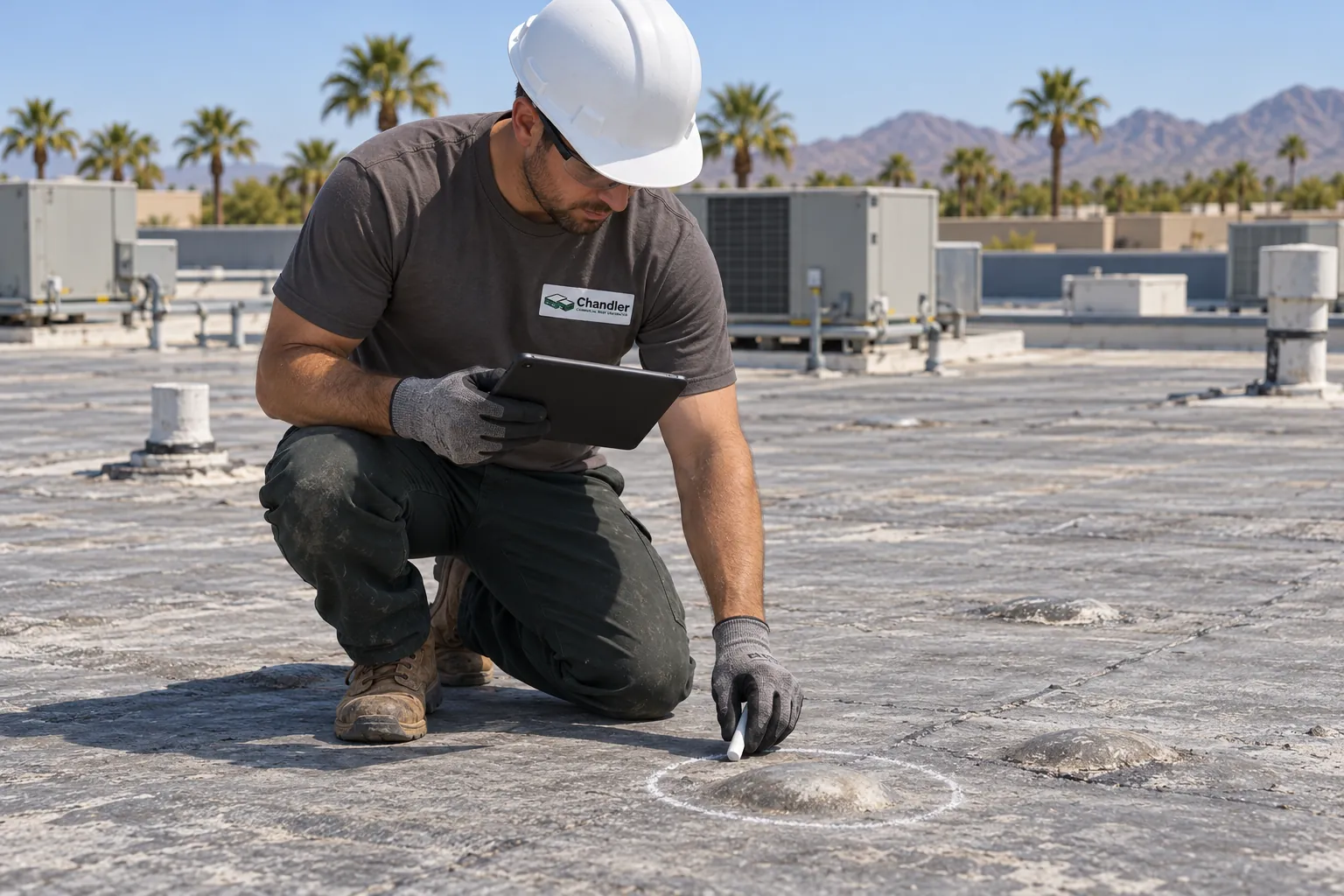
Roofer marking a blister on an older flat roof and photographing it with a tablet
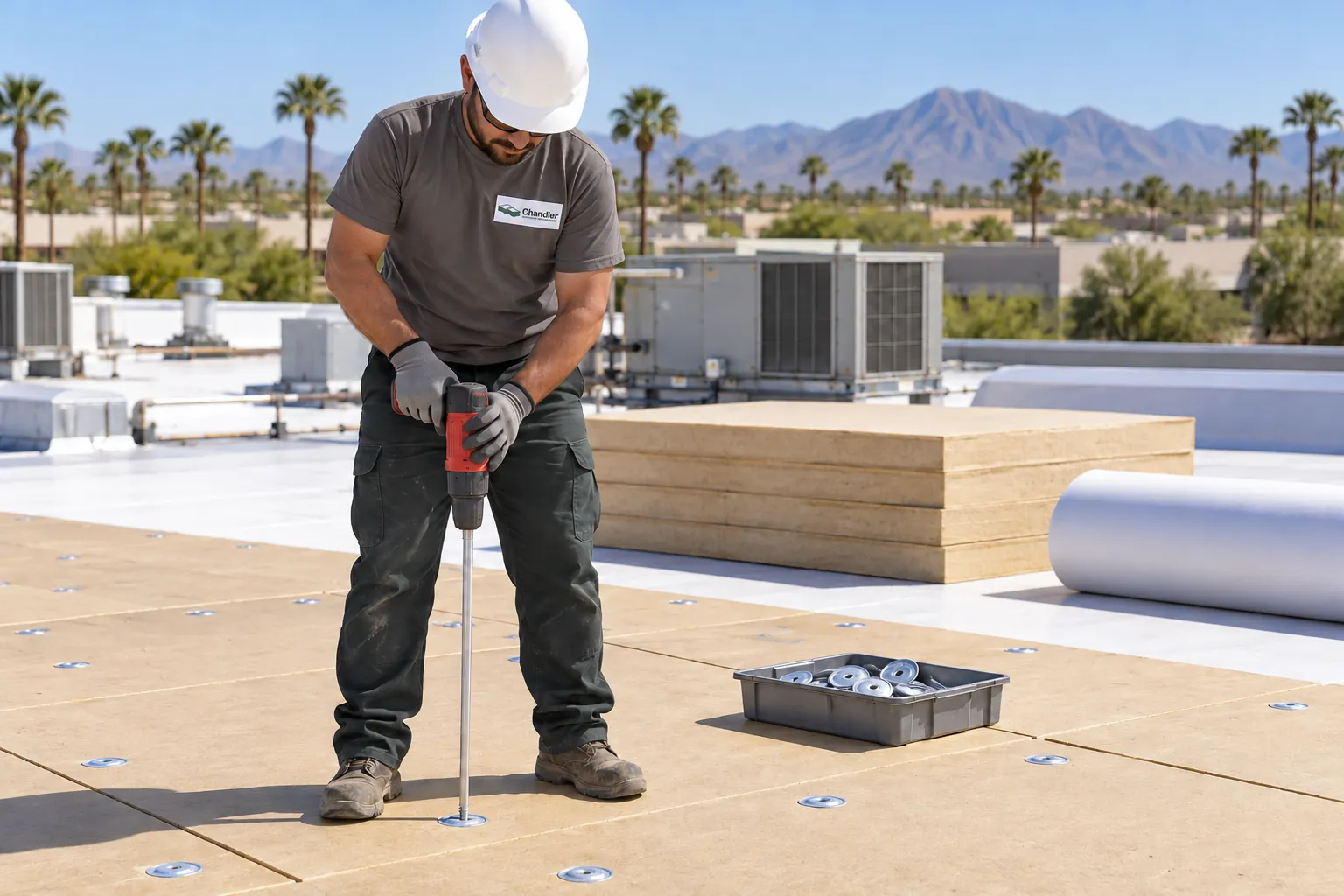
Roofer fastening insulation boards with plates and a stand-up screw gun
Roofer fastening edge metal at a roof corner while tied off
  1. Inspect Your Roof

    A roofer walks every section, marks blisters and split welds, and checks curbs, drains, and edge metal. Core samples and a moisture meter tell us whether the insulation under the membrane is dry or wet.

  2. Match The System

    We compare the findings with how the building is used, including tenant changes, heavy units, and production rules. That comparison decides between TPO, EPDM, metal, or a repair to the existing roof.

  3. Prepare The Deck

    Wet insulation comes out, new boards go down with plates and screws, and tapered pieces steer water to the drains. Old curbs and pipe boots are rebuilt so the new membrane has solid edges to tie into.

  4. Install And Flash

    Membrane is welded, taped, or adhered, or metal panels are set and seamed. Every curb, pipe, drain, and wall gets its own flashing detail before a section is signed off.

  5. Probe And Record

    Seams are probed, drains cleared, and each roof section photographed. Those photos and notes go to you for the building maintenance file.

Commercial Roofing Services Questions

Answers about choosing and combining roof systems on Chandler commercial buildings.

How do I know which roof system matches my building?

Start with three questions: how flat is the roof, how much equipment sits on it, and how often people walk it. Low-slope decks with light traffic lean toward TPO, crowded or flexing roofs toward EPDM, and sloped steel frames toward metal. An inspection of the deck and drainage settles it.

Can one property have more than one roof system?

Yes. A retail building with a flat main roof and a sloped metal canopy keeps both, and a plant can carry TPO over an office wing while the shop bay stays metal. Each section gets the system that matches its slope and use, and the flashing where two systems meet gets its own detail.

Which system handles heavy rooftop equipment best?

Fully adhered TPO, or EPDM with walkway pads, holds up best under heavy units and frequent service visits. The pads take the foot traffic, and reinforced membrane goes around curbs and equipment supports. On metal roofs, the panels and supports are checked for the added load first.

Do you repair roofs that another company installed?

Yes. Most repair work is on roofs another company put on years ago. We identify the original membrane or panel type, match the repair materials to it, and tell you when the roof is reaching the point where repairs stop paying off.

What happens to the old roof during a replacement?

Wet layers come off, and dry layers can stay when code allows one more overlay. Debris goes into dumpsters placed away from entrances and docks, and each torn-off section is closed watertight before the crew leaves that evening.

Will a white roof lower my cooling costs?

It often helps where the roof sits over air-conditioned space. A white TPO membrane reflects much of the sun, which keeps the deck cooler in summer. The actual effect changes with insulation, ductwork, and how the building runs, so we avoid promising a number.

Can you inspect a roof before I buy a building?

Yes. A pre-purchase inspection covers the membrane or panels, seams, flashings, drains, and any wet insulation found with a moisture meter. You get photos and notes on what needs repair now and what is aging, which helps when you negotiate or set a budget.

What should I have ready before the inspection?

Bring the roof size if you know it, any past repair invoices, and a list of where leaks show up inside. Tell us how the roof is reached, by hatch, ladder, or lift, and let tenants near the work area know a roofer will be walking above them.

Pick The Right System For Your Building

Send us the building type and the problem you see. We will inspect the roof and recommend the system that fits it.

Call Us (623) 310-0186