Drips Along Purlin Lines
Water drips in a straight row that matches the fastener lines above.
Backed-Out Fasteners
Heat movement loosens screws and dries out washers, letting rain past each hole.
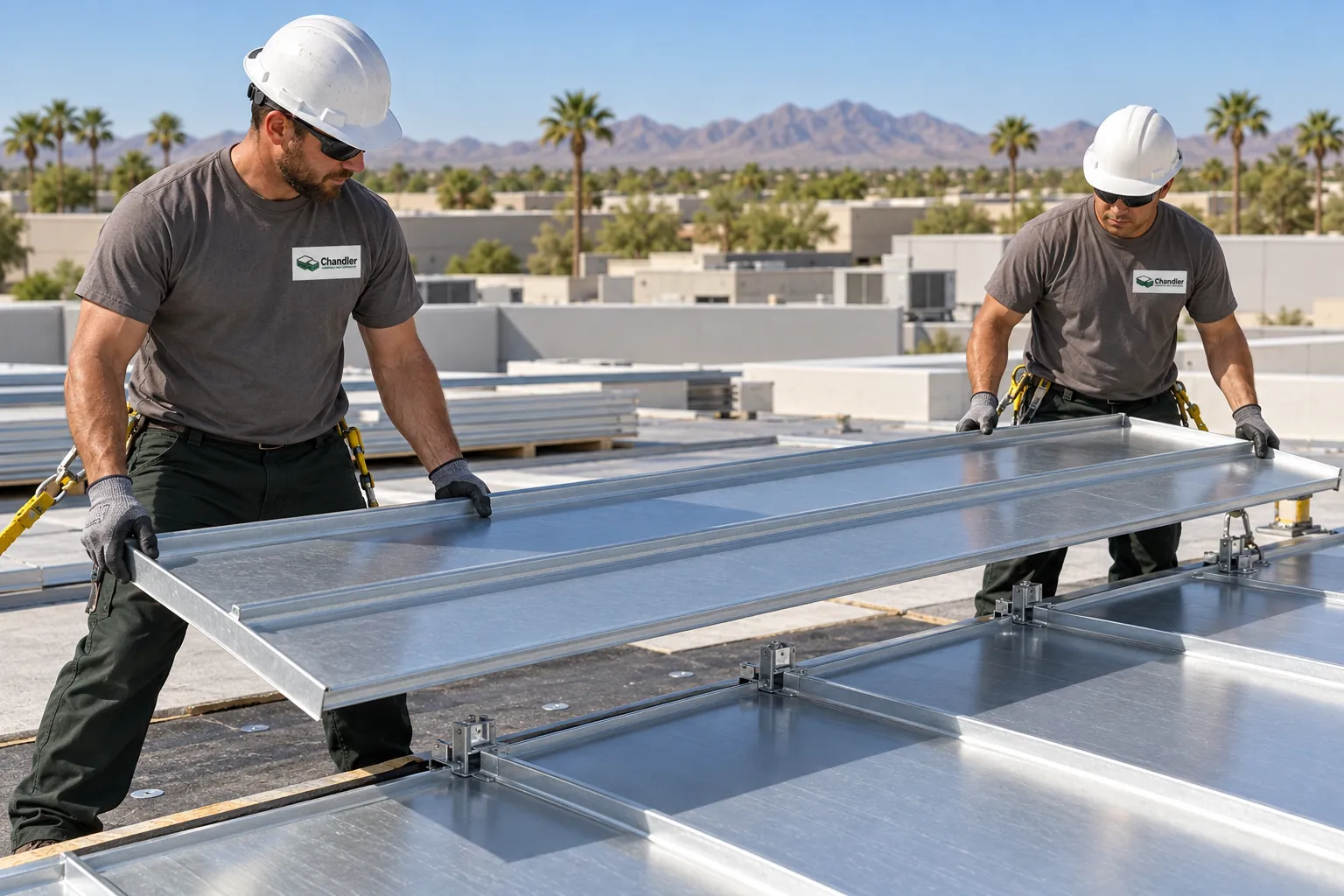
As a commercial metal roofing contractor in Chandler, we repair and replace standing-seam and through-fastened metal roofs on shops, storage, and warehouse buildings.
Metal works best where the roof has slope to shed water. These signs show when panels fit and when a membrane is the better call.
Metal roofs tell you where they leak if you know where to look. Each row pairs a sign inside with the panel detail behind it.
Water drips in a straight row that matches the fastener lines above.
Heat movement loosens screws and dries out washers, letting rain past each hole.
Staff see pinholes of light from inside a storage bay.
Moisture trapped between overlapping panels rusts through the metal at the laps.
Stains run down from the highest point of the building after wind-driven rain.
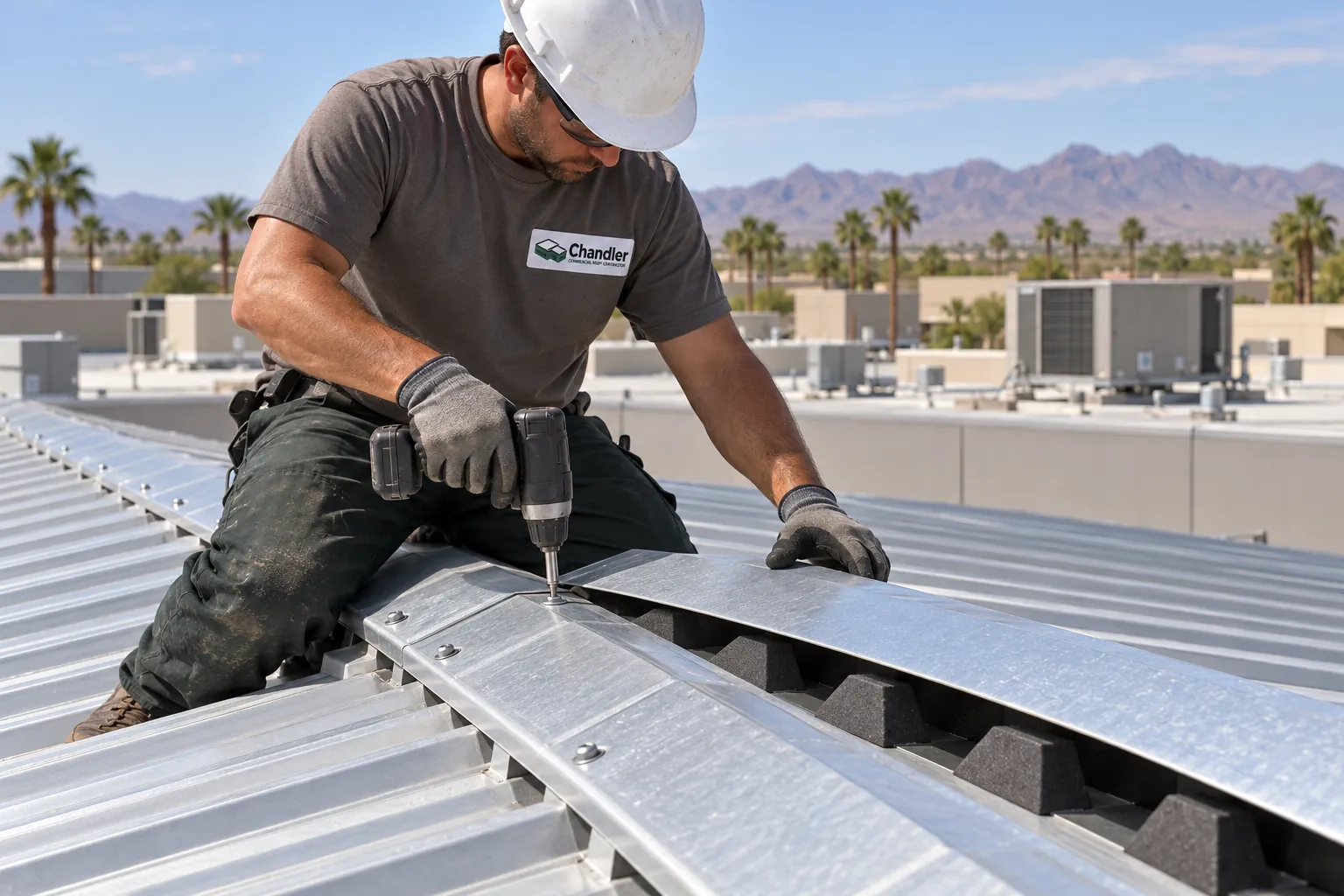
Ridge cap sealant and foam closures have dried out, and wind pushes rain under the cap.
Panels bang or rattle loudly during monsoon gusts.
Loose fasteners and torn trim let wind lift panel edges and roof corners.
Puddles form along the inside of the low wall after heavy rain.
Debris and dust back water up at the gutter until it overflows inside the wall line.
Four ways we handle a commercial metal roof. Panel condition and the purlins underneath decide which one fits.
| Option | When It Fits | What It Involves |
|---|---|---|
| Fastener and washer replacement | Leaks follow fastener lines on panels that are still solid | Pull worn screws, install oversized fasteners with new washers, and seal each one |
| Seam, ridge, and trim reseal | Open laps, dried ridge cap sealant, or loose trim | Clean and reseal laps and ridge caps, replace foam closures, and refasten trim |
| Coating over a solid metal roof | Panels are structurally solid with surface rust only | Treat rust, seal fasteners and laps, then apply a coating system made for metal |
| New standing-seam panels | Panels rusted through or past repair across large areas | Remove old panels in sections, check purlins, and install new standing-seam panels and trim |
Metal suits Chandler heat and summer storms when it is kept tight. These are the gains owners see from a well-kept metal roof.
Sloped panels shed heavy rain quickly, so water spends little time on laps and fasteners.
Light-colored or coated panels reflect sunlight well and keep the roof surface cooler.
With routine care, a metal roof commonly reaches 40 years or more, longer than most membrane roofs.
Standing-seam panels fasten to the purlins of pre-engineered shops and storage buildings, matching the existing frame.
Most upkeep is fastener, washer, and ridge cap work, done panel by panel without tearing off the roof.
Tell us roughly how old the panels are and where the rust or drips show. We will check the laps, fasteners, and purlins underneath.
(623) 310-0186Call UsMetal work follows five steps, from checking every lap to the final walk along the ridge.
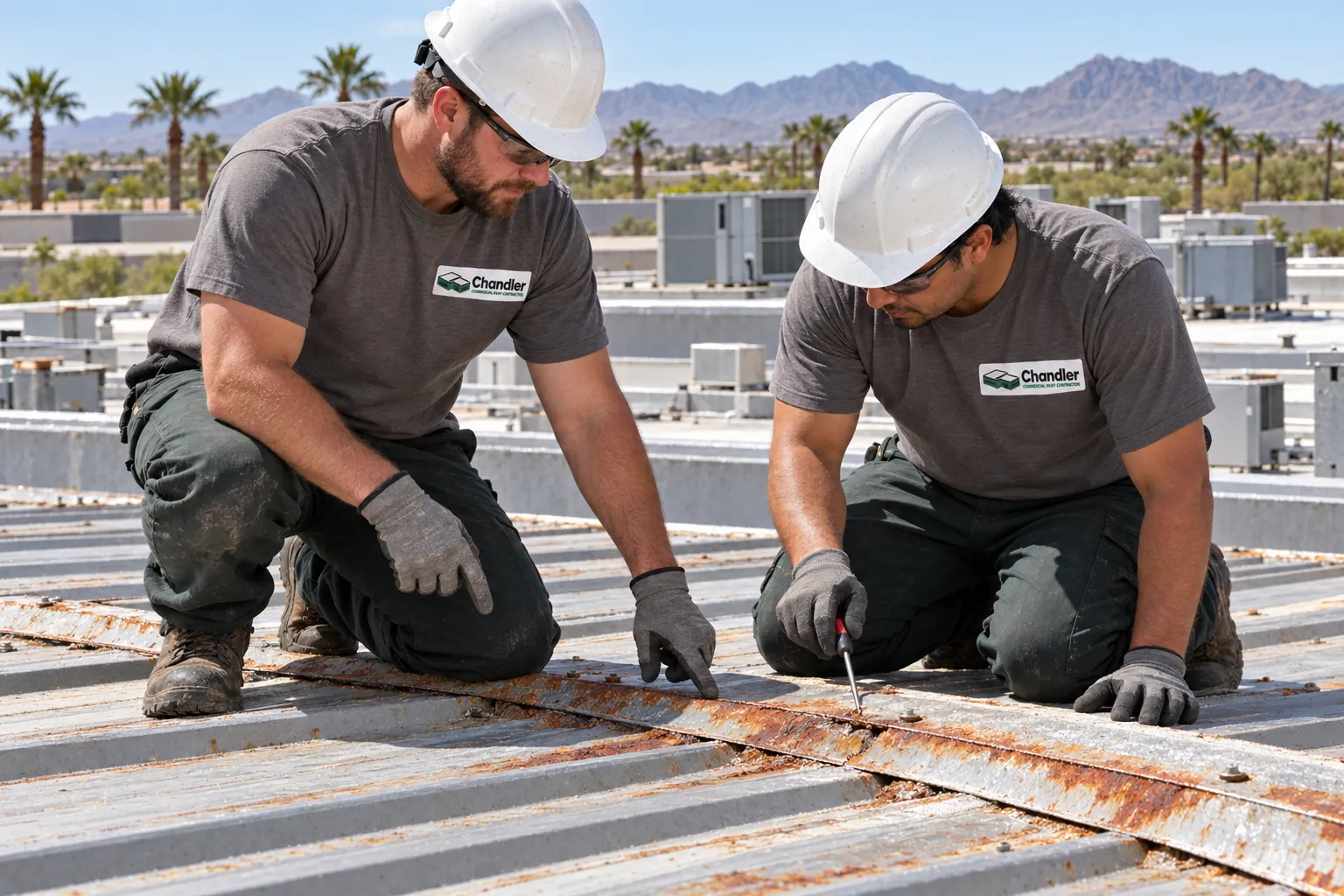
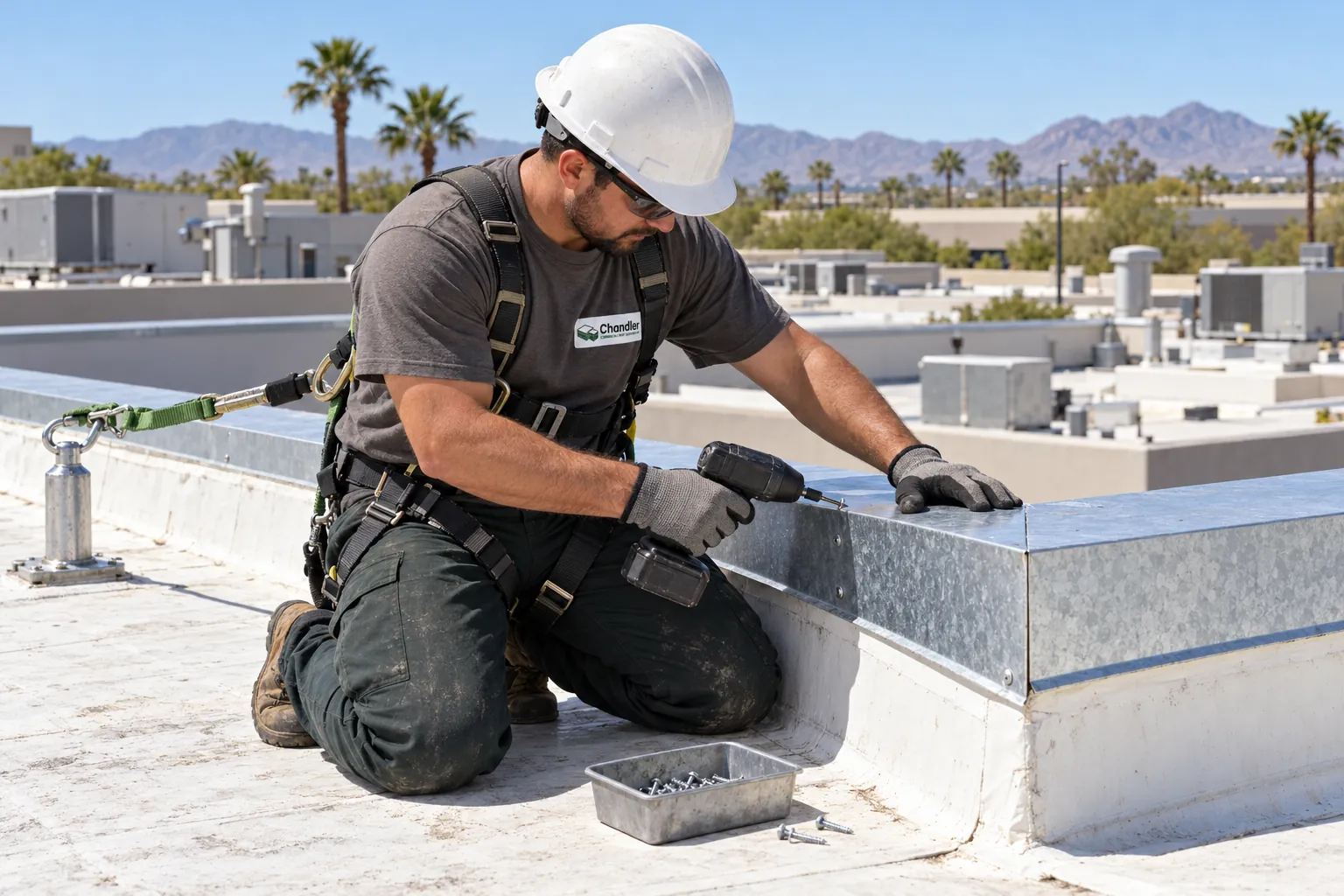
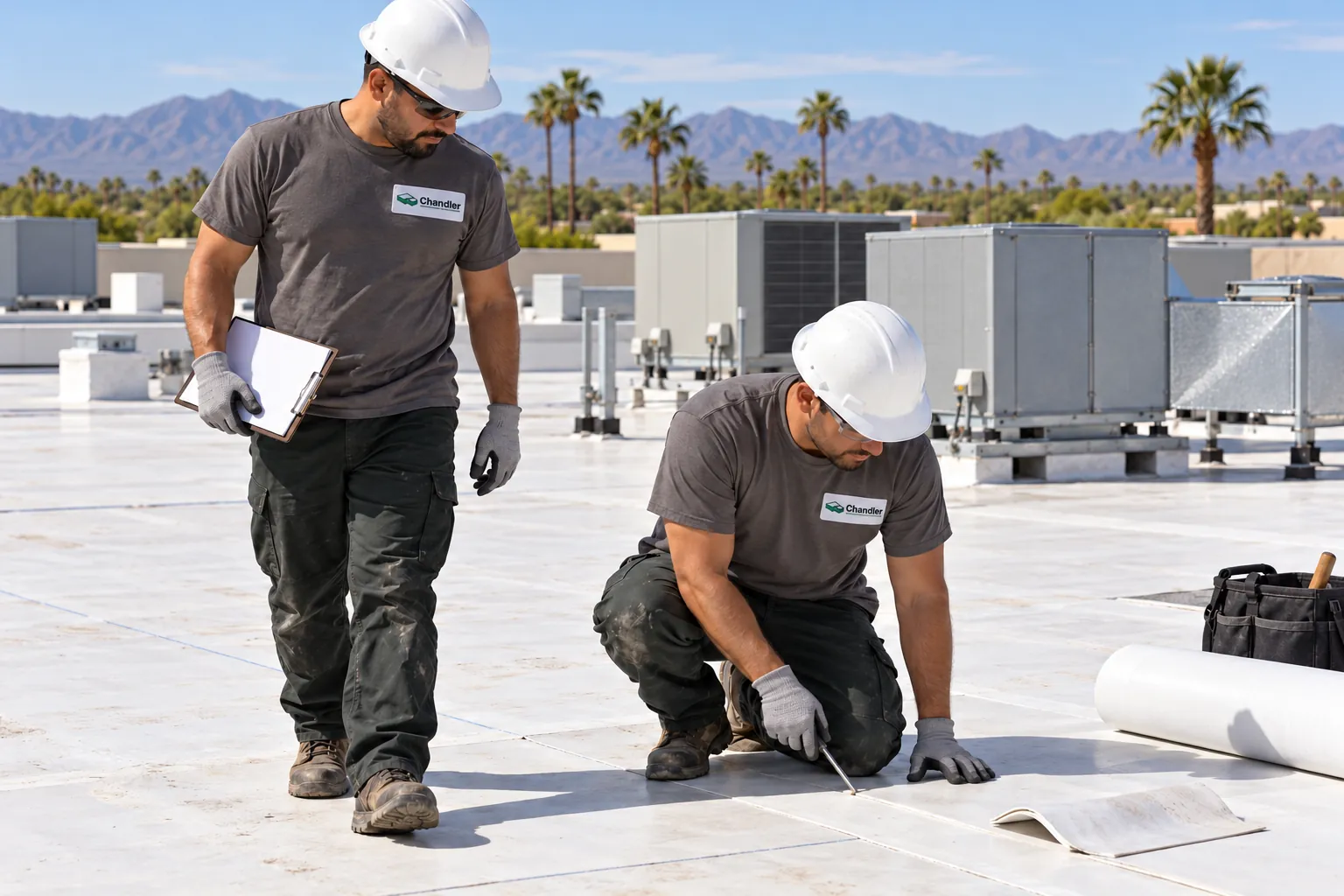
We walk the panels, test fasteners for looseness, and mark rust at laps, cut edges, and trim. Inside, we check purlins and look for daylight to find holes that are hard to see from above.
Solid panels with loose fasteners get fastener and sealant work. Panels rusted through across large areas point toward new standing-seam panels, and we show you the photos behind each call.
Rust is wire-brushed and treated, old sealant is cut out of laps and ridge caps, and loose trim and edge metal are pulled for refastening or replacement.
New oversized fasteners with fresh washers go in, laps and ridge caps are resealed, and foam closures are replaced. On a replacement, new panels are set and seamed over the purlins.
A final walk checks every fastener row, ridge cap, and gutter. Debris is cleared from scuppers, and you get photos of each completed roof area.
Many metal buildings sit beside low-slope roofs. These two services come up most often next to metal work.
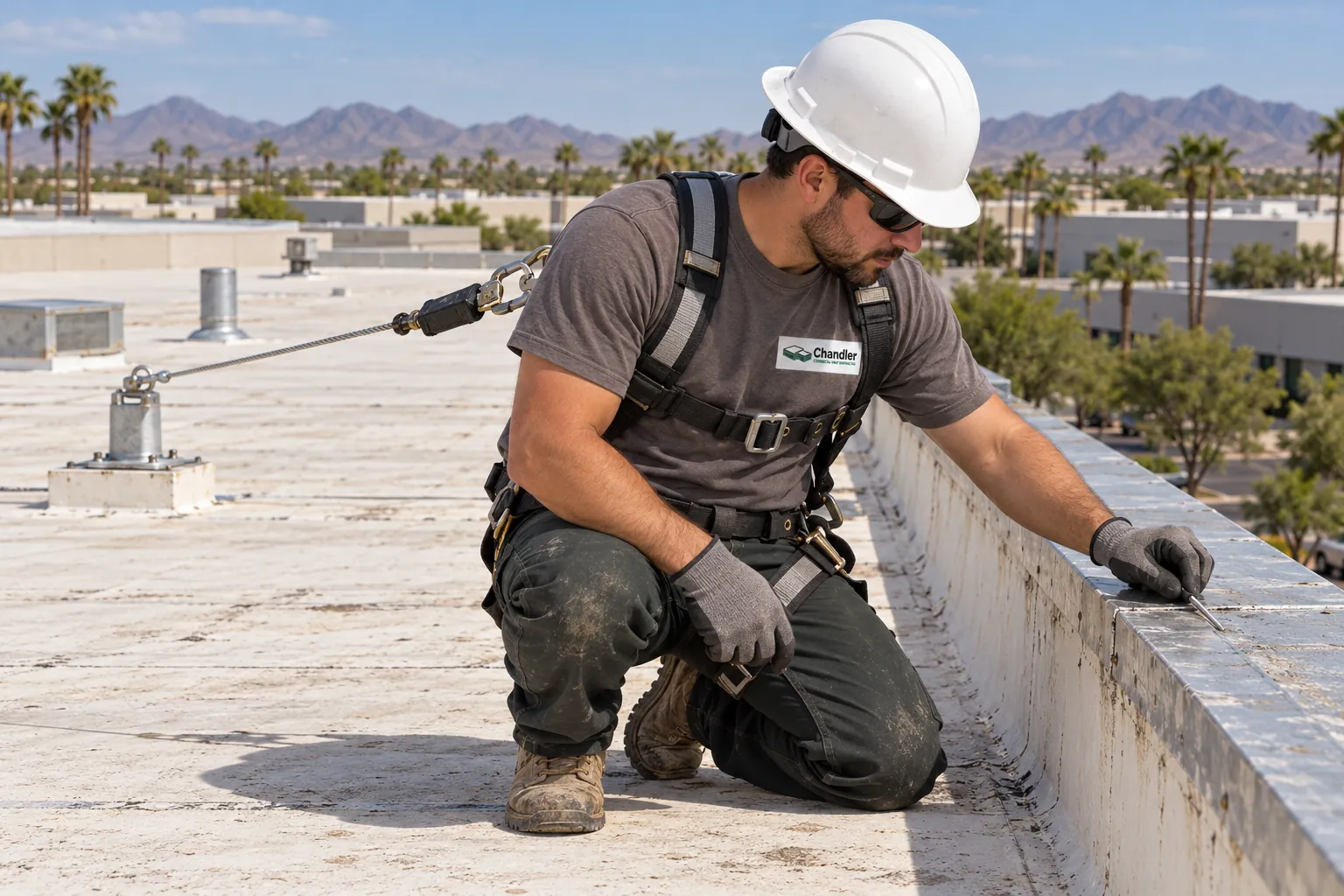
Plant campuses mix metal storage buildings with large membrane roofs, and our industrial work covers the stacks, curbs, and walk pads on those.
Best for: Plants and large campuses
Industrial roofing in Chandler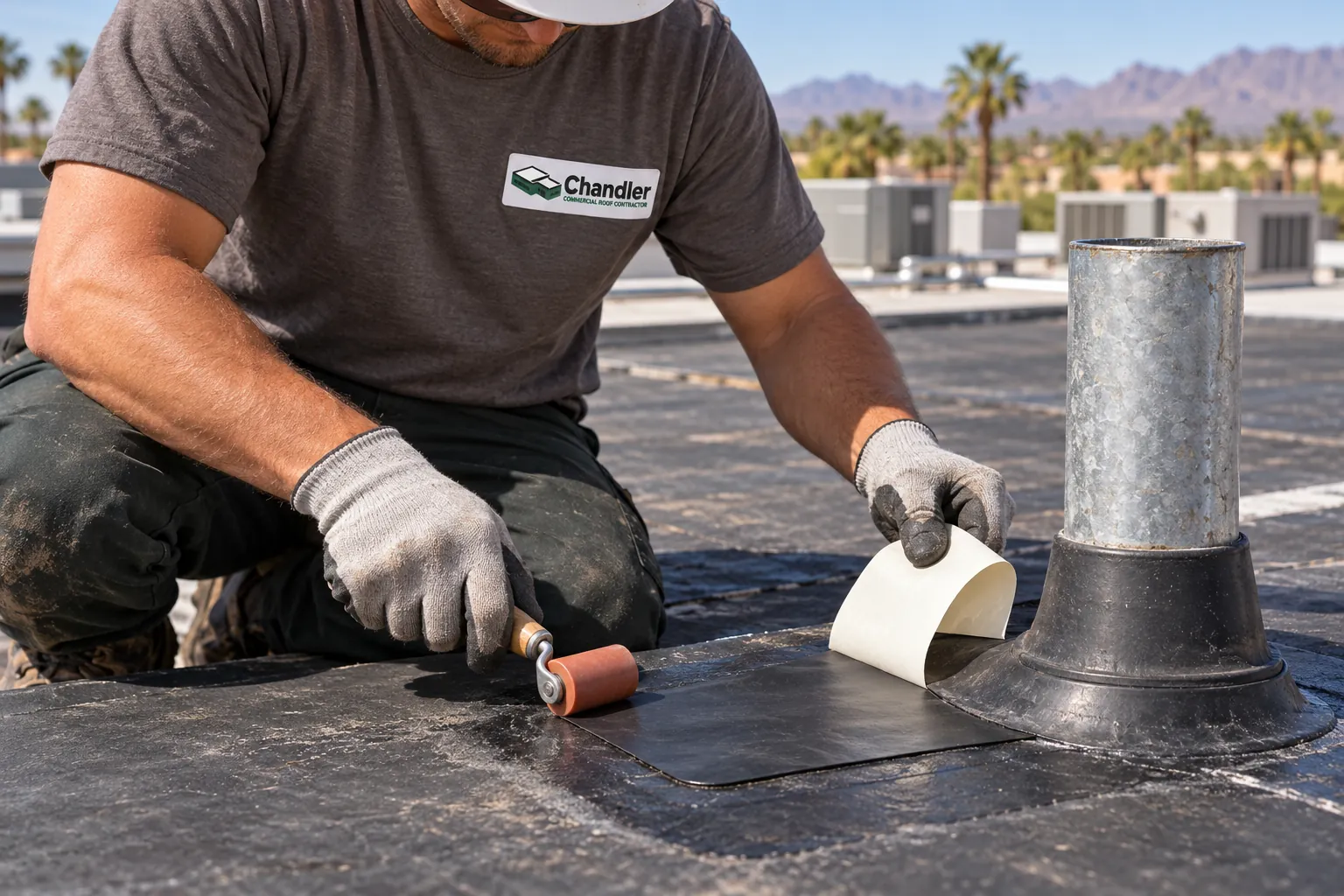
Flat additions and office wings attached to metal buildings often carry EPDM, which handles the pipes and joints where the two roofs meet.
Best for: Flat additions and office wings
EPDM roofing in ChandlerAnswers about metal roofs on Chandler shops, storage buildings, and warehouses.
They do. Light-colored and coated panels reflect sunlight well, and sloped metal sheds monsoon rain fast, which is why shops, storage buildings, and pre-engineered structures use it.
The heat does move the metal, so fasteners loosen and seams open over time. Through-fastened roofs need regular checks, and the usual work is new fasteners and washers, resealed seams and ridge caps, a coating over solid panels, or new standing-seam panels.
Forty years or more is a fair expectation with routine care. Loose fasteners, failed sealant, and rust at cut edges are what shorten it. Checking fastener rows and laps after each monsoon season and resealing as needed keeps a metal roof close to that range.
Through-fastened panels are screwed straight through the face into the purlins, so every screw becomes a possible leak once its washer ages. Standing-seam panels hold to the frame with hidden clips and join at raised seams, which leaves far fewer exposed holes and lets the metal move with heat.
Heat makes the panels grow and shrink every day, and that movement works screws loose and wears out their washers. We replace them with oversized fasteners and new washers so they bite into fresh metal. Badly elongated holes get a patch or a new panel.
Surface rust can, when the panels are still solid. We brush and treat the rust, seal the laps and fasteners, and coat the roof if that fits the building. Rust that has eaten through at laps or cut edges across large areas means those panels need replacing.
We remove the loose ridge cap screws, cut out the dried sealant, and replace the foam closures that block wind-driven rain. The cap goes back on with new sealant and fasteners, or we fit a new cap if the old one is bent or rusted through.
It can, on a bare metal building with no insulation under the panels, where rain and hail sound louder. Insulation under the panels or a solid deck below quiets it, and tight fasteners stop the rattling that loose panels make in monsoon wind.
Tell us the building type and what you see at the laps and fasteners. We will inspect the panels and lay out repair or replacement options.
Leave a name and number and we will call you back about your commercial roof.
Or call now: (623) 310-0186