Grit On Filters
Filter changes show grit sooner than the maintenance schedule expects.
Debris Near Intakes
Granules, dirt, or old roofing debris sit beside makeup-air units and get pulled in.
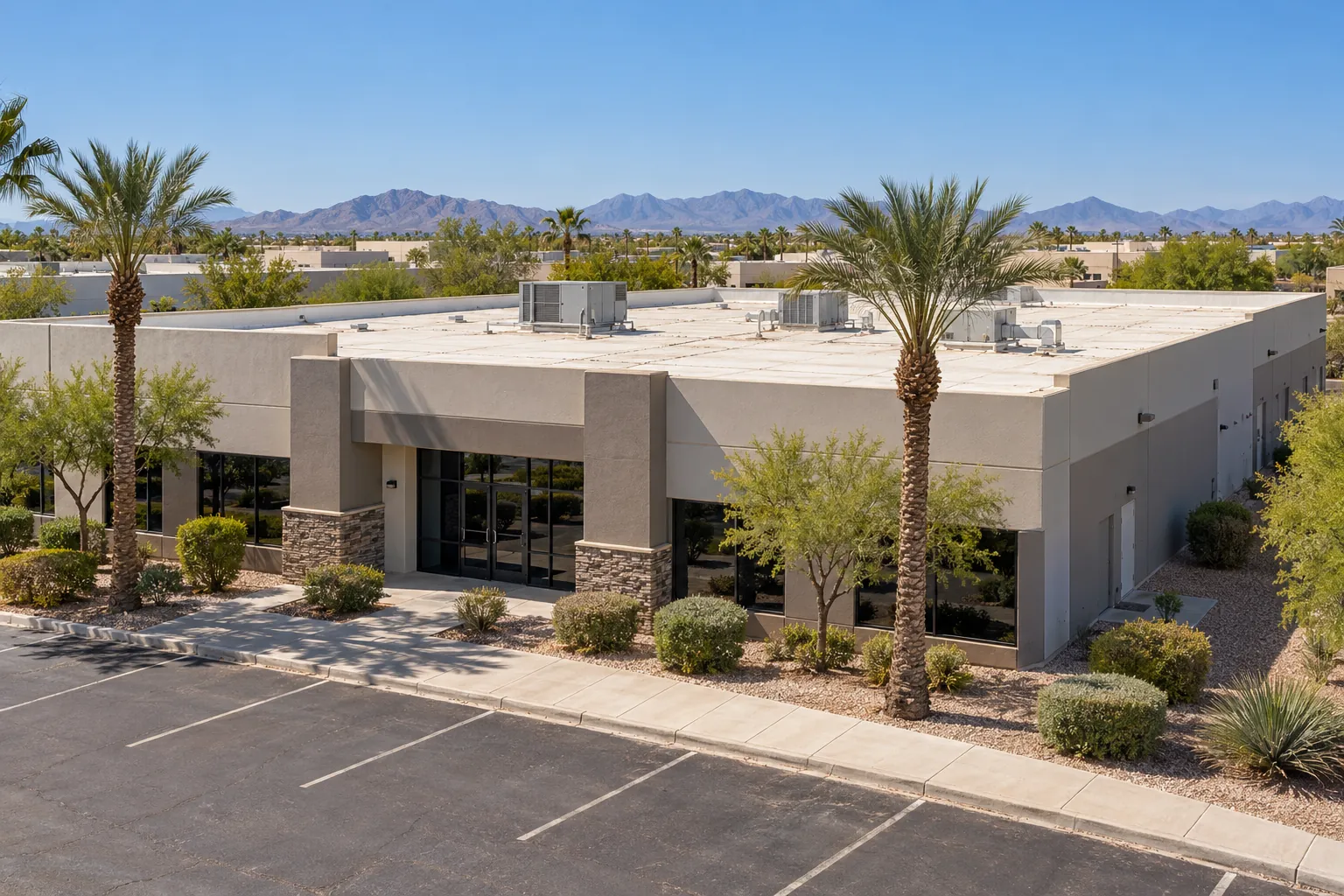
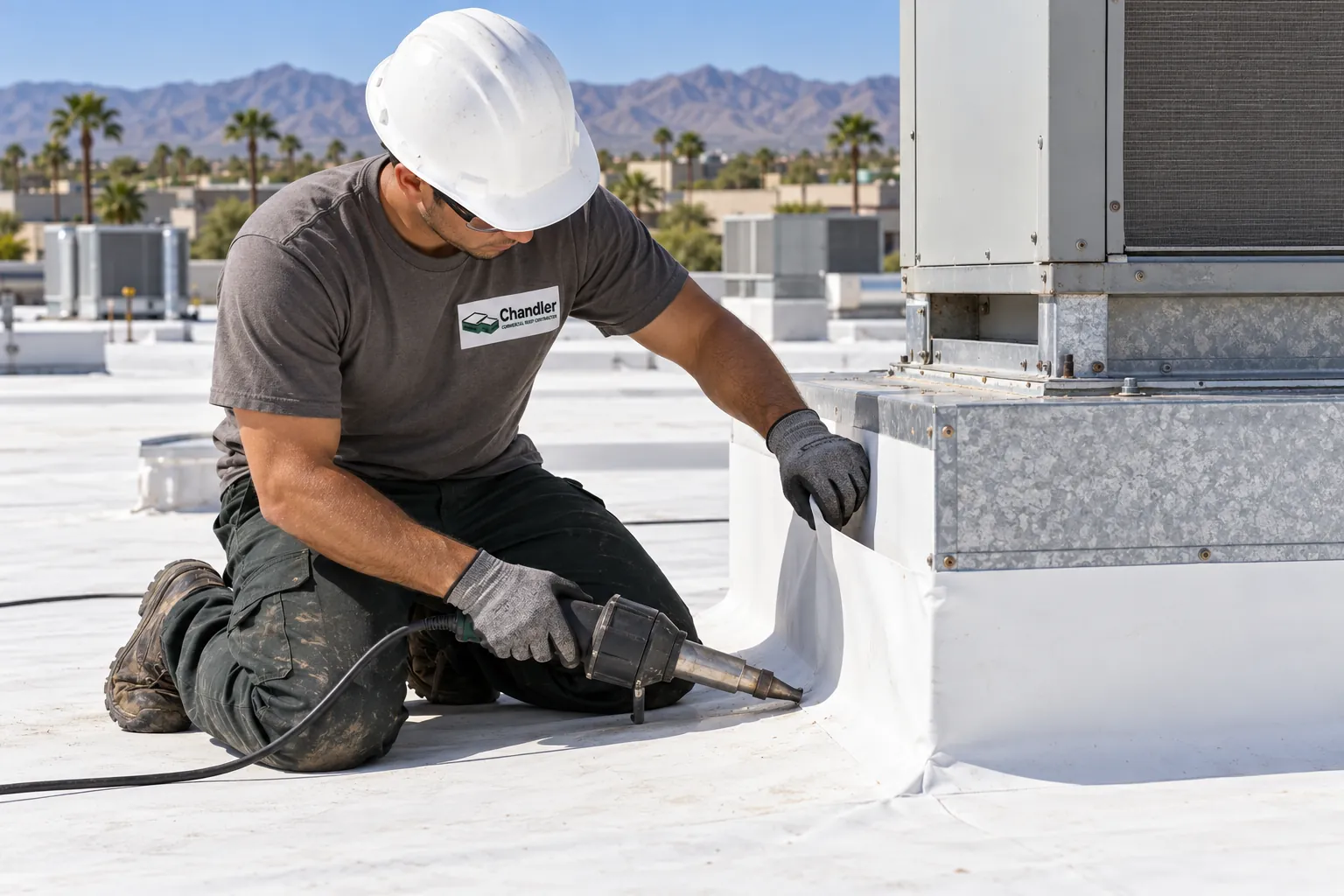
As a Price Corridor commercial roofing contractor, we roof Chandler manufacturing plants and technology campuses in sections, with air intakes covered and work timed around production shifts.
The Price Corridor holds semiconductor, aerospace, and technology campuses where the roof sits above clean production space. Makeup-air units and exhaust stacks pull from and vent to the same roof we are working on, so dust, fumes, and debris have to stay away from intakes.
We plan each section with the facility manager: which units can shut down, when shifts change, and where crane lifts can land. Roof permits go through City of Chandler Development Services, Building Safety.
On production buildings, roof trouble shows up as a facility issue first. These pairs tie each one to the roof detail above.
Filter changes show grit sooner than the maintenance schedule expects.
Granules, dirt, or old roofing debris sit beside makeup-air units and get pulled in.
Equipment gets covered after water drips through a deck seam onto a production line.
Process piping supports have worn through the membrane where they rest on the roof.
Staff notice fumes from roof work or exhaust drawn back inside.
Stack flashing has split, and heat from the stack has aged the membrane around it.
Contractors go up often to service fans, units, and piping.
Foot traffic has worn the membrane bare along paths without walkway pads.
Security reports loose material on the roof after monsoon winds.
Edge metal along the long roof perimeter has pulled loose between fasteners.
What plant and campus managers get from a roof built and repaired around production.
Covered intakes and bagged debris keep roofing dust out of makeup-air units during the job.
Sealed deck seams and pipe supports stop drips onto production equipment below the roof.
Walkway pads along service paths spread the foot traffic that wears through the roof near units.
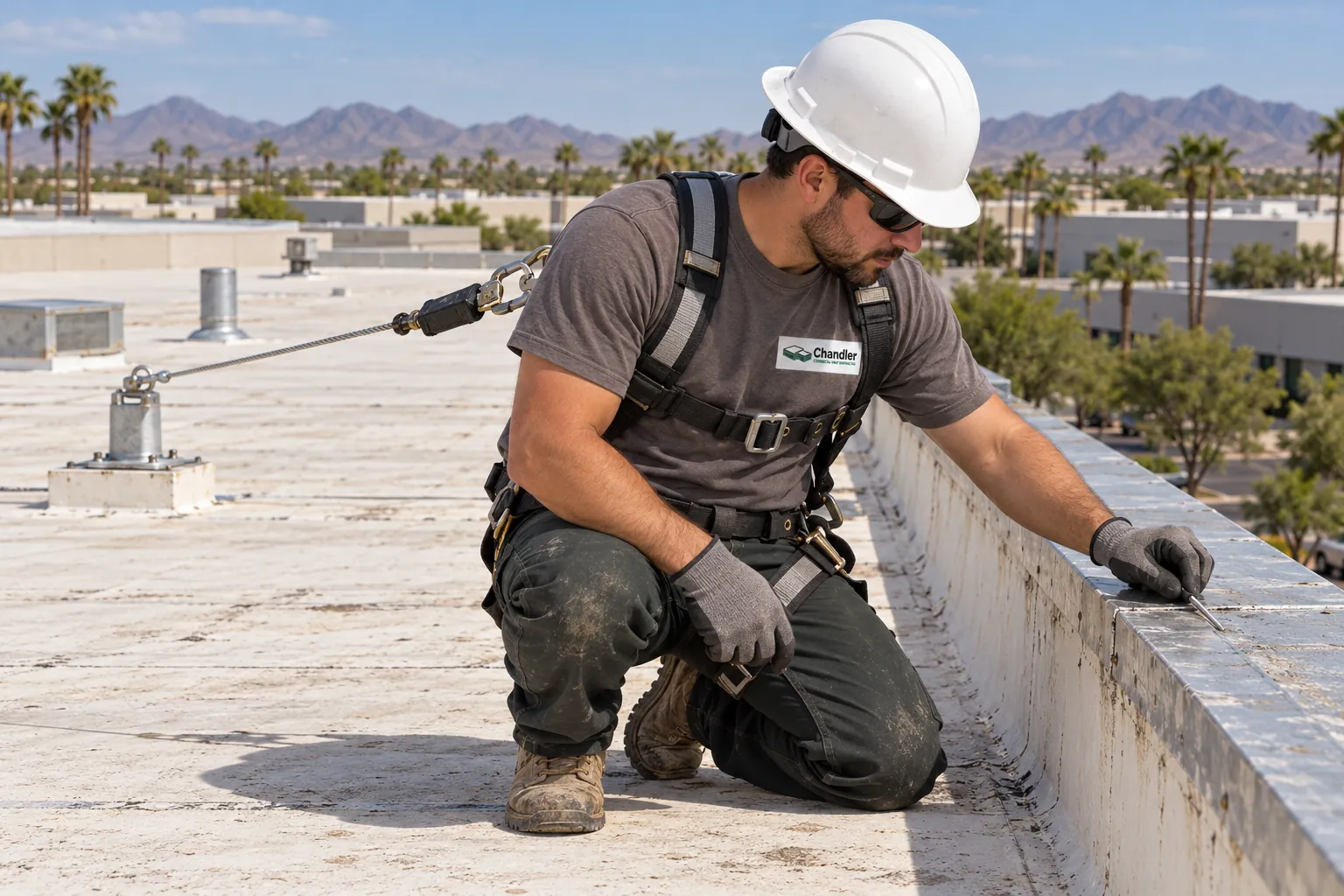
Fall-protection points and marked routes give service contractors a set path across the roof.
Section-by-section tear-off, with nothing left open overnight, fits roof work into shift calendars.
Plant and campus roofs here usually take one of these two approaches.
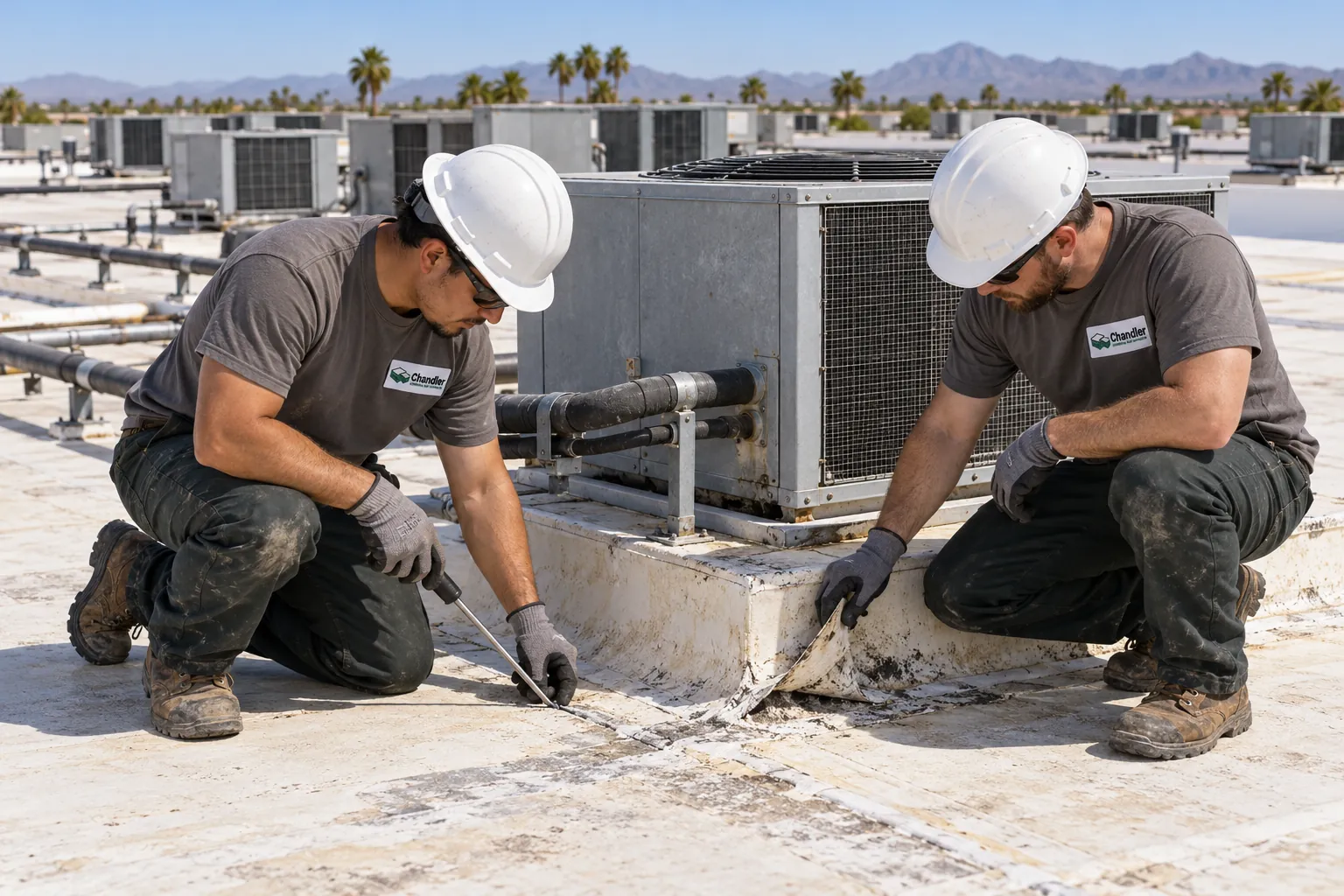
Large footprints with exhaust fans, process piping, and heavy units need phased tear-off, sealed penetrations, and walk pads for service crews. We plan crane lifts and noisy work with the facility manager.
Best for: Manufacturing plants and production buildings
See industrial roofing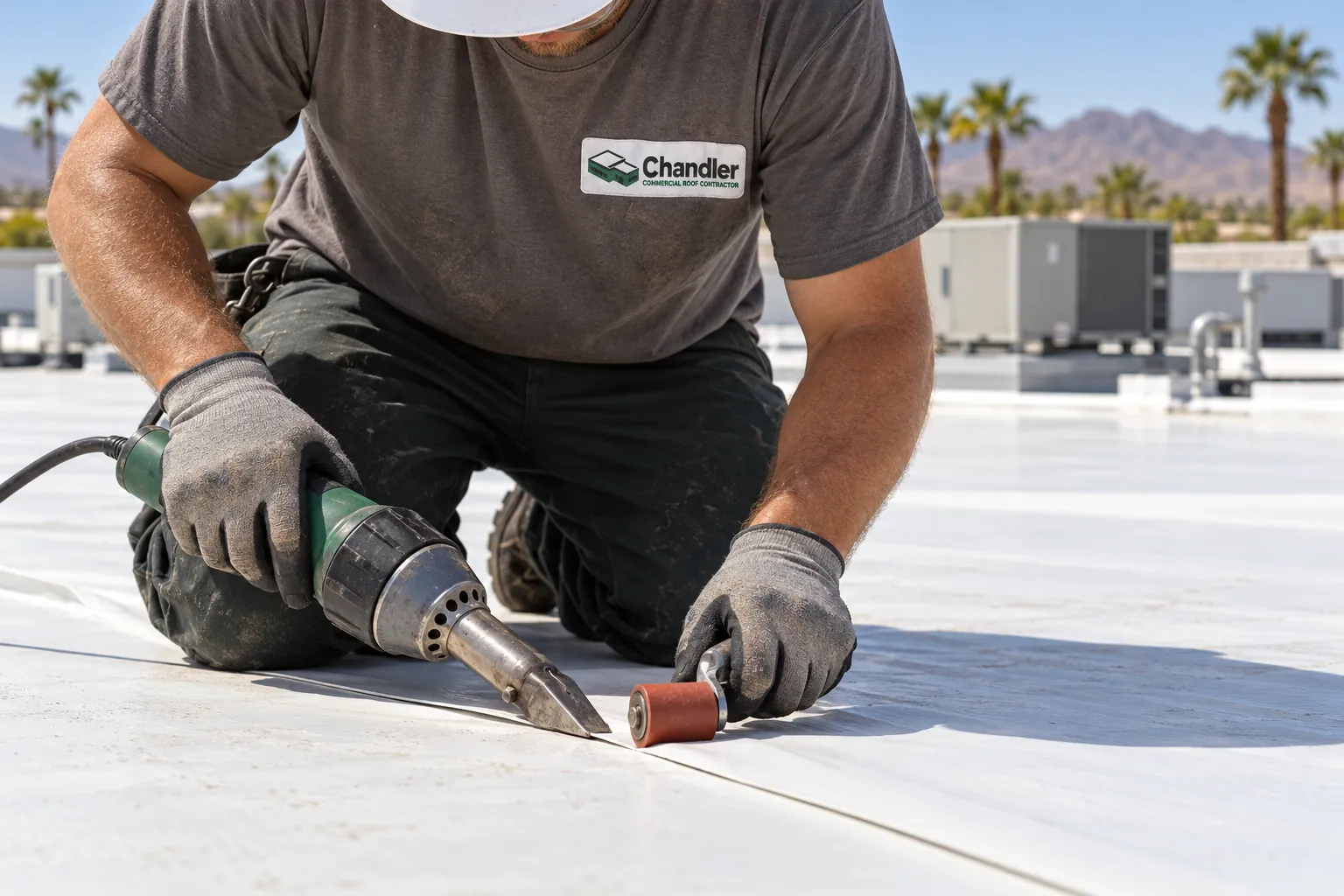
Fully adhered TPO handles heavy rooftop equipment and service traffic on office and lab buildings across a campus. Its white surface reflects heat away from conditioned space.
Best for: Campus offices, labs, and cleanroom buildings
See TPO roofingCall with the building, the units that have to keep running, and your shift times. We will plan the inspection around production.
(623) 310-0186Call UsFive steps for a Price Corridor plant or campus roof, built around the facility calendar.
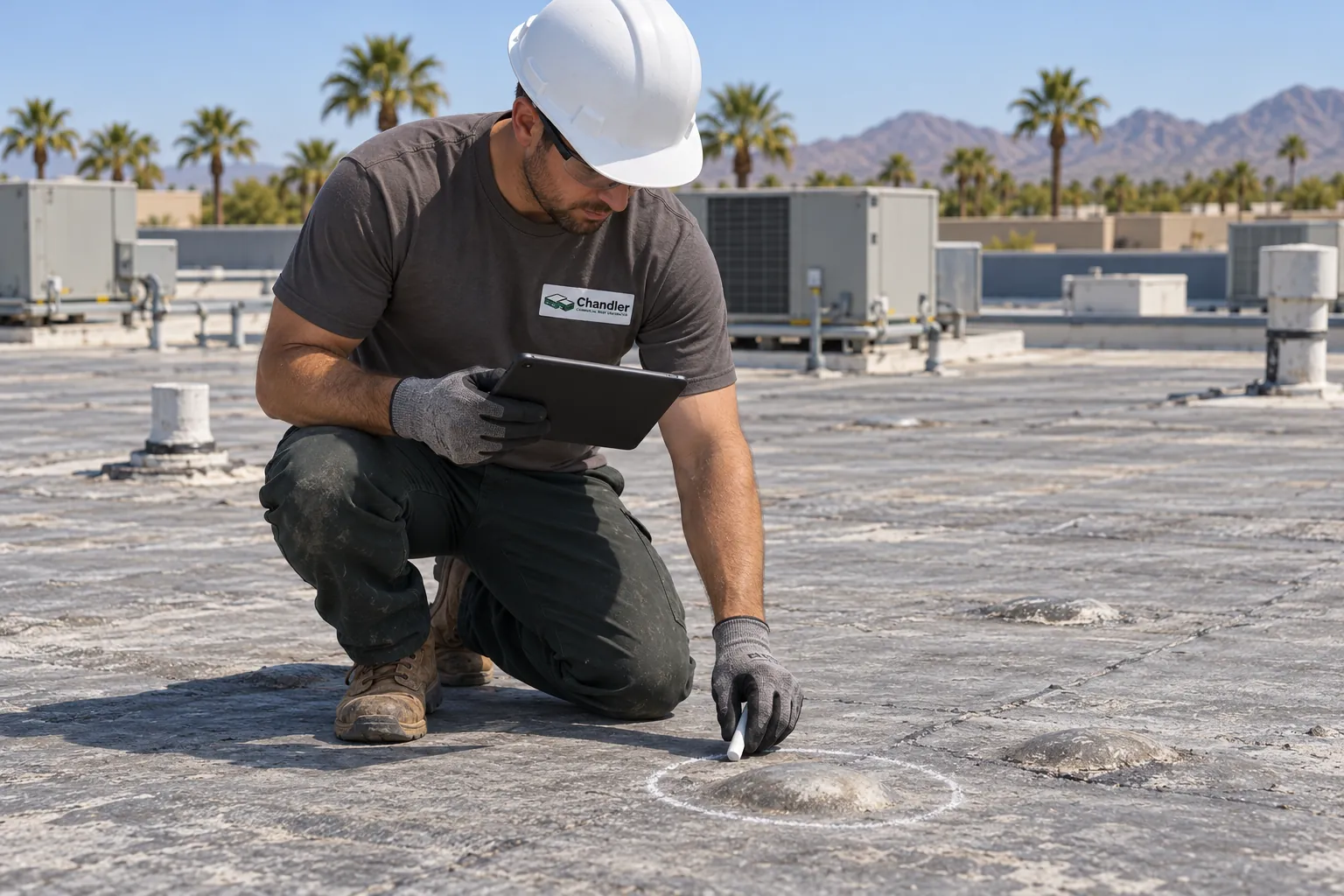
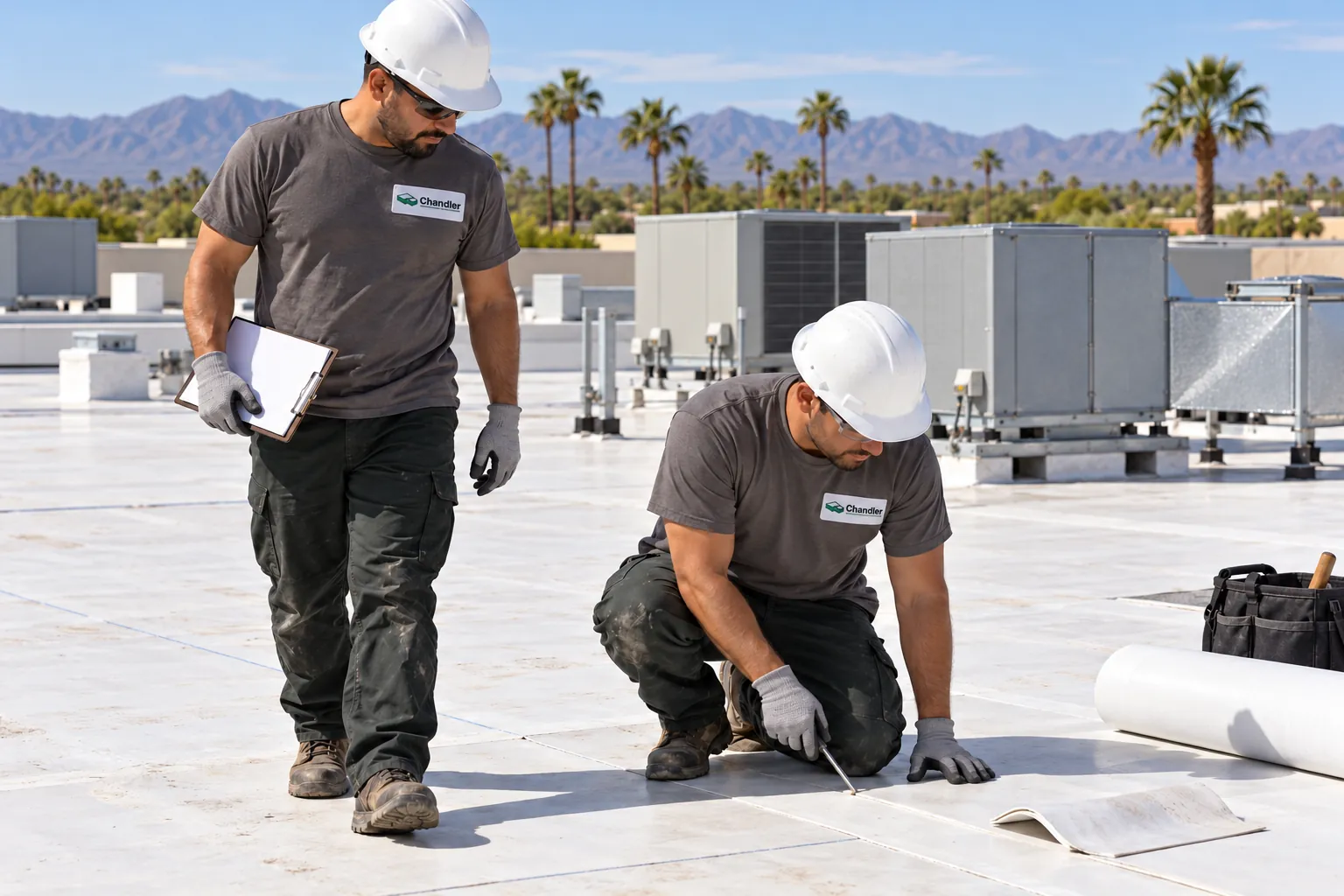
We walk the roof with facility staff, map every makeup-air unit, exhaust stack, and pipe support, and check seams, flashings, and edge metal. Core cuts near suspected leaks show whether insulation over the production floor is wet.
Shift times, units that stay running, and access rules go into a written plan. Each roof section gets a date that avoids shift changes and production peaks.
Filters and covers go on makeup-air intakes near the active roof section, and debris is bagged at the work area instead of swept across the deck.
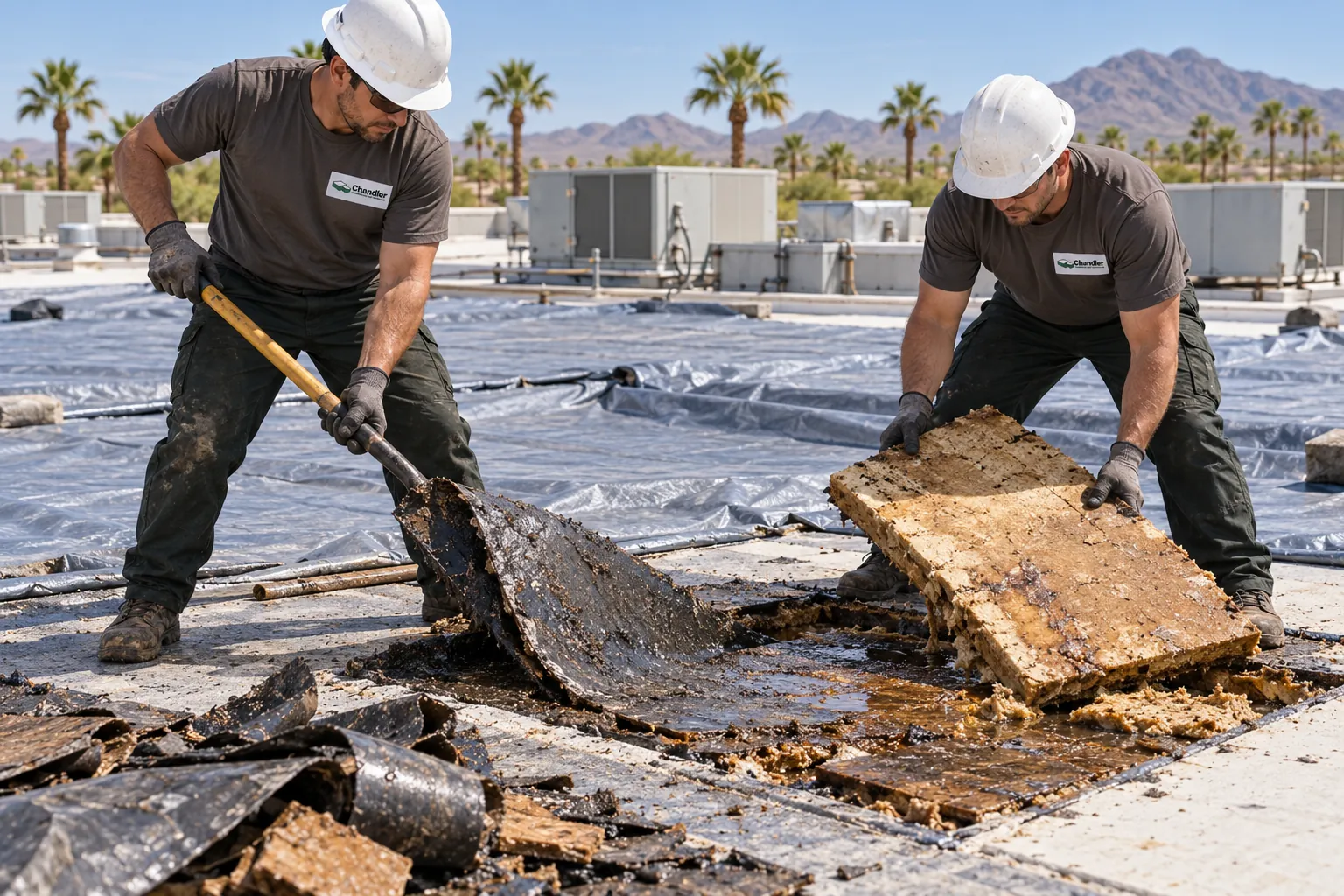
Crews remove one section at a time, install insulation and membrane, and flash pipe supports and stacks before leaving, so no open area sits exposed overnight.
Walk pads go down along service paths, intake covers come off, and facility staff walk the completed roof section with us and keep the photo record.
These nearby service areas border the Price Corridor or sit just south of it.
Tilt-up distribution buildings where TPO goes down in wide rolls around truck docks.
Clubhouse roofs south of the corridor, permitted through Maricopa County.
Retail and medical buildings where the town requires a licensed contractor for commercial roof work.
Shopping center roofs where tenants keep adding units and exhaust fans after construction.
Answers for facility managers of plants, labs, and campuses along the Price Corridor.
Yes, on most projects. We section the roof, work in phases, and close each area watertight before the end of the day so production keeps running.
Planning covers work hours away from shift changes, HVAC intakes protected from fumes and dust, materials staged away from loading docks, notice before noisy tear-off days, and crane lifts early in the morning or on weekends. In summer, crews often start before sunrise.
We cover or filter the makeup-air intakes near the active section, bag debris at the work area, and avoid power sweeping beside units. Units the plant can shut down are scheduled off during tear-off, and units that must run get the heaviest protection.
The Price Corridor is inside the City of Chandler, so roof permits go through Chandler Development Services, Building Safety. Plans submitted on or after July 1, 2025 follow the city's amended 2024 International Codes. Check the city Building Safety page for current requirements.
Fully adhered TPO, or EPDM with walkway pads, holds up under heavy rooftop equipment and service traffic. The choice comes down to the deck, the number of penetrations, and how often contractors are on the roof, which the inspection documents.
Each stack gets flashing rated for its heat, and the membrane around it is checked for heat aging. Pipe supports sit on pads or stands so they stay off the bare membrane, and every penetration is sealed before a section is closed.
We review the building's tie-off points and access routes before anyone goes up, and crews tie off near unprotected edges. Where a plant has its own roof access rules, we follow them and write them into the job plan.
Yes. Planned shutdowns are a good window for tear-off over sensitive areas, since intakes can stay off. Give us the shutdown dates early so materials, crane time, and permits are ready when the window opens, and we can split the rest of the work into normal weeks.
Tell us the building, the units that must keep running, and the next shutdown window. We will inspect the roof and plan the sections.
Leave a name and number and we will call you back about your commercial roof.
Or call now: (623) 310-0186