Stained Tiles Over A Sales Floor
Merchandise gets moved because a tile above the register turned brown after rain.
Split Seam Near A Unit
Service techs kneel on the seams beside a rooftop unit until a lap opens.
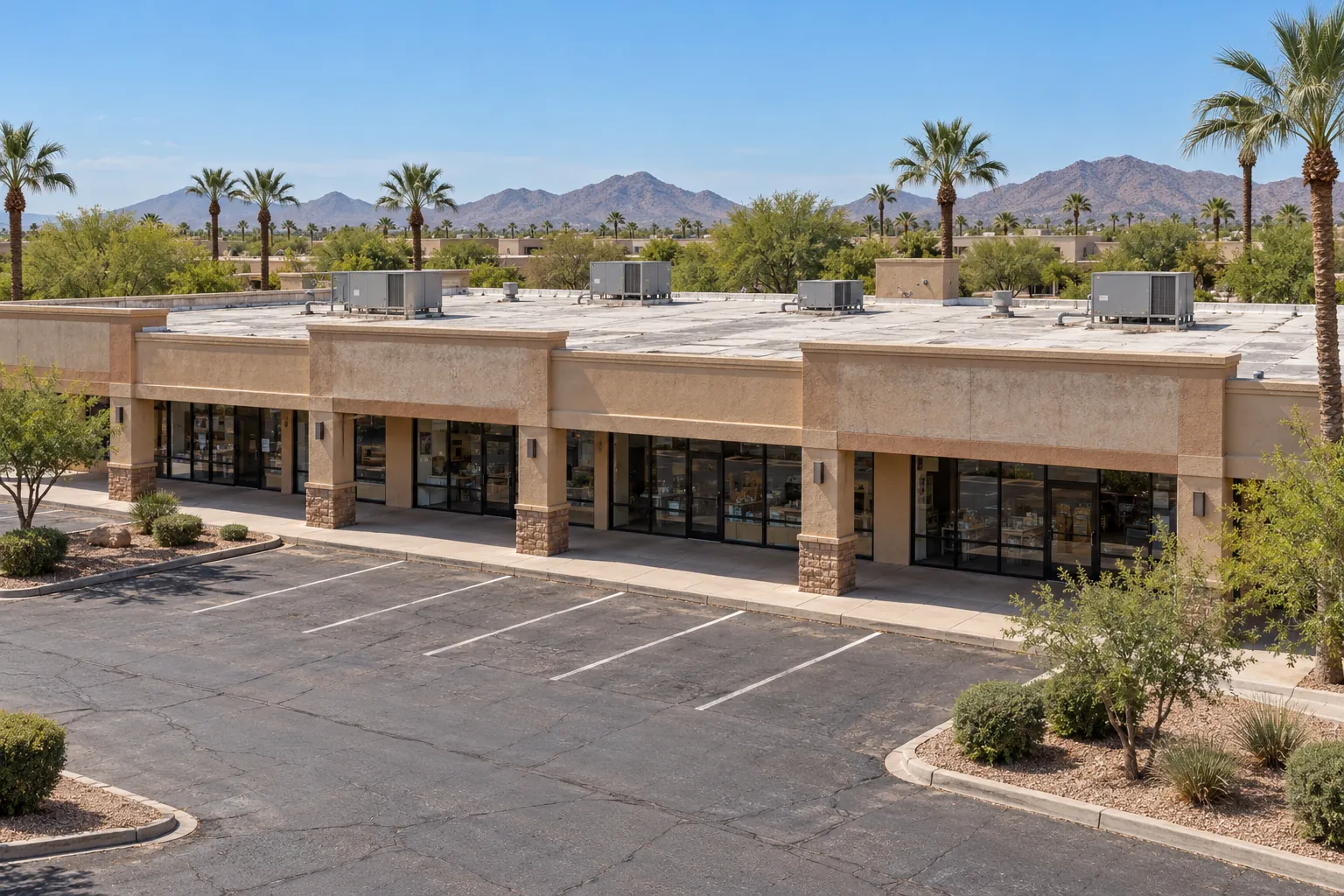
We are a Gilbert commercial roofing contractor for retail centers, medical offices, and business parks, with roof work staged suite by suite so tenants keep their doors open.
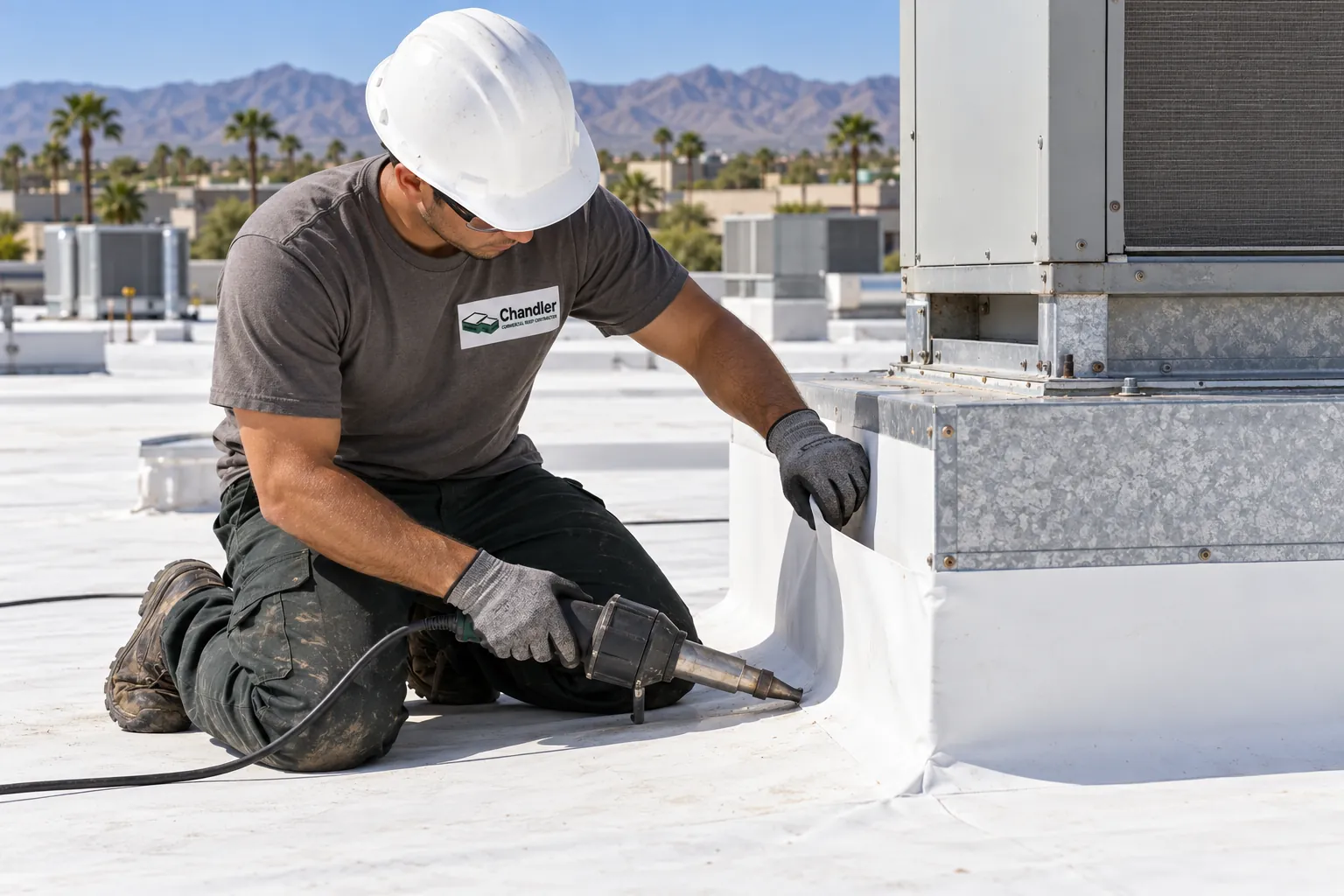
A Gilbert retail center or medical office roof covers tenants who stay open while the work happens above them. We split the roof along suite lines, so each tenant gets a known work window and a known noisy day.
Each section closes watertight before crews leave. Gilbert requires an Arizona-licensed contractor for work in commercial buildings, and owners can check any license with the Arizona Registrar of Contractors.
Retail and medical tenants usually report a roof problem before anyone climbs up. These pairs match the complaint to the roof detail behind it.
Merchandise gets moved because a tile above the register turned brown after rain.
Service techs kneel on the seams beside a rooftop unit until a lap opens.
Patients wait in exam rooms that never cool down on summer afternoons.
The white roof surface has worn to gray and now absorbs heat over the suite.
Condensate or rainwater drips from a supply diffuser in one tenant space.
Flashing at the curb corner pulled back where the unit was last serviced.
Calls come in from neighboring suites after the same monsoon storm.
Coping on the shared parapet has lifted and lets water into the wall cavity.
Rear service doors take water from above during heavy rain.
Debris fills the scupper over the service lane, so water backs up behind the parapet.
These are the results Gilbert retail and medical owners ask for when we repair or replace a roof suite by suite.
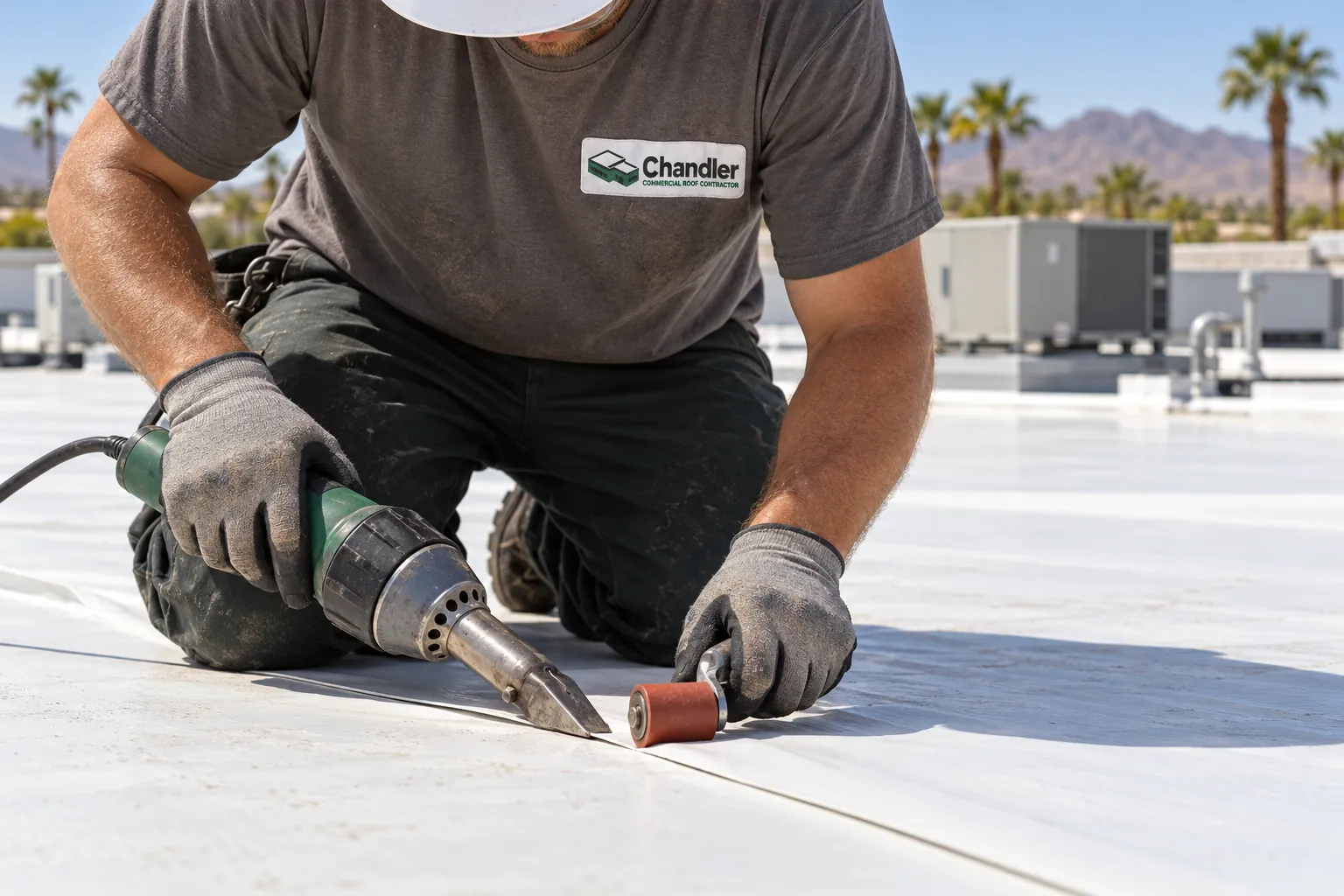
Welded seams and sealed curbs above each suite cut the repeat leak calls that pull property managers out after storms.
White TPO over a storefront or exam room reflects much of the afternoon sun off the roof deck.
Suite-by-suite phasing lets each tenant plan around one or two noisy days on the roof above them.
An older flat roof with dry insulation can sometimes take a reflective coating instead of a full tear-off.
Photos and notes tied to each tenant space show which leaks came from the roof and which came from rooftop units.
Most Gilbert retail and medical roofs end up with one of these two systems, chosen after the inspection.
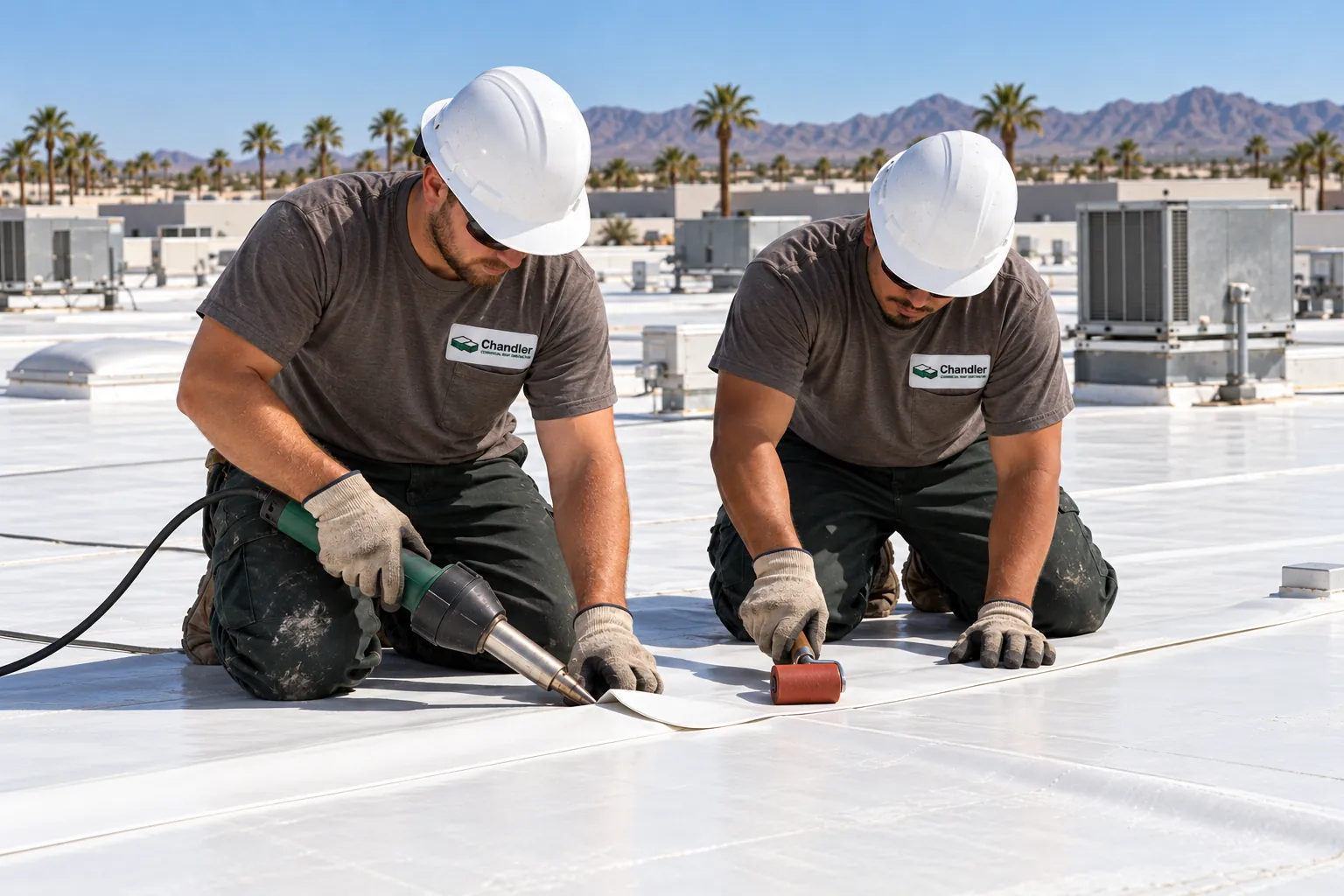
Heat-welded TPO fits the open, low-slope decks over strip retail and medical office suites. New sections tie into the existing roof edge one suite at a time.
Best for: Retail centers and medical offices over cooled space
See TPO roofing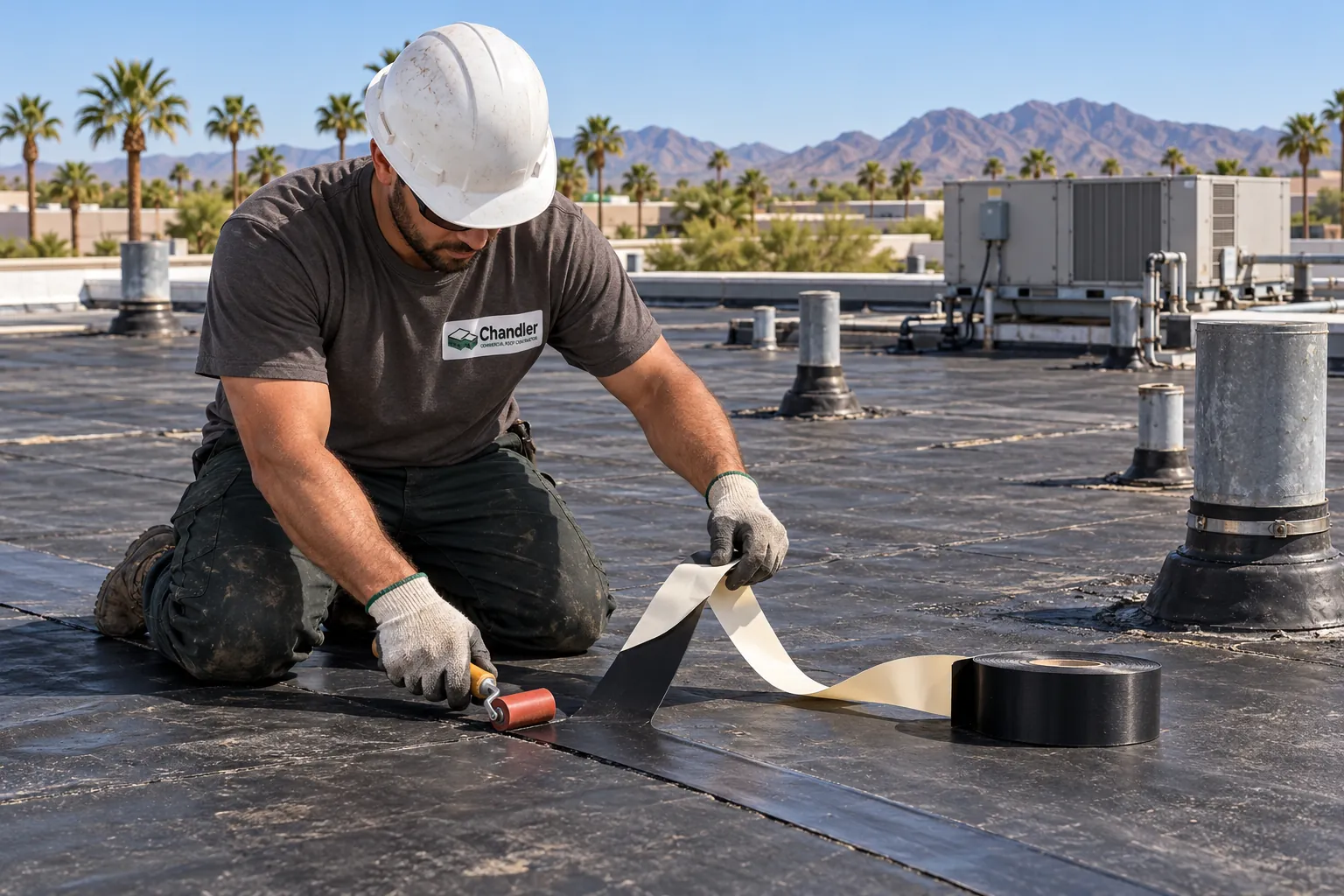
EPDM handles business-park roofs where tenants move or add HVAC units, since the rubber sheet stays flexible around new curbs and pipes. Older EPDM with dry insulation often needs seam and flashing repair only.
Best for: Business parks with frequent tenant HVAC changes
See EPDM roofingCall with the suite number, where the stain is, and whether a rooftop unit sits above it. We will check that section of roof first.
(623) 310-0186Call UsFive steps for a Gilbert retail or medical roof, written so each tenant knows when the work reaches their suite.
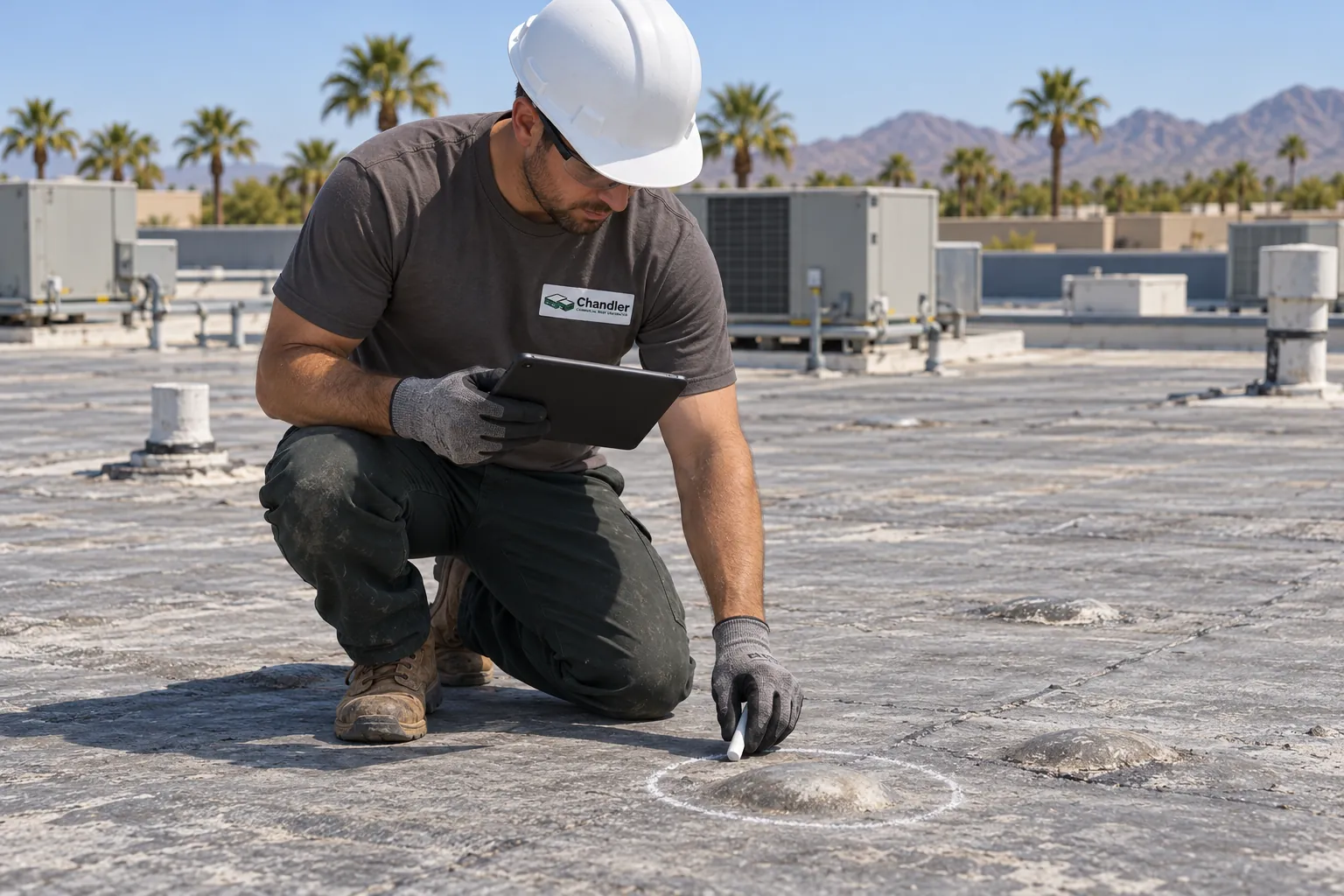
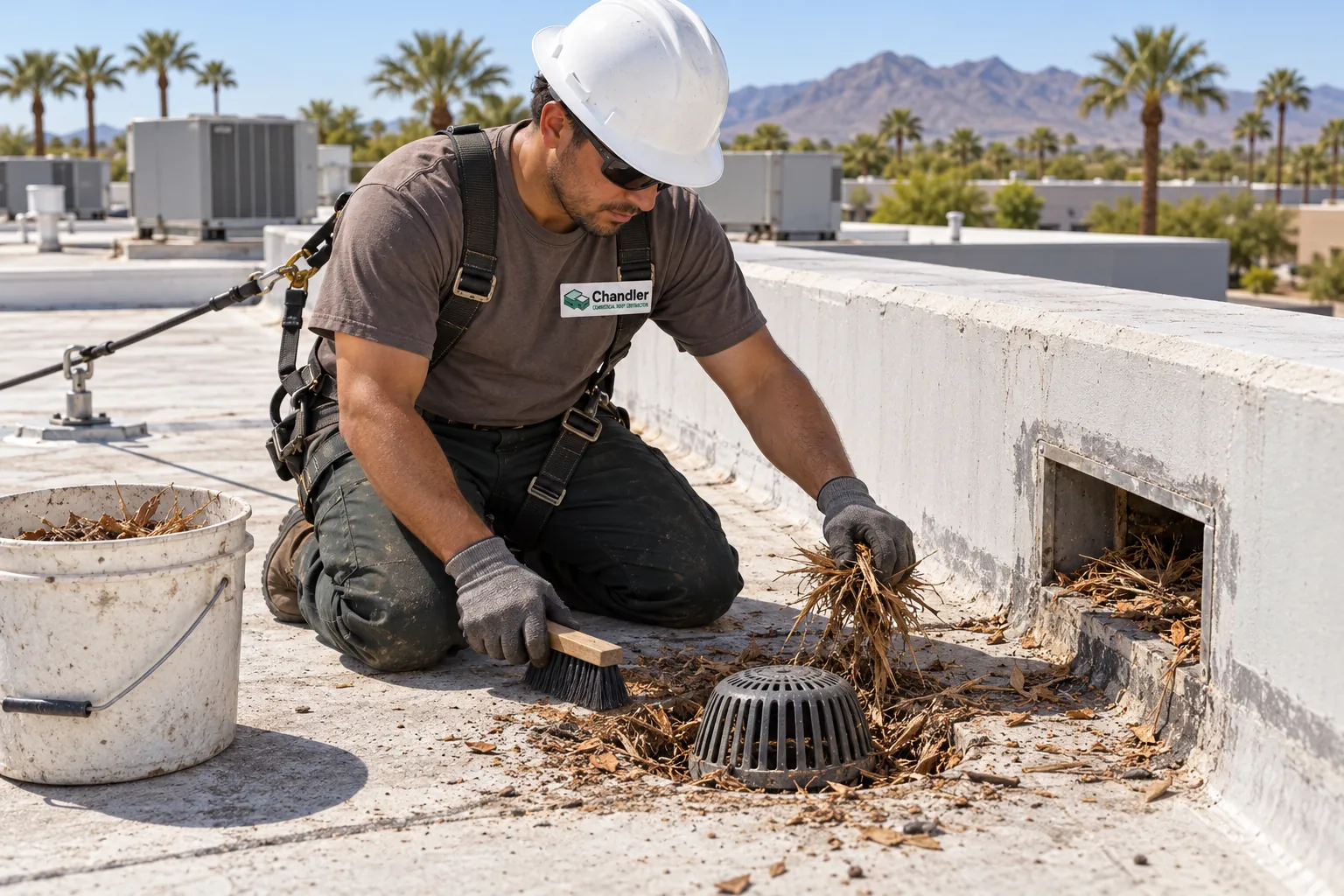
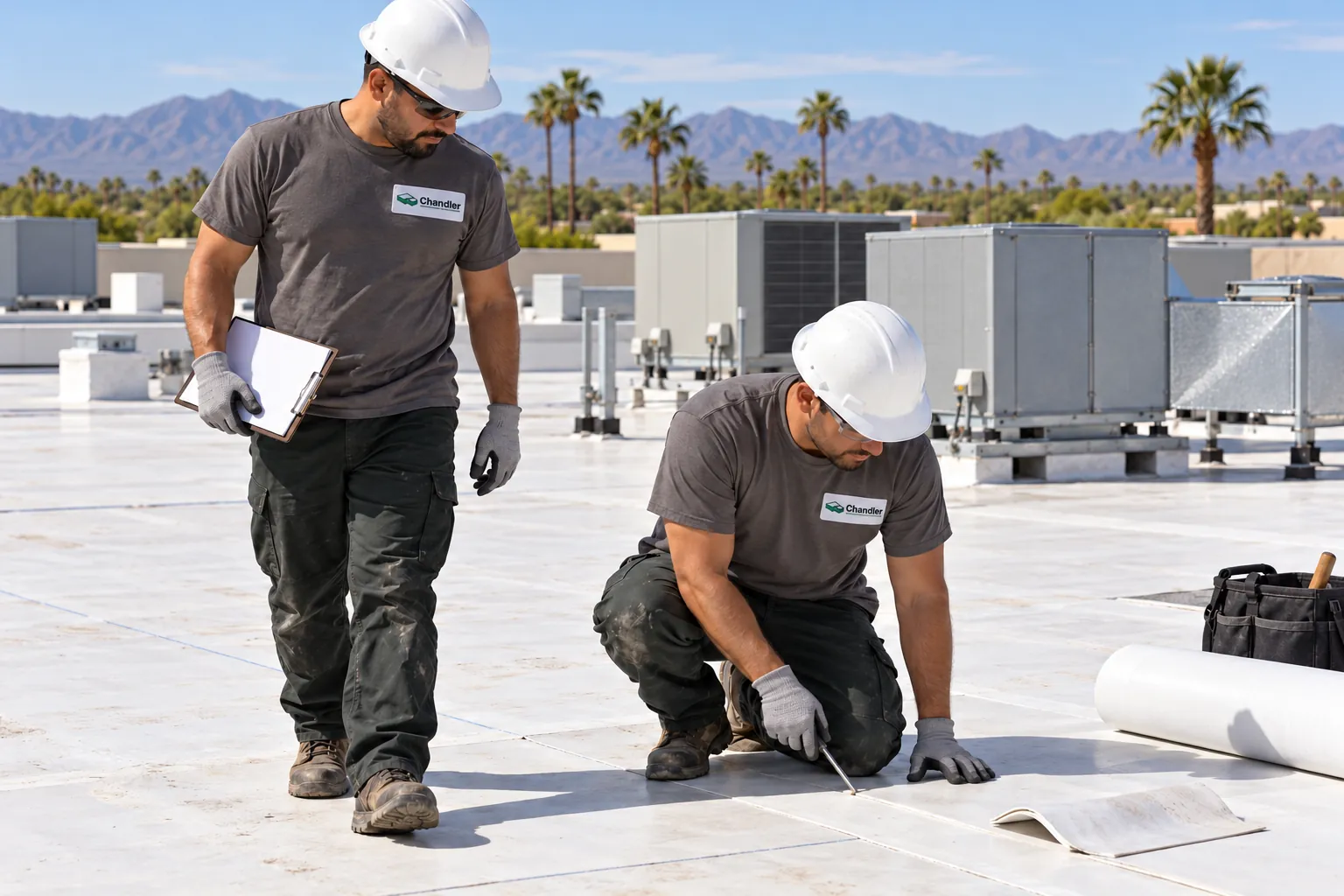
We walk every suite section, mark open seams, worn curbs, and blocked scuppers, and take core samples where tenants reported leaks. The inspection map labels each finding by suite number.
Roof sections are drawn to match tenant walls below, so one lease space never has two separate noisy days. Medical suites with sensitive rooms get their dates picked first.
Property managers get a written schedule to pass on before tear-off starts, listing dates, work hours, and which rooftop units will be shut down for curb flashing.
Each section is torn off, insulated, and covered with membrane before the crew moves on. Curbs and pipe boots above that suite are flashed on the same visit.
Seams are probed, scuppers cleared, and photos filed by suite number. You get one roof record per tenant space for later lease questions and storm claims.
Gilbert borders several of our other service areas. Each one has its own building mix and permit office.
South of Gilbert, with metal shop and storage roofs permitted by one town office across two counties.
Newer centers where tenant-added rooftop units leave fresh curbs that need flashing checks.
Chandler technology campuses where each roof section is timed around production shifts.
Clubhouse and community roofs scheduled around members who use the buildings every day.
Answers for Gilbert property managers planning roof work over retail and medical tenants.
Sometimes. A reflective coating can add years to a flat roof over a retail center or medical office when the membrane and insulation are still in good shape, and it lowers surface heat.
A coating will not fix wet insulation, a sagging deck, or failed drainage. We test adhesion and check for trapped moisture first, and the existing surface decides between silicone, acrylic, and other coating types.
Yes. The Town of Gilbert requires an Arizona-licensed contractor for work in commercial buildings. You can look up any contractor with the Arizona Registrar of Contractors before you sign, and Gilbert Development Services handles roof replacement permits.
In most cases, yes. We section the roof over exam rooms and waiting areas, cover the HVAC intakes for those suites during tear-off, and schedule the loudest work for times the office names. Each section is closed watertight before the crew leaves.
Active leaks go first. After that we start at the low end of the roof so water from later sections runs away from finished ones, then adjust the order around tenants with tight schedules, such as clinics and food service.
Most stay in place. We lift the old flashing, tear off around the curb, and flash it into the new membrane. Units that have to come off for curb work are disconnected by the tenant HVAC contractor, so those dates go into the tenant schedule ahead of time.
Heat-welded TPO gives off little odor, and EPDM seam tape has a mild smell for a short time. Adhesives and primers cause most odor, so near intakes over medical suites we cover the units and pick products and timing with the property manager.
Note which suites reported leaks, when they started, and where the stains are. Take photos of ceiling tiles and any water at rear doors. Send that list with your call so the inspection goes straight to the matching roof sections and scuppers.
Send the center layout or suite list, and tell us which tenants have reported leaks. We will inspect the roof and map out the sections.
Leave a name and number and we will call you back about your commercial roof.
Or call now: (623) 310-0186