Wet Cartons On Top Racks
Pickers find wet cartons on the top rack after a storm.
Failed Field Seam
A seam out in the field of the roof has opened where heat and foot traffic worked it.
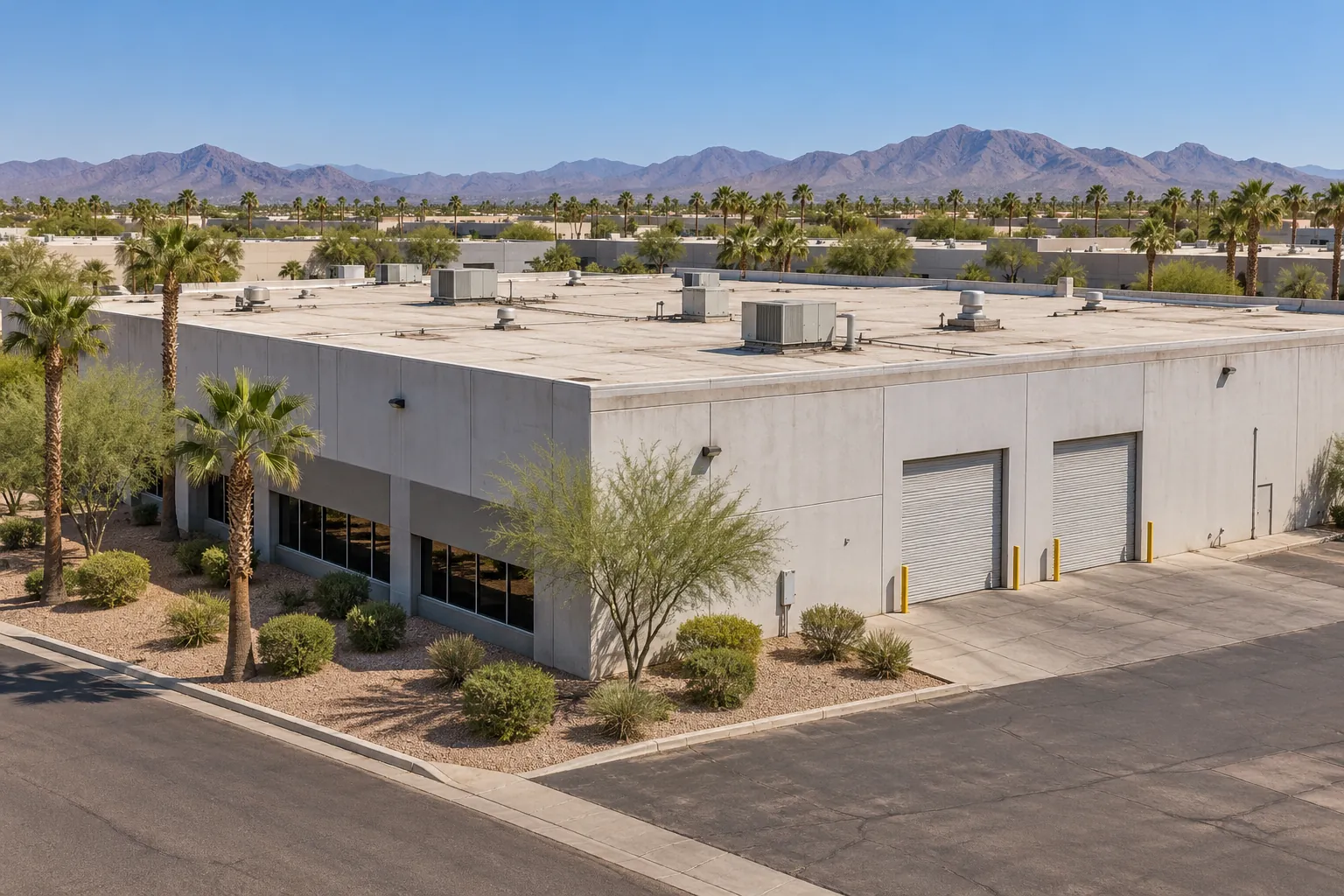
As a West Chandler commercial roofing contractor, we install, replace, and repair roofs on tilt-up warehouses, flex buildings, and light industrial sites, with staging kept clear of truck docks.
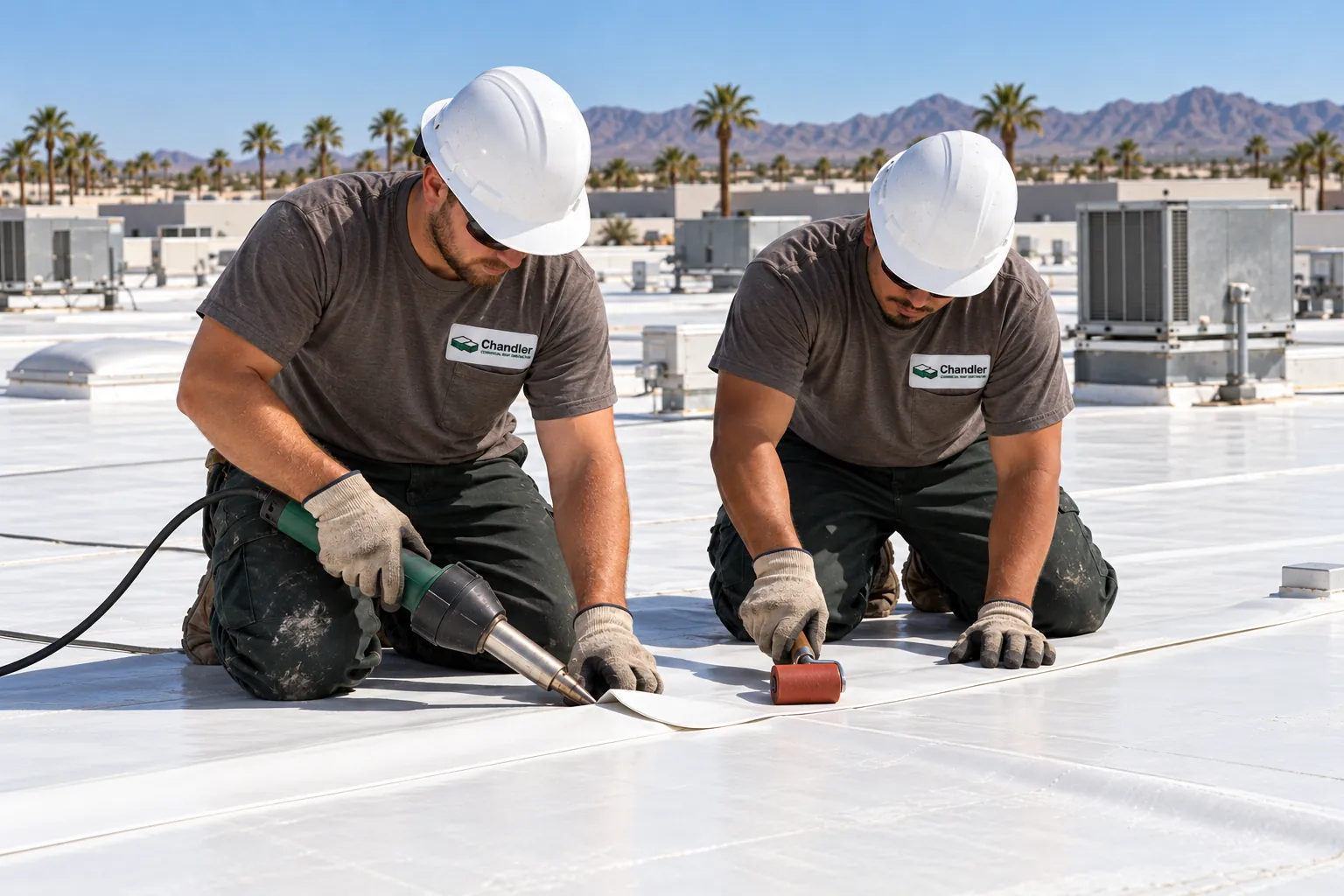
West Chandler tilt-up warehouses and distribution buildings carry large open roof decks. TPO goes down in wide rolls with fewer seams to inspect, and the seams are fused with hot air, which helps them resist wind-driven monsoon rain.
Trucks run on a schedule, so material drops, crane lifts, and dumpsters go where they will not block dock doors. We match membrane thickness, attachment pattern, and insulation to the wind exposure of each building.
Warehouse problems show up on racks, floors, and stock before anyone checks the roof. Each pair links the report to the roof detail.
Pickers find wet cartons on the top rack after a storm.
A seam out in the field of the roof has opened where heat and foot traffic worked it.
Water collects at the base of a roof column after rain.
The drain near that column is half blocked, so water stands on the deck.
Dock crews mop water inside a loading door during monsoon rain.
Edge metal above the dock wall has pulled loose in outflow winds.
Offices on a mezzanine stay hot through summer afternoons.
The roof surface has gone gray and lost the reflectivity it had when new.
Tenant suites in flex buildings show sagging tiles near the back wall.
Water ponds over a low spot in the deck and soaks the insulation below.
What warehouse and flex owners in West Chandler get from a well-attached TPO roof with working drainage.
Wide TPO rolls cut the number of seams across a big roof deck, which means fewer places for water to get in.
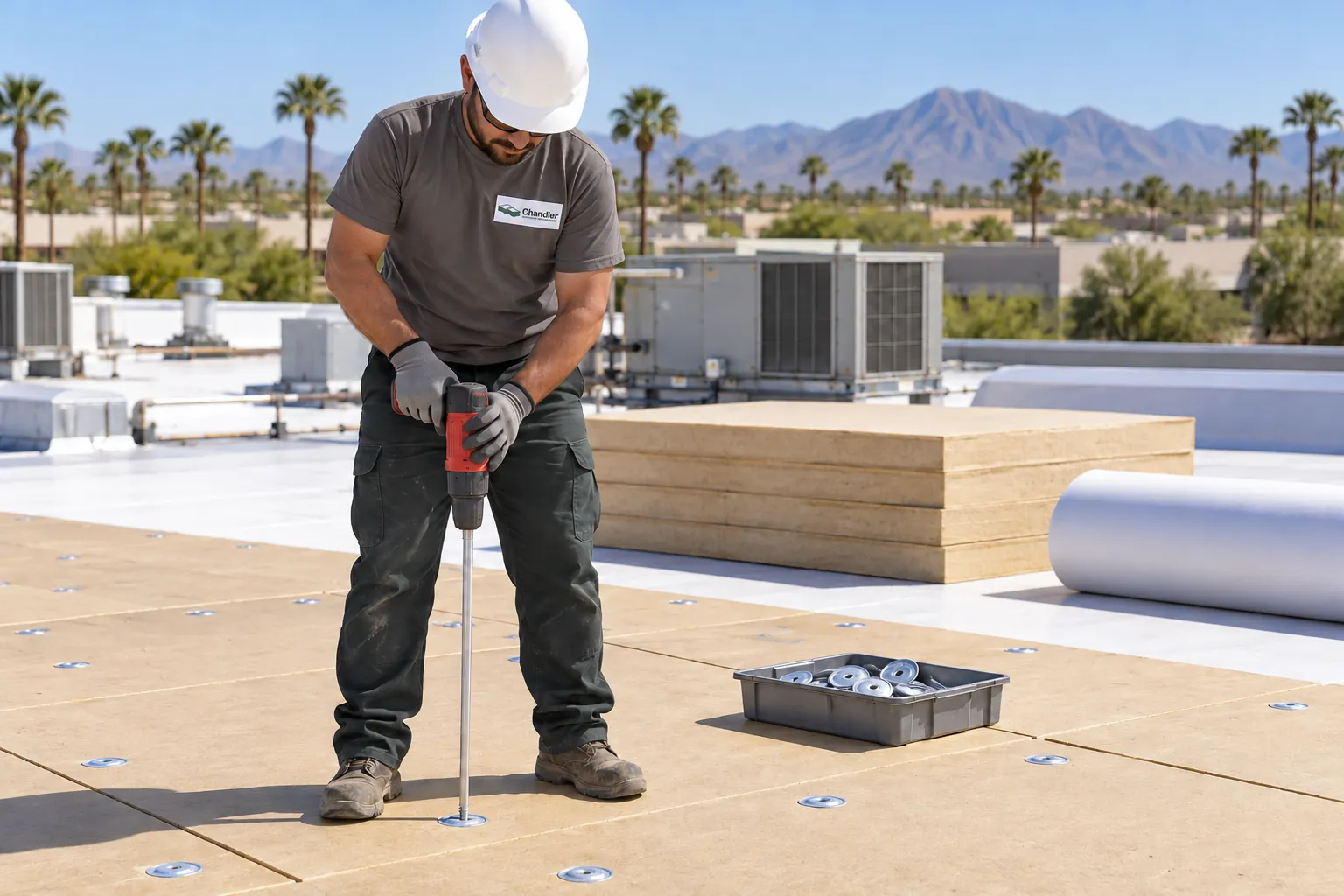
Fastener spacing and plates set for the building's exposure hold the membrane down in monsoon outflow winds.
Sealed seams and edges over the racking keep cartons and pallets dry through summer storms.
A white TPO surface reflects much of the sun off the roof over upper offices.
Tapered insulation toward cleared drains moves water off the deck before it can pond around columns.
Two services cover most West Chandler warehouse and flex roofs.
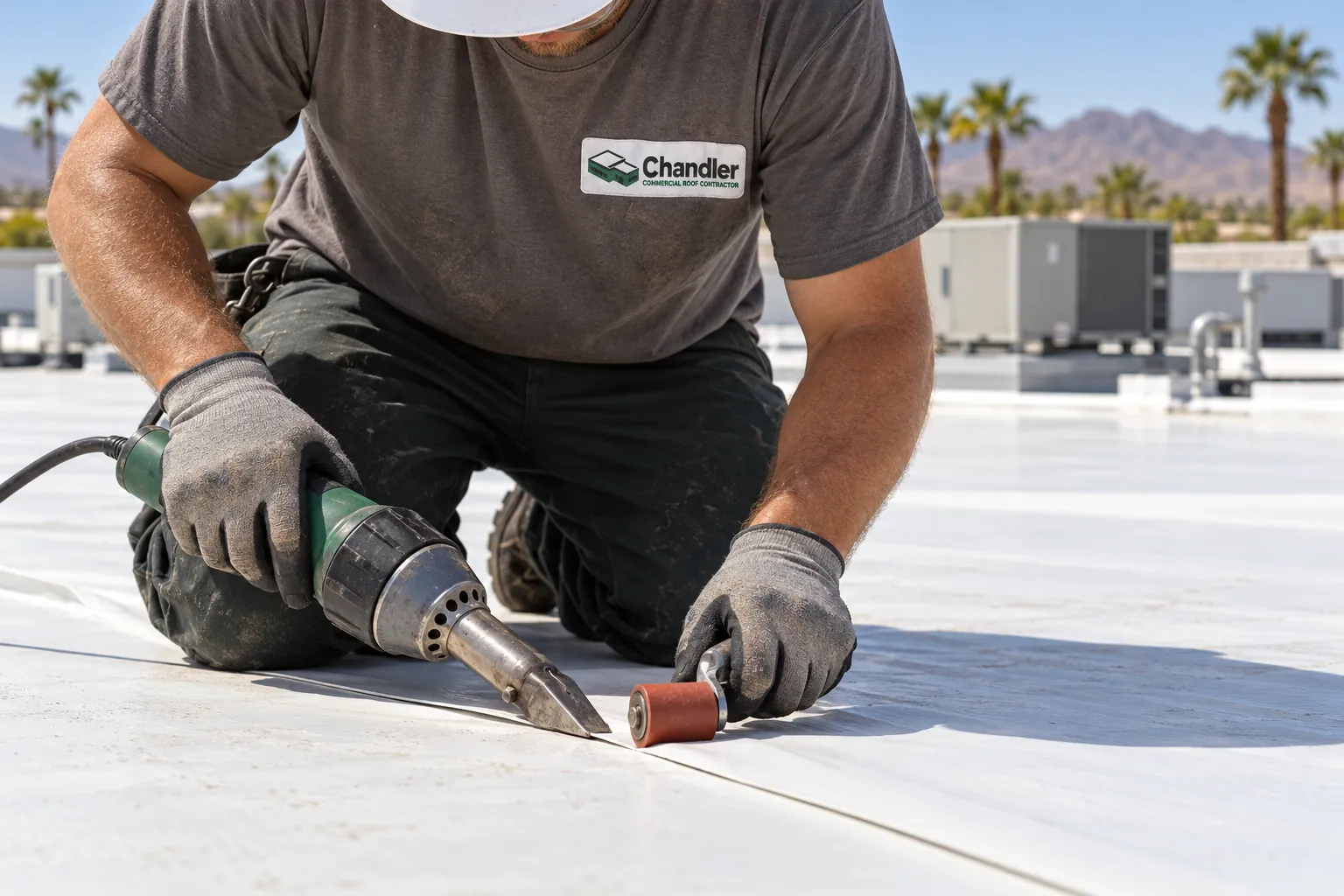
TPO fits tilt-up warehouses and distribution buildings with big open decks. The white membrane goes down in wide rolls, and every seam is heat-welded and probe-checked.
Best for: Tilt-up warehouses and flex buildings
See TPO roofing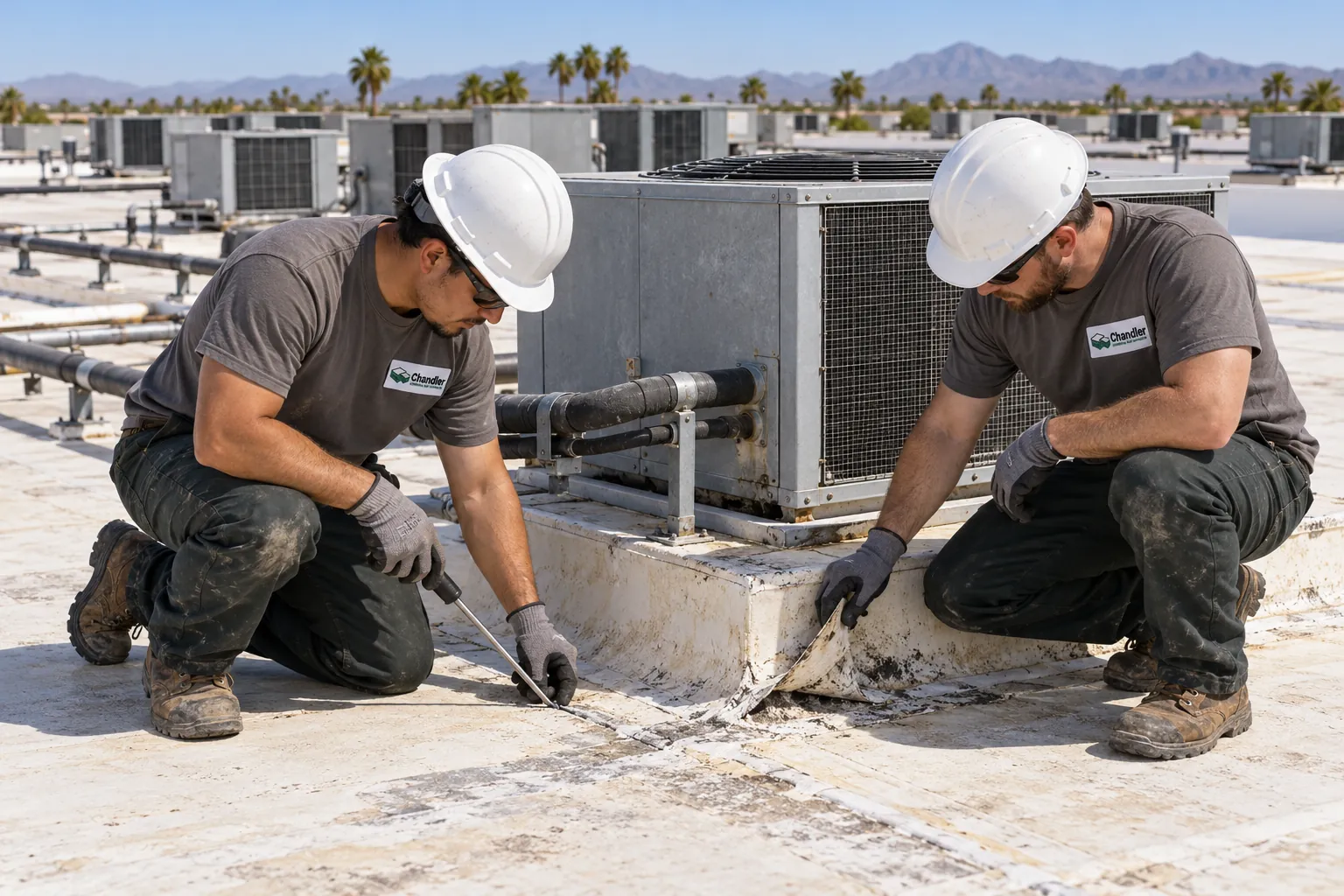
Light industrial buildings with refrigeration units, exhaust fans, and process piping need phased tear-off and sealed penetrations. We plan that roof work around shipping and production schedules.
Best for: Light industrial and refrigerated buildings
See industrial roofingCall with the dock door number and whether the edge metal above it looks loose. We will inspect that wall and the drains nearby.
(623) 310-0186Call UsFive steps for a West Chandler warehouse or flex roof, planned around trucks and tenants.
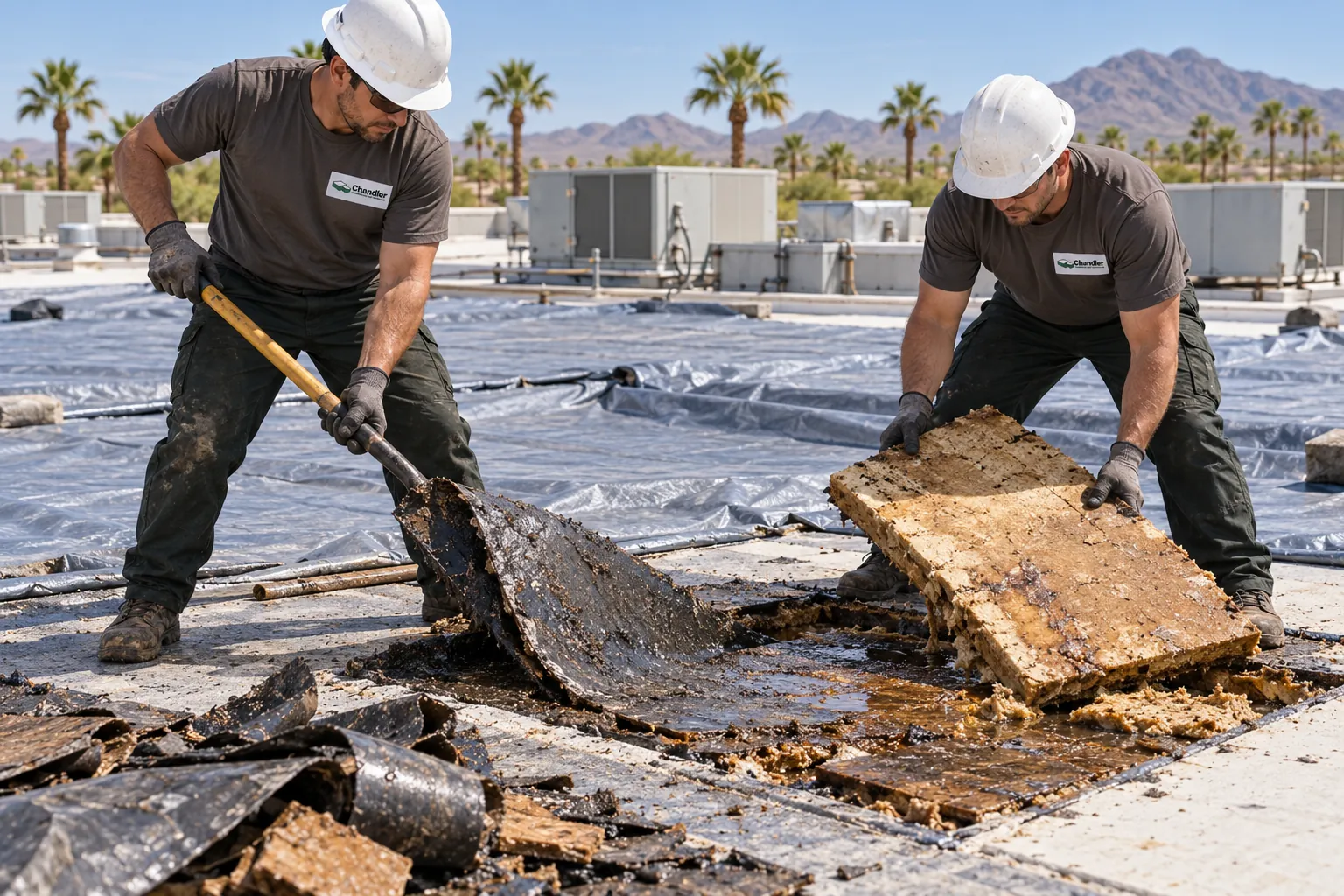
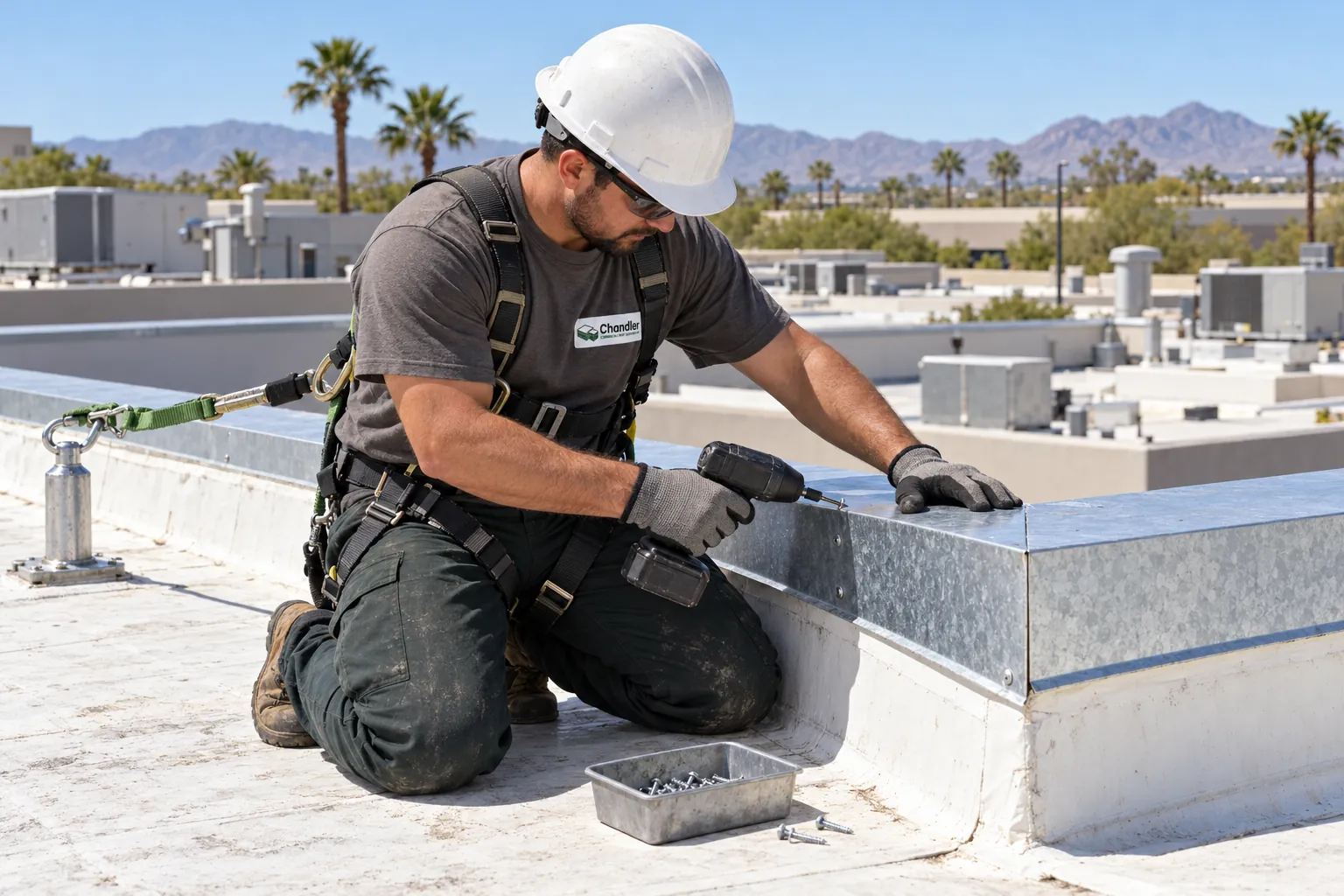
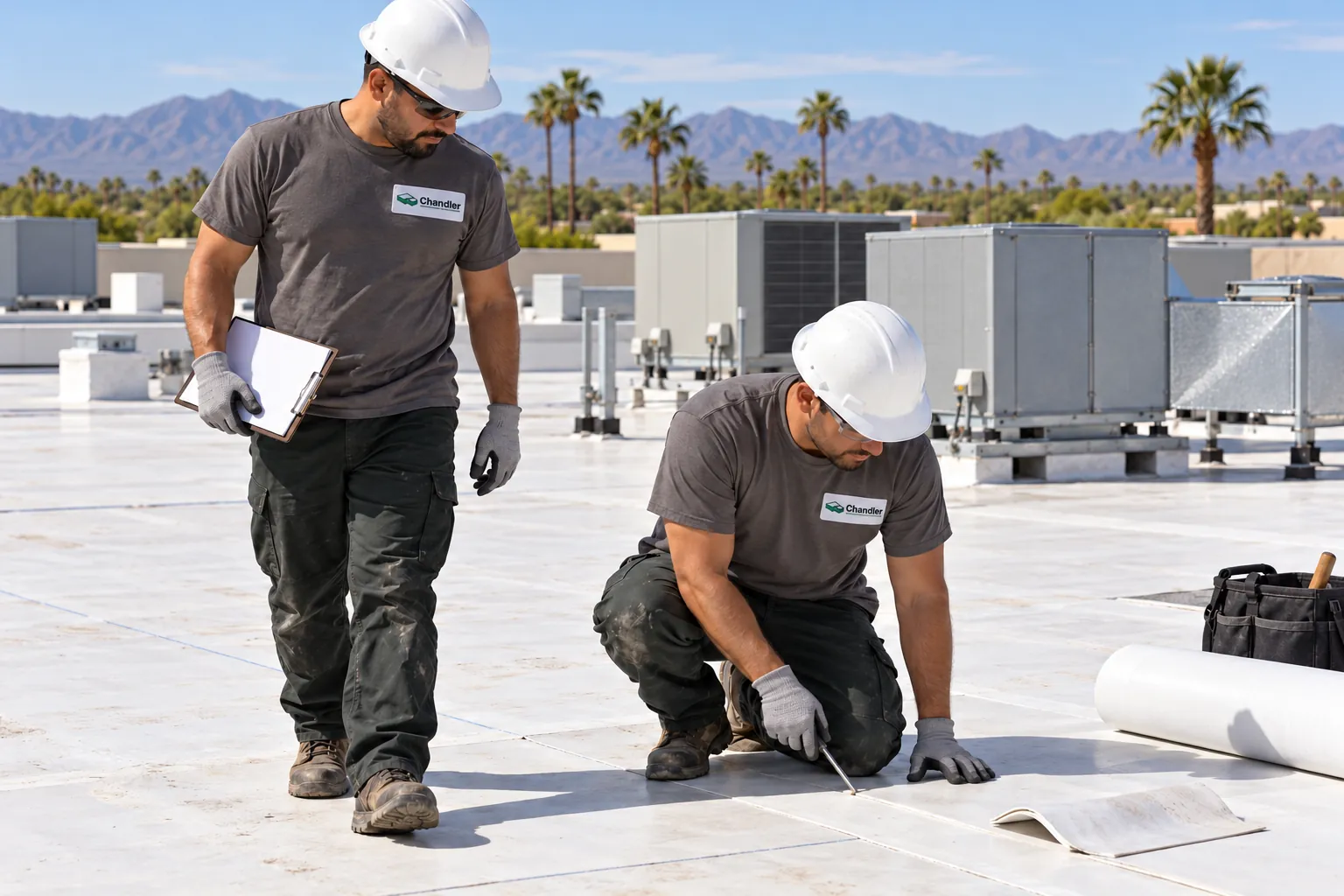
We walk the full deck in a grid, check field seams, drains, and edge metal over the docks, and pull cores where staff reported wet stock. The moisture survey shows whether the roof can be recovered or needs tear-off.
Truck schedules decide where cranes and dumpsters go and which days each roof section gets torn off, so shipping keeps moving.
Only the wet insulation areas found in the survey come out, and each roof opening is covered and closed before crews leave.
Insulation is fastened on the pattern set for the building's wind exposure, then wide TPO rolls are laid and every seam is heat-welded.
Each seam is probed, drains and scuppers are cleared, and edge metal over the docks is checked again. You get the record with photos by roof section.
West Chandler is on the west side of our coverage. These areas are closest.
Chandler tech and manufacturing roofs, where roofing debris has to stay out of production air.
Community buildings to the south where noisy work is booked around member events.
Suite-by-suite reroofing for strip retail and clinics under Gilbert permits.
Pre-engineered metal buildings where heat cycling loosens screws and washers.
Answers for owners and managers of warehouses, flex buildings, and light industrial sites.
Repair usually fits when damage is limited to a few seams, flashings, or penetrations and the deck and insulation are dry. Replacement makes more sense when leaks keep coming back, wet insulation is widespread, or the membrane is brittle, cracked, or shrinking across large areas.
Core samples and a moisture survey settle the question before you sign for either one.
Sometimes. A recover works when the insulation underneath is dry and there is only one roof layer. If the survey finds wide areas of wet insulation, or two layers already exist, that section is torn off first. Recovering dry areas skips tear-off there and keeps more of the deck closed during the job.
We set crane, dumpster, and material locations with your shipping schedule, away from active dock doors. Lifts happen early in the day or on slow days, and each tear-off section is timed so equipment stays clear of the docks below.
Roof decks deflect between columns, and drains clog with dust and debris, so water pools where it should drain. Tapered insulation, crickets, and cleared drains move it off the roof. If ponding stays more than about two days, the deck or drain needs attention.
That comes down to the building's wind exposure, rooftop units, and foot traffic. We check thickness, attachment pattern, and the insulation layer against those factors before choosing, and thicker membrane goes on roofs with heavy service traffic.
No. Work moves section by section over the suites, and each section is closed watertight before the crew leaves. Tenants get notice before tear-off over their space, and rooftop units are shut down only while their curbs are flashed.
We open only as much roof as can be closed before the crew leaves, and we watch the forecast before each tear-off day. Racks under the active section can be covered with sheeting at your request.
Tell us the building size, the dock layout, and where stock is getting wet. We will inspect the deck and price the repair or new roof.
Leave a name and number and we will call you back about your commercial roof.
Or call now: (623) 310-0186