Drip Under A Vent Stack
A stain grows on the ceiling right under a plumbing vent or exhaust pipe.
Failed Pipe Boot
The rubber boot around a pipe has split or slipped, and water runs down the pipe.
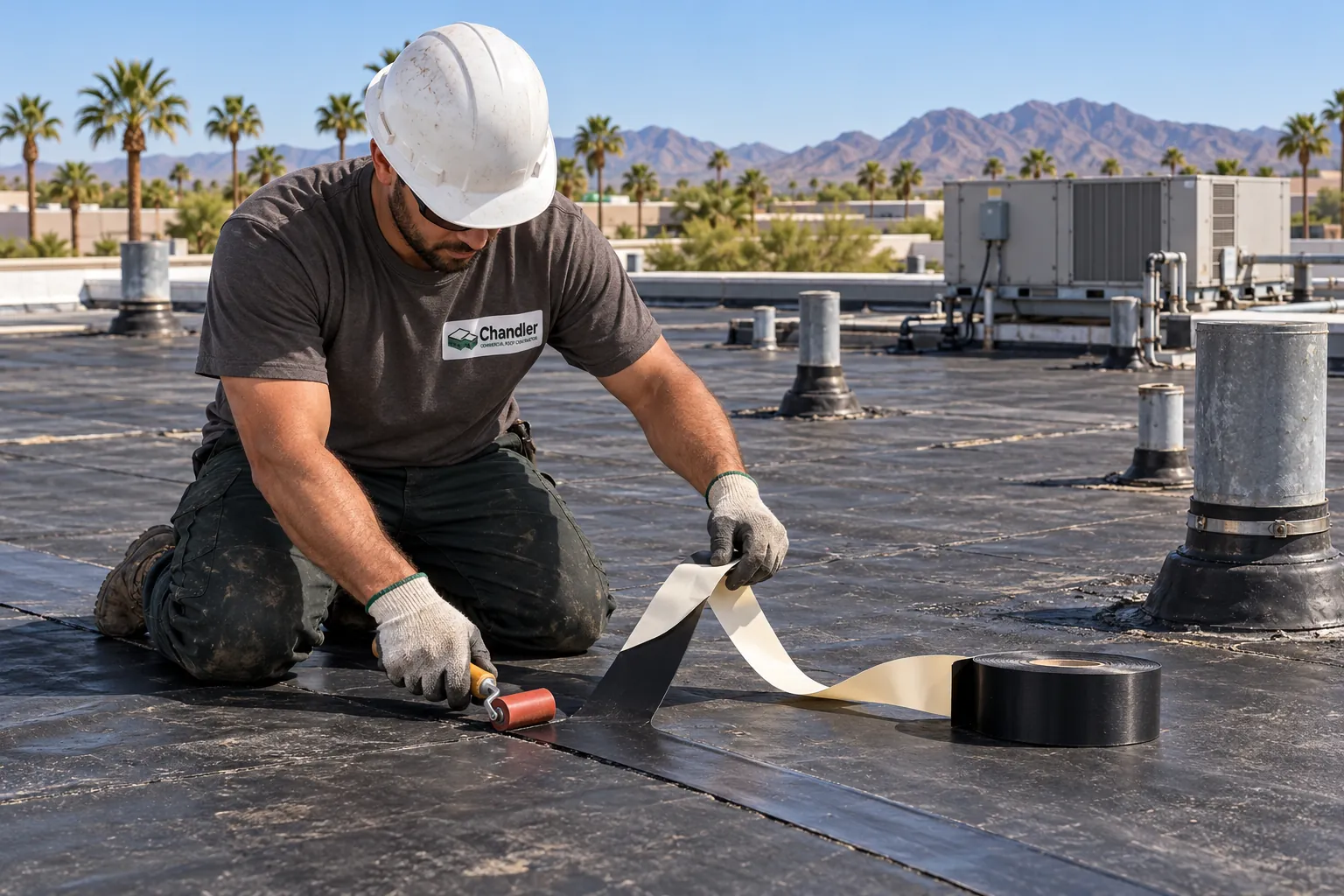
As an EPDM roofing contractor in Chandler, we install, repair, and replace rubber roofs on flex suites, offices, and buildings crowded with vents, curbs, and pipes.
EPDM makes sense where a roof keeps changing underfoot. These signs point toward rubber or toward another membrane.
Rubber roofs leak in predictable places. Each row pairs what people notice inside with the EPDM detail we usually find above it.
A stain grows on the ceiling right under a plumbing vent or exhaust pipe.
The rubber boot around a pipe has split or slipped, and water runs down the pipe.
Water appears in a suite a few weeks after a new unit or vent went in.
An installer cut through the EPDM and sealed the opening with caulk instead of flashing it.
A narrow stain follows a straight line across several ceiling tiles.
Old adhesive or seam tape has dried out, and the lap edge lifts along a run.
Spaces right under the roof stay warm long after sunset in summer.
Black EPDM absorbs sun all day, and that heat moves down through the roof deck.
Puddles collect at a column line where the roof deck spans between beams.
Aged EPDM shrinks and pulls at corners and parapet walls, stretching the flashing until it tears.
Four ways we handle an EPDM roof. Dry insulation keeps the repair and coating options open.
| Option | When It Fits | What It Involves |
|---|---|---|
| Seam and flashing repair | Leaks come from lap edges, pipe boots, or curbs on an EPDM roof with dry insulation | Clean and prime the old rubber, apply cover tape or new flashing, and roll it down tight |
| Reflective coating over EPDM | The sheet is intact, the insulation tests dry, and the owner wants a cooler white surface | Repair seams first, clean and prime the rubber, then apply a coating made for EPDM |
| White EPDM replacement | Worn black EPDM over cooled space where a light surface matters | Remove the old sheet, replace wet boards, and install white EPDM with taped seams |
| Tear-off and replace | Shrinking, brittle rubber or wet insulation across large areas | Strip to the deck in sections, add tapered insulation, and install new EPDM and flashings |
Rubber earns its spot on Chandler roofs that keep changing. These benefits come from flexibility and simple repairs.
The rubber sheet stretches and recovers through hot days and cool nights instead of cracking at joints and corners.
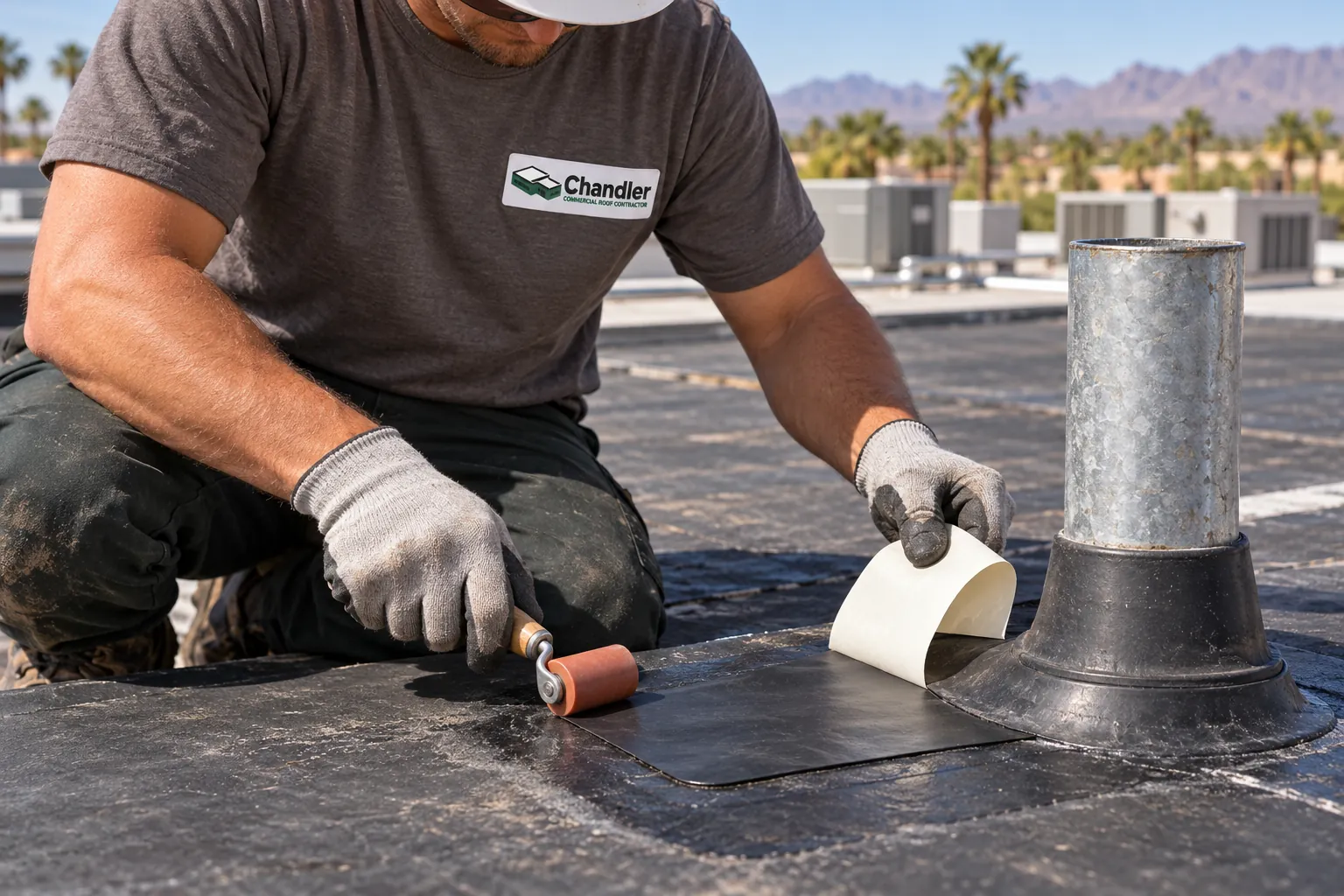
Pipes, vents, and curbs flash cleanly with pre-formed boots and cover tape, even on a crowded roof.
When a tenant adds an HVAC unit, the new curb is cut in and flashed with matching EPDM.
Older EPDM with dry insulation can often be fixed at seams and flashings, buying years before a tear-off.
White EPDM, or a reflective coating over a dry, intact sheet, cuts the heat a black roof soaks up.
Tell us when the unit went in and where the water shows inside. We will check the curb and every new cut through the rubber.
(623) 310-0186Call UsFive steps cover an EPDM repair or replacement, from the first seam check to the final roll-down.
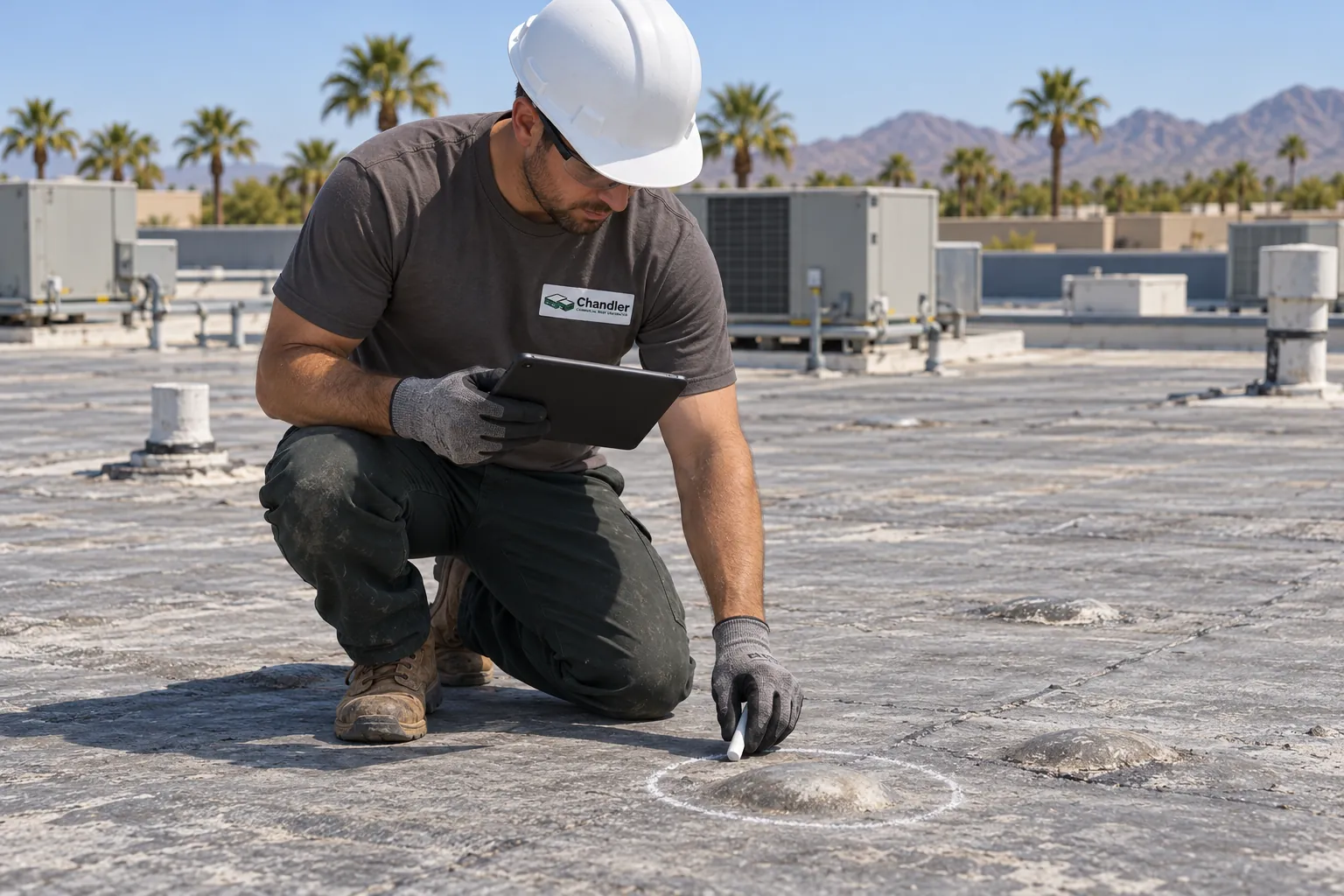
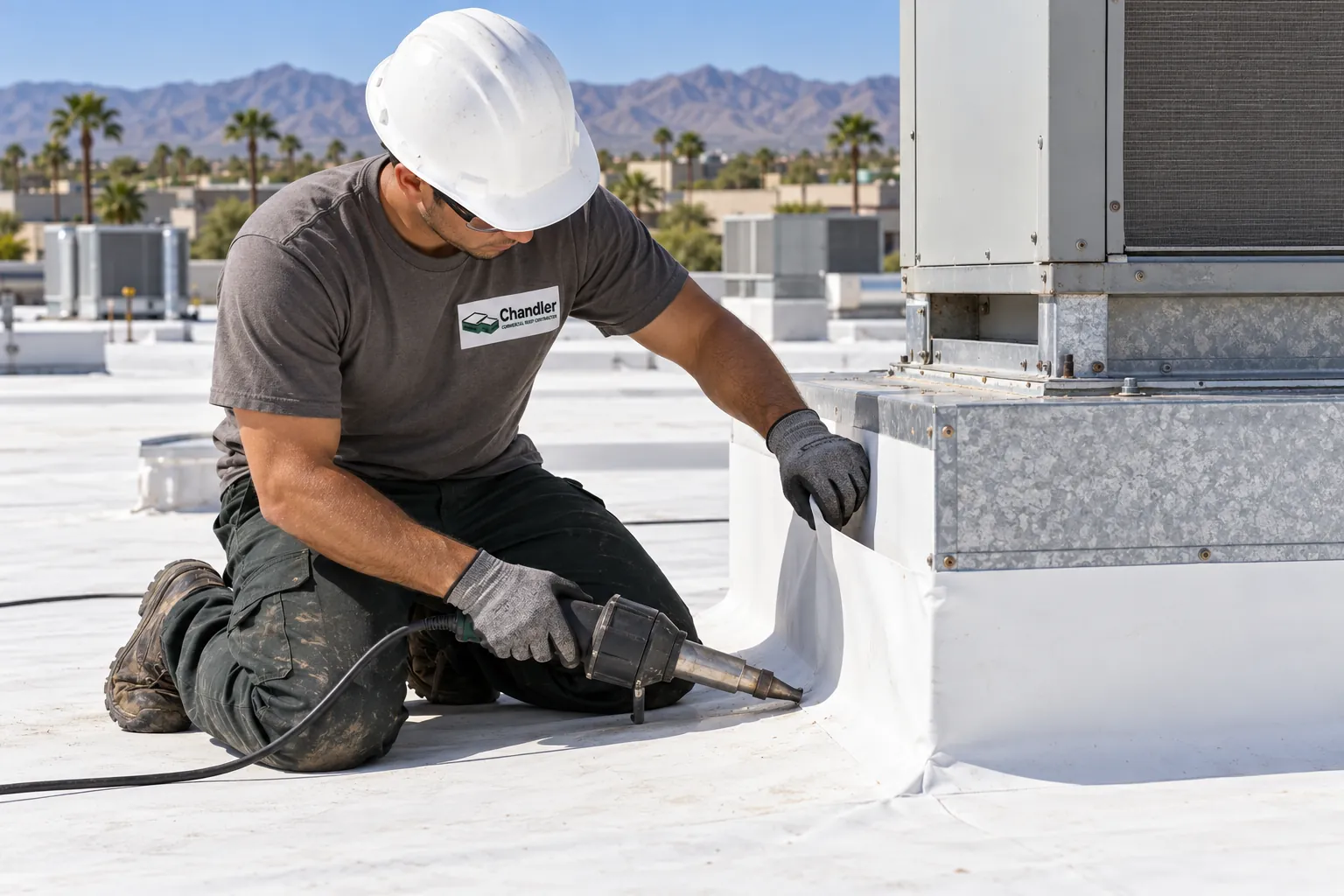
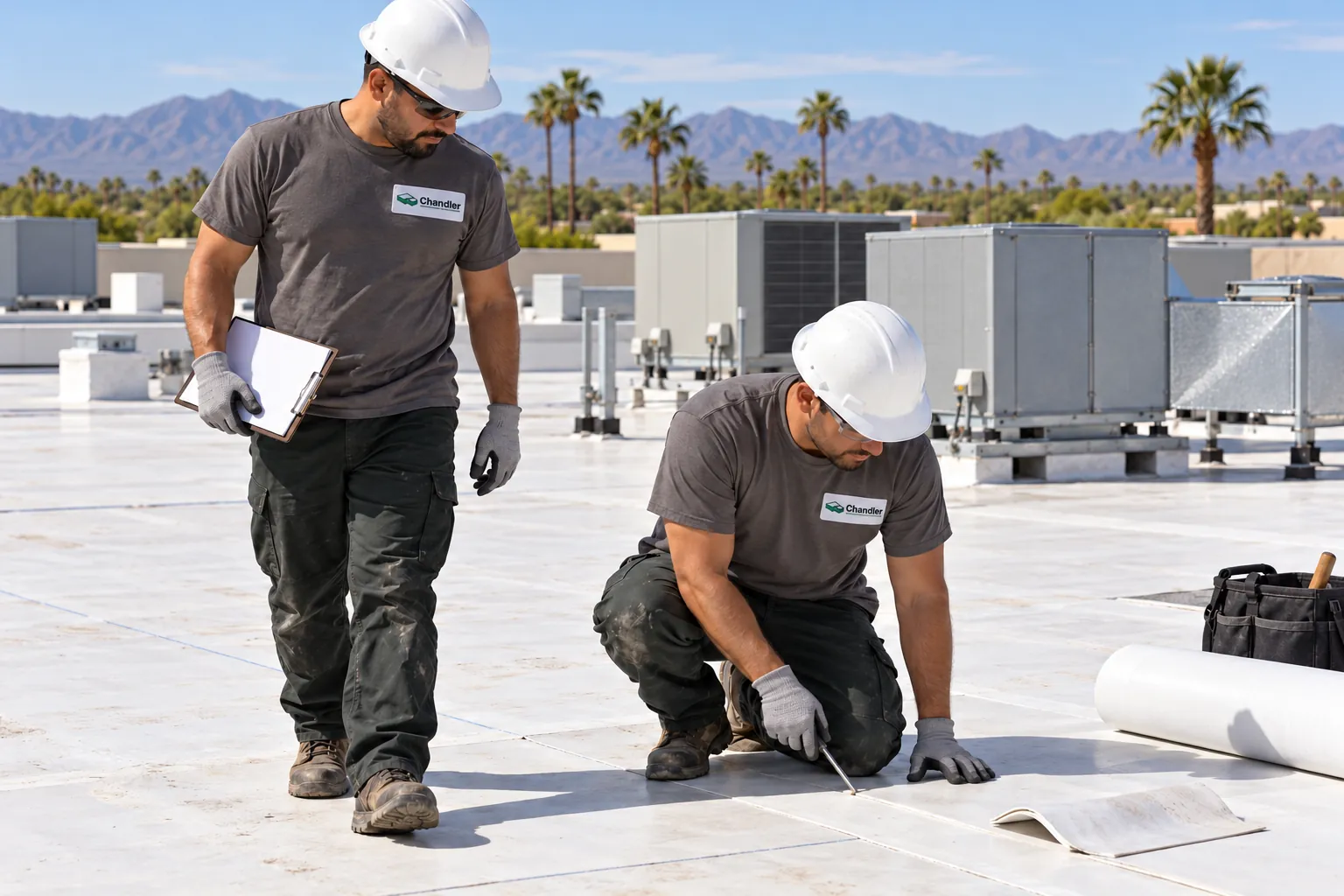
We check every lap edge, pipe boot, and curb, and press on the sheet to find loose areas. Cores near drains and penetrations show whether the insulation is dry enough to keep.
Dry insulation and flexible rubber point toward seam and flashing repair. Brittle, shrinking EPDM or wet boards across the deck point toward a new roof, and we show you the cores either way.
Old EPDM is scrubbed and primed so tape and flashing bond to it. On a replacement, wet boards come out and new insulation is fastened before the sheet is laid.
Laps are joined with seam tape and rolled down hard. Each pipe gets a pre-formed boot, and curbs get new EPDM flashing tied into the field sheet.
A final pass checks the tape edges and boot collars by hand, clears the drains, and photographs each completed roof area for your records.
A rubber roof is one of several answers. These two come up most often when we look at EPDM buildings.
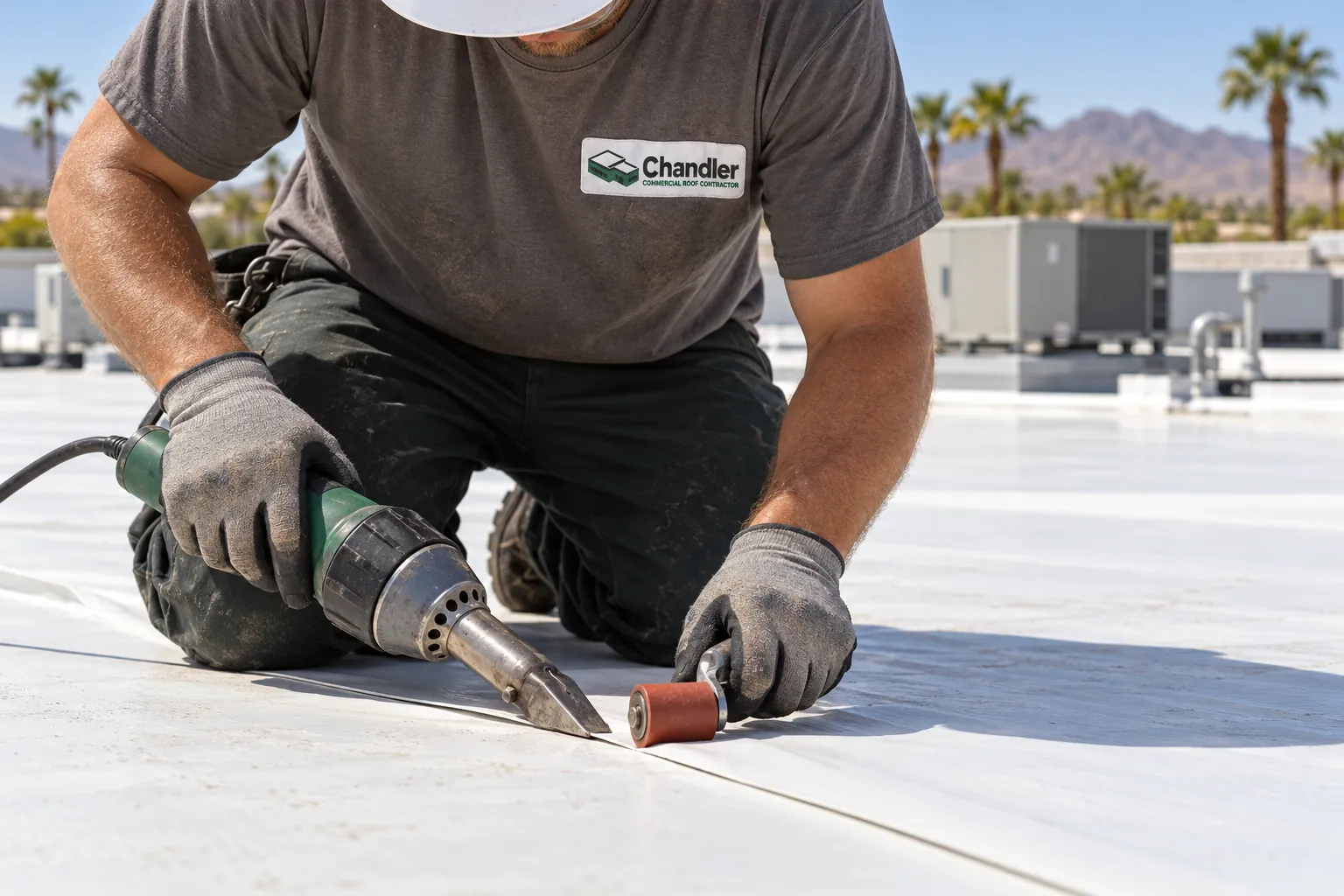
Choose TPO when a roof has a big open deck and few pipes, since wide white rolls cover it with fewer seams and a reflective surface.
Best for: Warehouses and large retail decks
TPO roofing in Chandler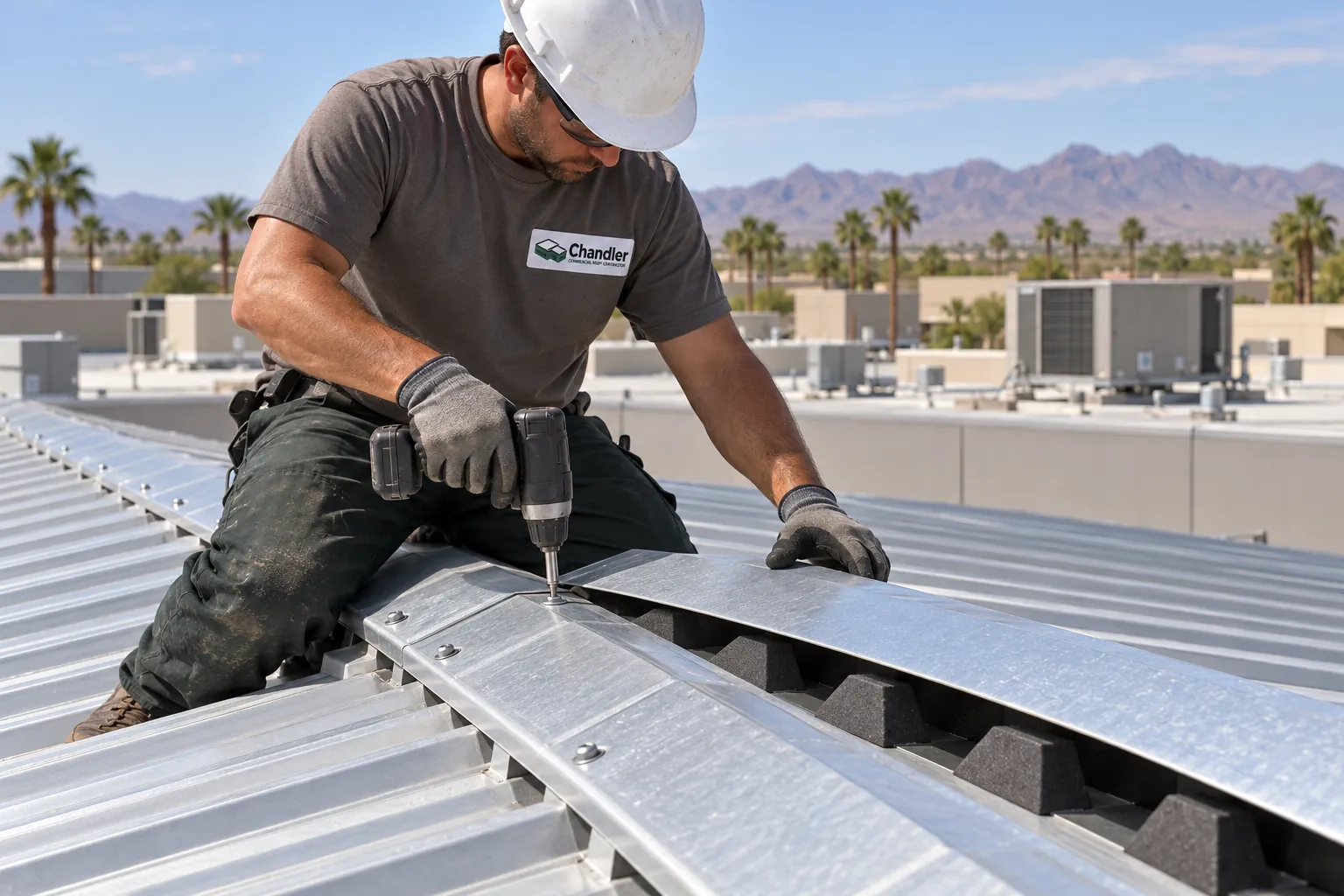
Buildings with enough slope to shed water often do better with metal panels, which last for decades with fastener and sealant upkeep.
Best for: Shops and storage buildings
Commercial metal roofing in ChandlerAnswers about rubber roofs on Chandler flex suites, offices, and equipment-heavy buildings.
Choose EPDM for roofs that take a lot of foot traffic, carry many penetrations, or see equipment added and moved often. The synthetic rubber stays pliable as summer days swing to cooler nights.
Under Chandler sun, a white or coated EPDM surface works better than black. On older flex and office roofs, repairing seams and flashings is often enough to keep the rubber in service.
Roughly 25 to 30 years with proper installation and regular care. Seam adhesive breaking down and punctures from foot traffic shorten it most around here. Walk pads at service paths and a seam check after each monsoon season help an EPDM roof reach the long end of that range.
Yes, when the rubber is intact and the insulation underneath is dry. We repair the seams and flashings first, clean and prime the sheet, and use a coating made for EPDM. A coating will not fix wet insulation or a sagging deck, so we check cores before recommending it.
Pipe boots and flashing are the weak points on most rubber roofs. Boots split as they age, clamps loosen, and pipes added later are sometimes sealed with caulk instead of flashing. We replace failed boots with pre-formed EPDM boots and cover-tape the base into the field sheet.
White, in most cases. Black EPDM absorbs heat all day, which warms the spaces under the roof. White EPDM, or a reflective coating over intact black rubber, keeps the surface cooler. Black still makes sense over unconditioned storage, where heat gain matters less.
Yes, with some care. Summer heat softens the rubber and makes primer flash off fast, so we work early in the day and keep the patch area shaded and clean. The surface has to be dry and free of dust for the tape to bond.
Dragging equipment, dropping tools, and cutting new holes without a roofer present cause most EPDM damage. Ask tenants and HVAC contractors to stay on walk pads and to call before any new penetration. A quick flashing job when a unit goes in costs far less than chasing a leak later.
Tell us how old the rubber is and where it leaks. We will check the seams, boots, and cores, then explain the options.
Leave a name and number and we will call you back about your commercial roof.
Or call now: (623) 310-0186