Drips After A Monsoon Storm
Water shows up at ceiling tiles hours after wind-driven rain, then stops once the storm passes.
Weak Weld At A Lap
A seam that was welded too cold or too hot lets go along a short run, and wind pushes rain through it.

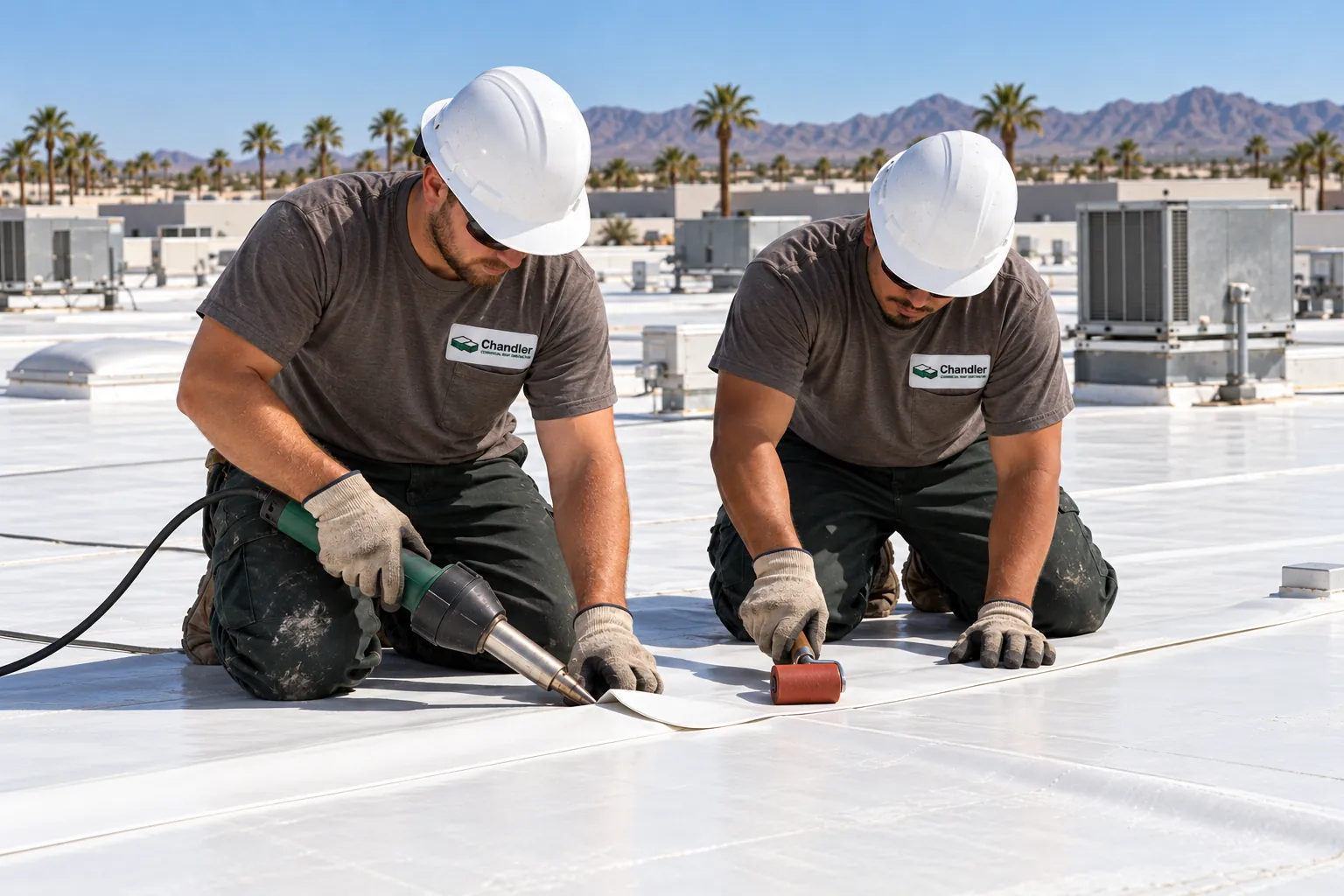
As a TPO roofing contractor in Chandler, we install, replace, and repair white heat-welded TPO roofs on warehouses, offices, and retail buildings.
TPO fits most low-slope Chandler roofs that drain. These signs show when it is the right membrane and when another system answers the building better.
Trouble on a TPO roof shows up indoors before most owners climb the ladder. Each row matches a symptom inside with the detail we look for on the membrane.
Water shows up at ceiling tiles hours after wind-driven rain, then stops once the storm passes.
A seam that was welded too cold or too hot lets go along a short run, and wind pushes rain through it.
Suites under the roof run hotter than the floor below during long summer afternoons.
Dust and age dull the white membrane, so more of the sun reaches the roof deck.
Tenants report a drip near a supply grille or along a duct run above the ceiling.
TPO flashing at an HVAC curb corner has torn or pulled back from the metal.
Tiles droop in one area of the room with no clear drip path above them.
Insulation under the membrane holds water, and the roof feels spongy underfoot.
Rings form on the ceiling around drain bodies and roof leader pipes inside the building.
Dust and debris slow the drains, and standing water stresses the seams nearby.
Four ways we handle a TPO roof, from a single weld repair to a full replacement. The cores and the deck decide which one fits.
| Option | When It Fits | What It Involves |
|---|---|---|
| Seam and flashing repair | Leaks trace to a few welds, curbs, or pipe boots on a TPO roof with dry insulation | Clean and prep the old sheet, weld new TPO patches or flashing, then probe the repaired seams |
| Recover over the old roof | One existing roof layer, dry insulation, and a deck that drains | Fasten cover board or insulation over the old roof, then weld new TPO on top |
| Tear-off and replace | Wet insulation across large areas, or two roof layers already in place | Remove to the deck in sections, fix damaged deck, add tapered insulation, install new TPO |
| Fully adhered TPO | Manufacturing and cleanroom buildings with heavy equipment and service traffic | Membrane glued to cover board instead of fastened at the laps, with walk pads on service paths |
TPO earns its place on Chandler roofs for a few plain reasons. Each one depends on a good weld and a deck that drains.
Hot air fuses the overlapping sheets into one piece, so the laps resist wind-driven monsoon rain better than glued seams.
Wide rolls cover big tilt-up decks with fewer seams, which leaves fewer places for water to start.
The light membrane sends back much of the summer sun and keeps the roof surface cooler over air-conditioned space.
Later patches and curb flashings are heat-welded to the existing sheet while the membrane is still clean and flexible.
Replacement opens the roof to new insulation and tapered boards that push water toward the drains.
Tell us where the drip shows inside and roughly where it sits on the roof. We will check the welds and curb flashings nearby.
(623) 310-0186Call UsFive steps take a TPO roof from the first inspection to the final probe of every weld.
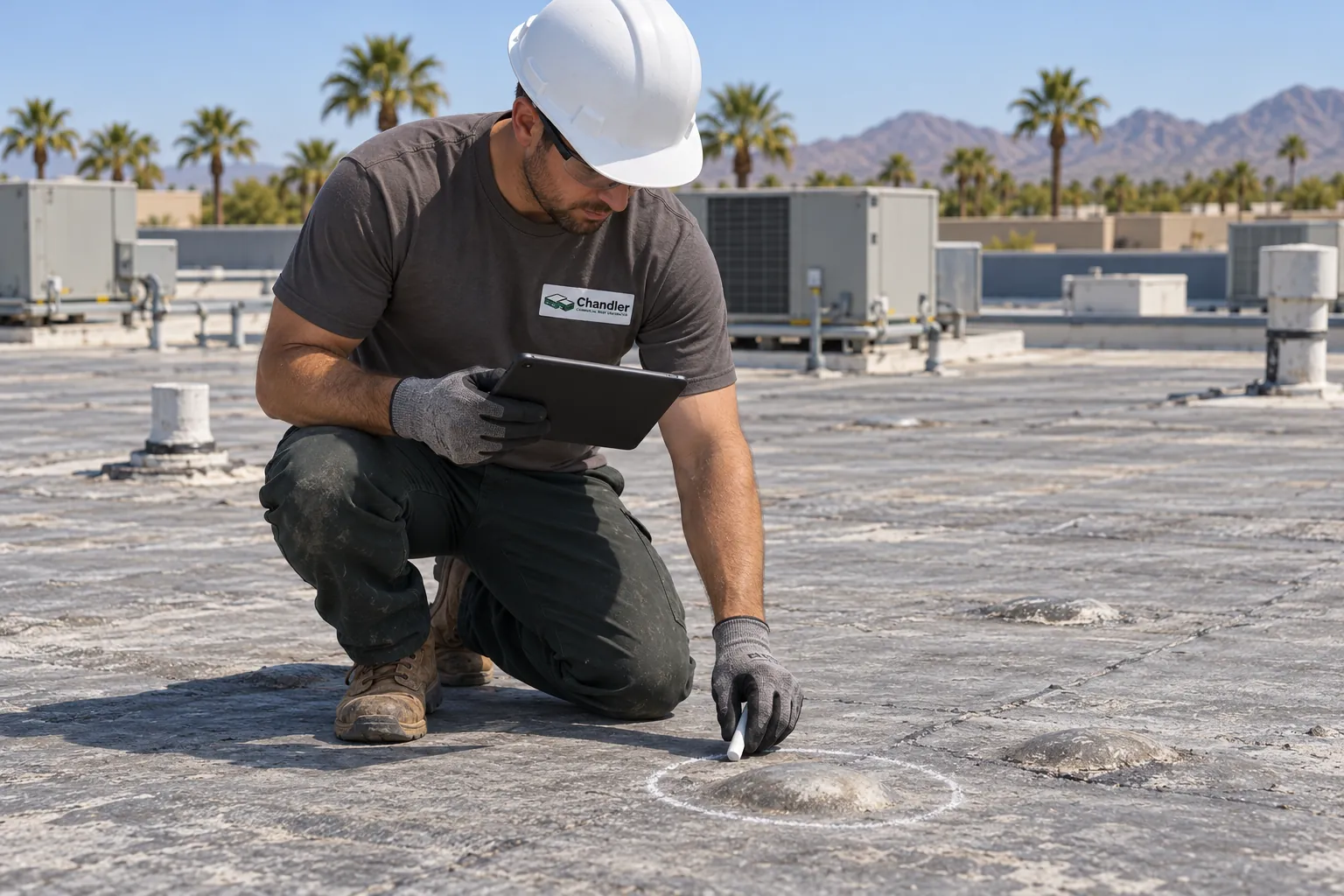
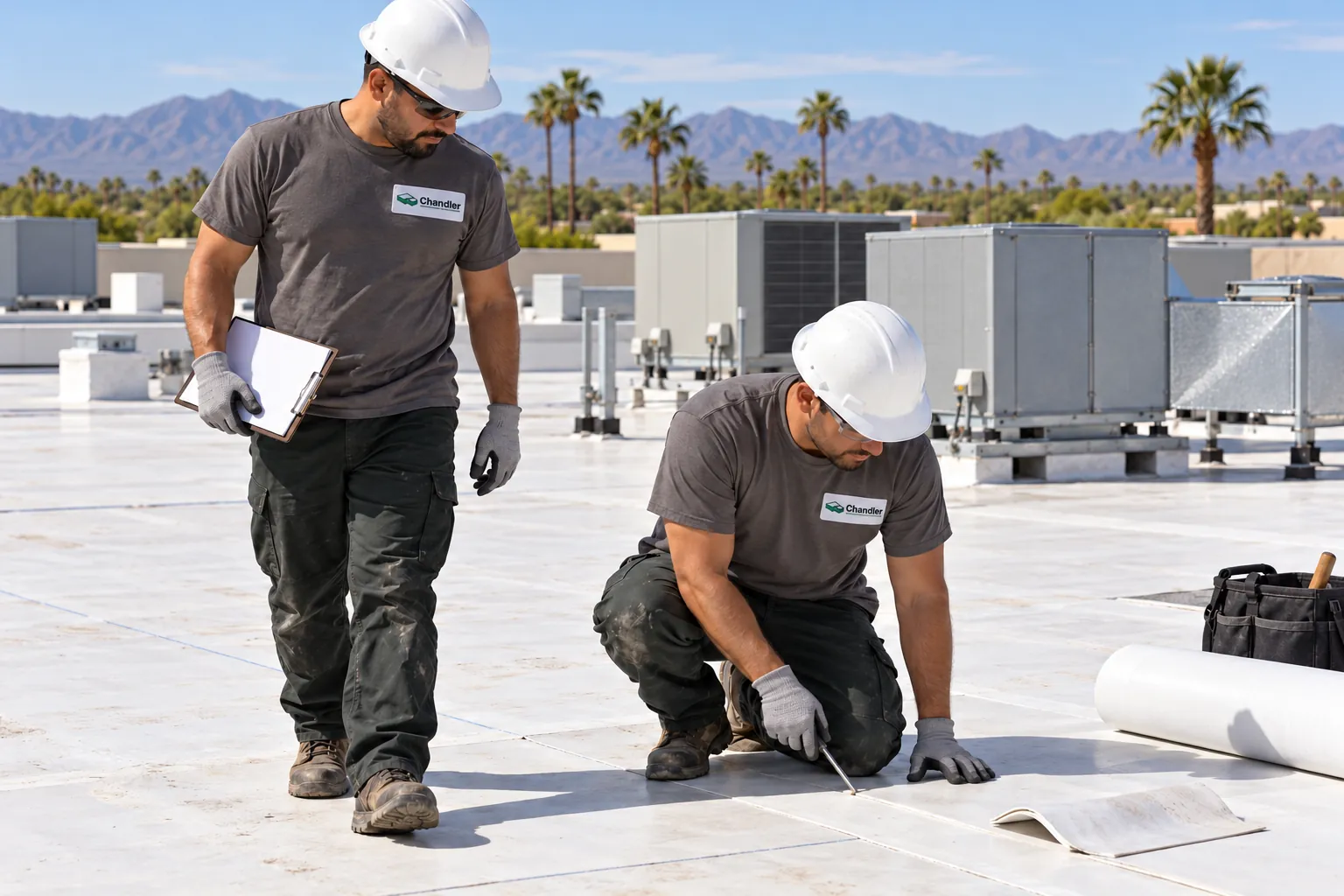
We walk the existing membrane, mark blisters and open laps, and pull core samples near drains and curbs. The moisture readings decide whether TPO can go over the old roof or the old roof comes off to the deck.
Membrane thickness, fastener pattern, and insulation layers are matched to the building's wind exposure and rooftop units. Corners and roof edges get tighter fastening than the open field.
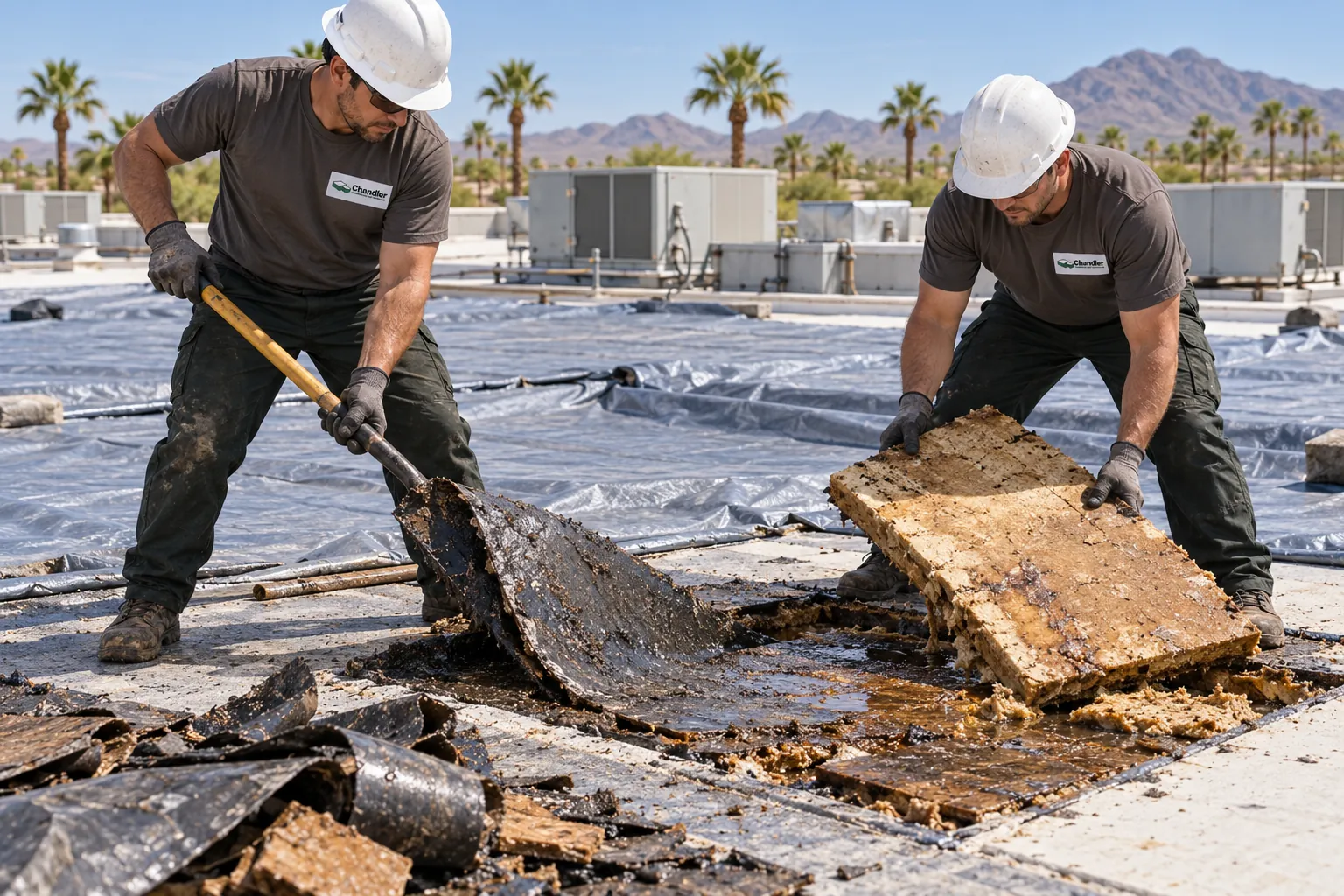
Tear-off moves one section at a time, and each area is closed watertight before the end of the day. Damaged deck panels are replaced before new insulation goes down.
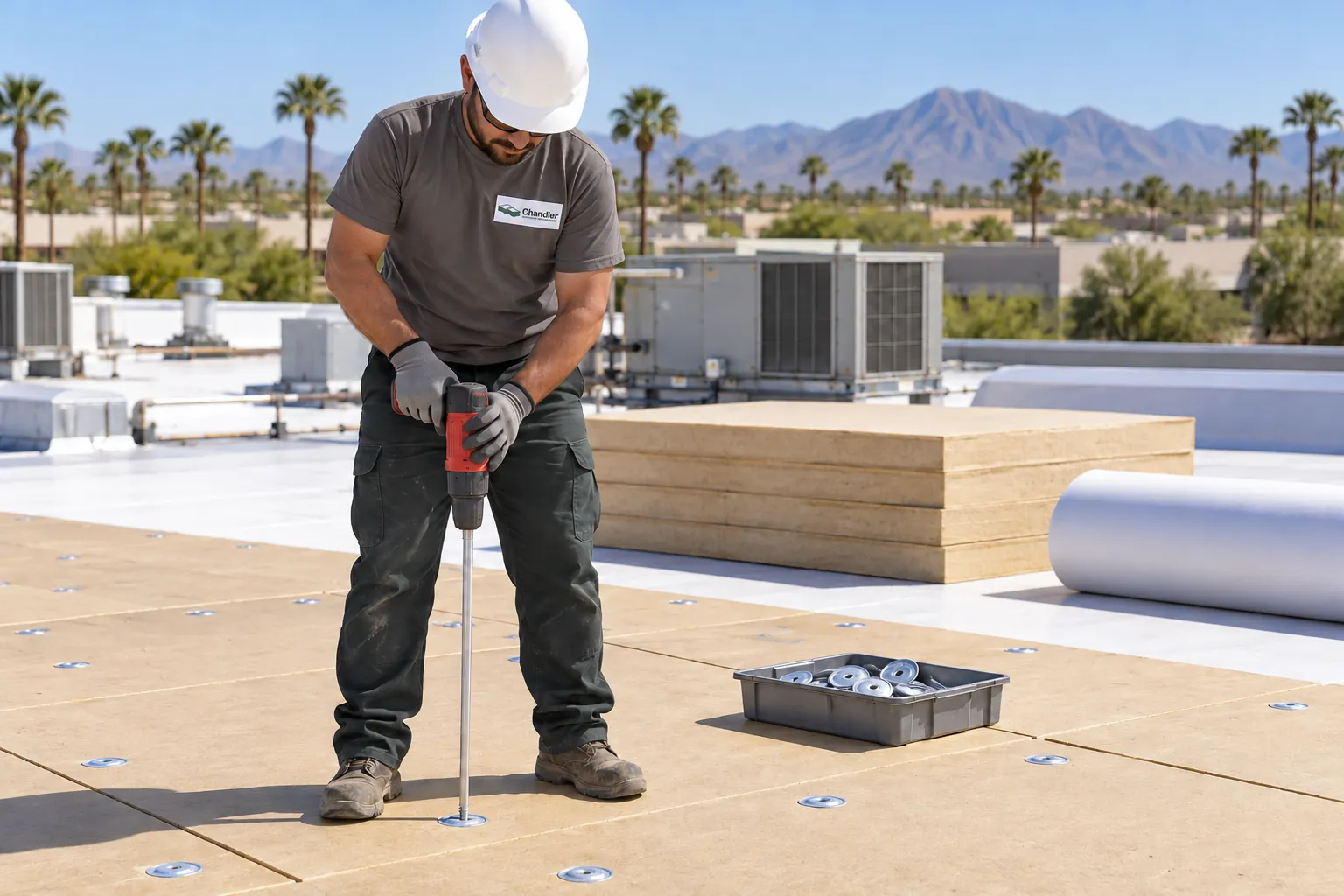
Insulation boards are fastened, then the TPO sheets are rolled out and heat-welded at every lap. Curbs, pipes, drains, and edge metal get welded TPO flashing.
A probe runs along each weld to find gaps, and any weak spot is rewelded right away. Drains are cleared, and you get photos of the completed sections.
Some buildings fit another system better. These two come up most often on Chandler TPO jobs.
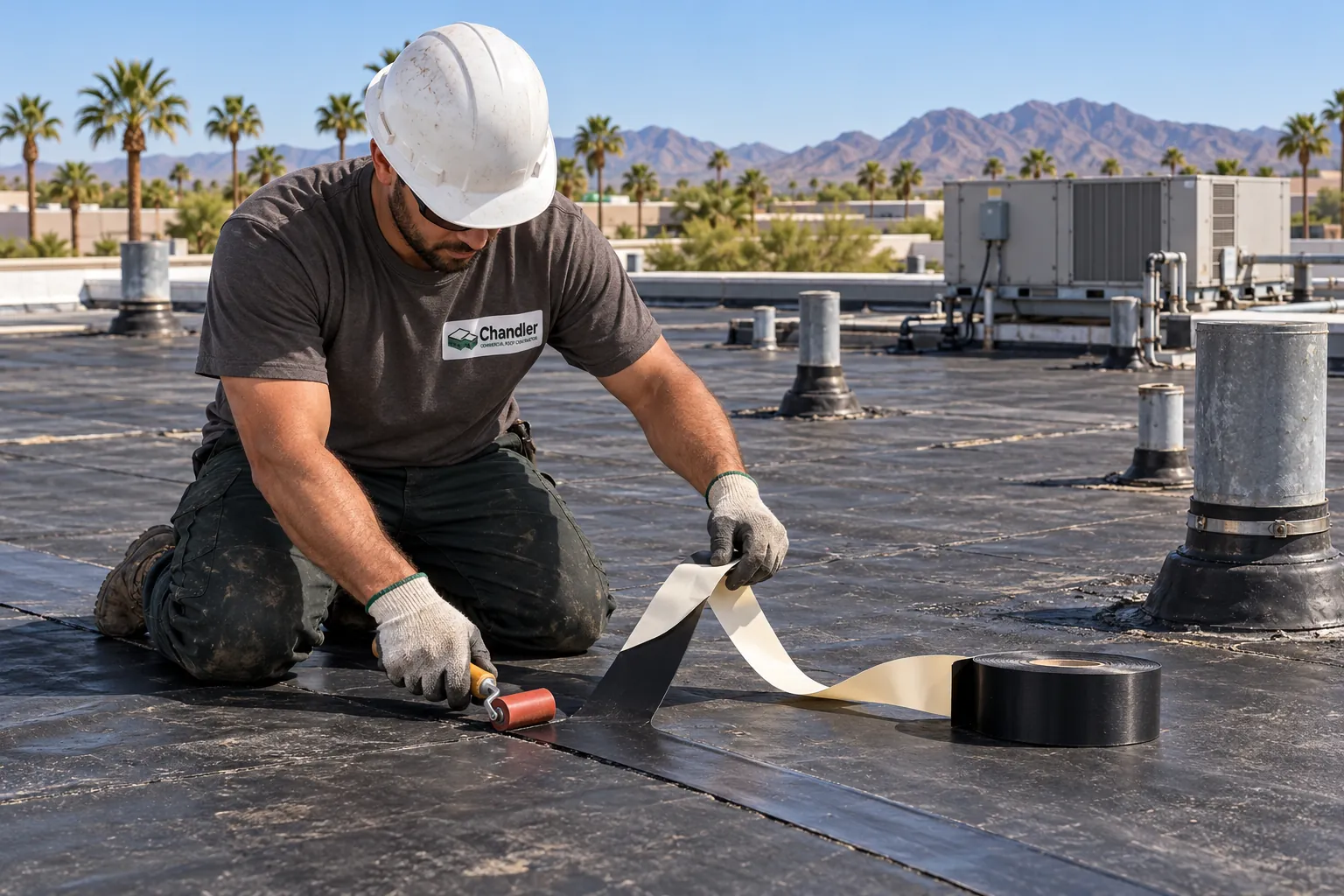
Pick EPDM when a roof is crowded with pipes and vents or tenants move HVAC units often, since the rubber sheet handles constant changes well.
Best for: Flex suites and penetration-heavy roofs
EPDM roofing in Chandler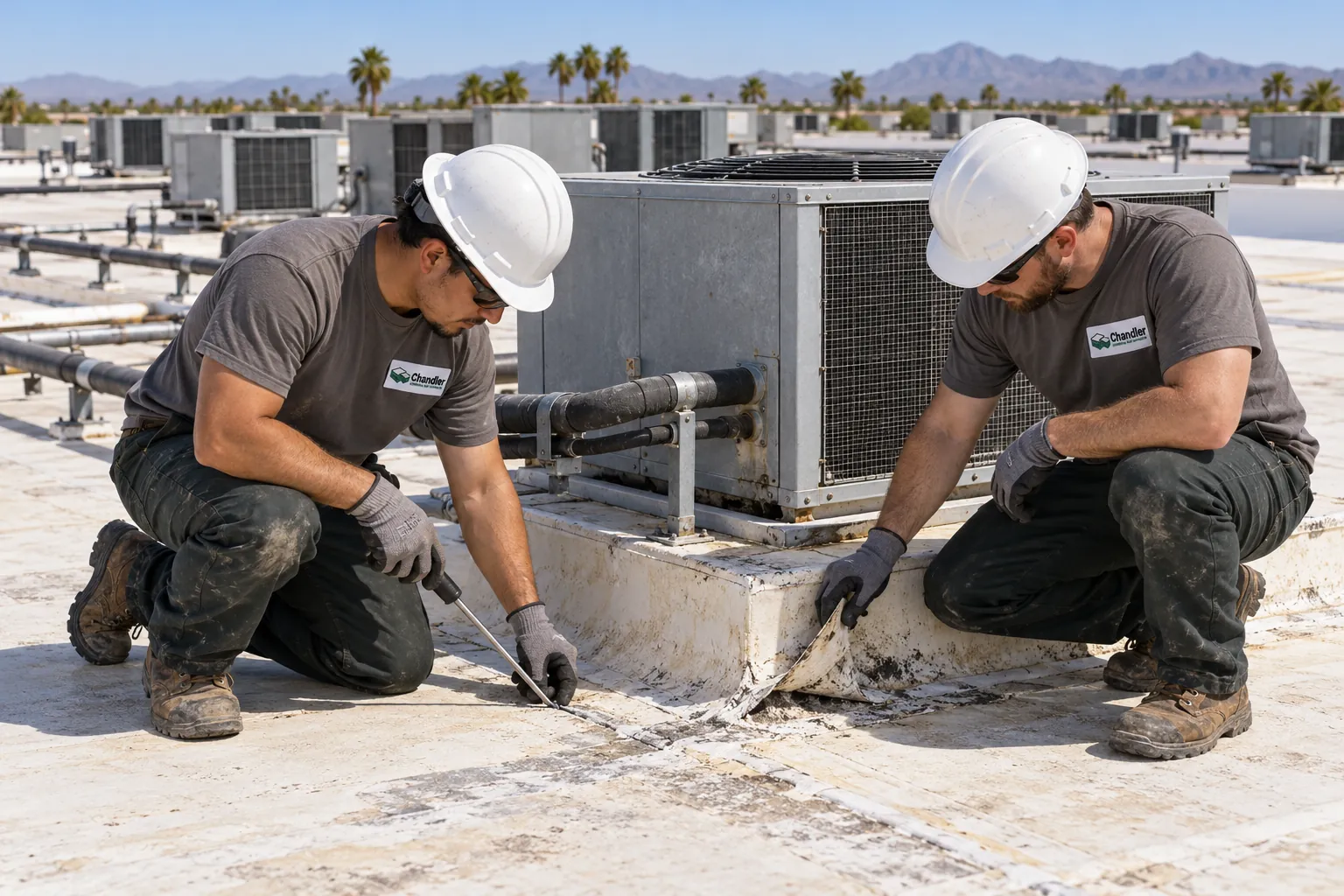
Large plant roofs with exhaust stacks and heavy units need phased tear-off and walk pads, which is where our industrial roofing work comes in.
Best for: Manufacturing plants and large campuses
Industrial roofing in ChandlerAnswers about TPO on Chandler warehouses, offices, and retail buildings.
For most warehouses, yes. A white TPO sheet bounces back a large share of the sun's energy, so the roof surface stays cooler through long Chandler summers.
On West Chandler tilt-ups the wide rolls leave fewer seams, and those seams are fused with hot air so they stand up to wind-driven monsoon rain. We match membrane thickness, fastening, and insulation to the building's wind exposure and rooftop units.
With good installation and routine care, about 20 to 30 years is the usual range. Long UV exposure, poor welds, and ponding water shorten it. Keeping drains clear and checking seams after each monsoon season are the two habits that matter most for a Chandler TPO roof.
Sometimes. A recover works when there is only one existing roof layer, the insulation tests dry, and the deck drains. If cores show wet boards or the building already has two layers, the old roof comes off before the new TPO goes down.
We choose it roof by roof. Common TPO sheets come in 45, 60, and 80 mil, and thicker sheets add puncture resistance where service techs walk often. Wind exposure, rooftop traffic, and budget set the choice, and we list the thickness in the scope so you can compare bids.
We clean the area, prep the old membrane, and heat-weld a new TPO patch over the open lap. Aged TPO needs a clean surface to take a weld, so we test-weld first. If the old sheet will no longer hold a weld, that section is a candidate for replacement instead of patching.
It can help. White TPO reflects much of the sun's energy, so the roof surface runs cooler than a dark or dirty membrane. How much that changes a cooling bill depends on insulation, ceiling height, and how the building is used, so we do not promise a number.
Units stay in place on most jobs. We remove the old flashing around each curb, bring new insulation up to it, and weld new TPO flashing up the curb sides. If a unit has to be lifted for a curb repair, we schedule the crane with your HVAC contractor.
Send us the roof size and what you see from inside. We will inspect it and lay out repair, recover, and replacement options for TPO.
Leave a name and number and we will call you back about your commercial roof.
Or call now: (623) 310-0186