Stained Meeting Room Ceiling
Brown spots appear on tiles over a meeting room after a storm.
Open Lap Seam
A lap seam on the roof has opened after years of heat cycling.

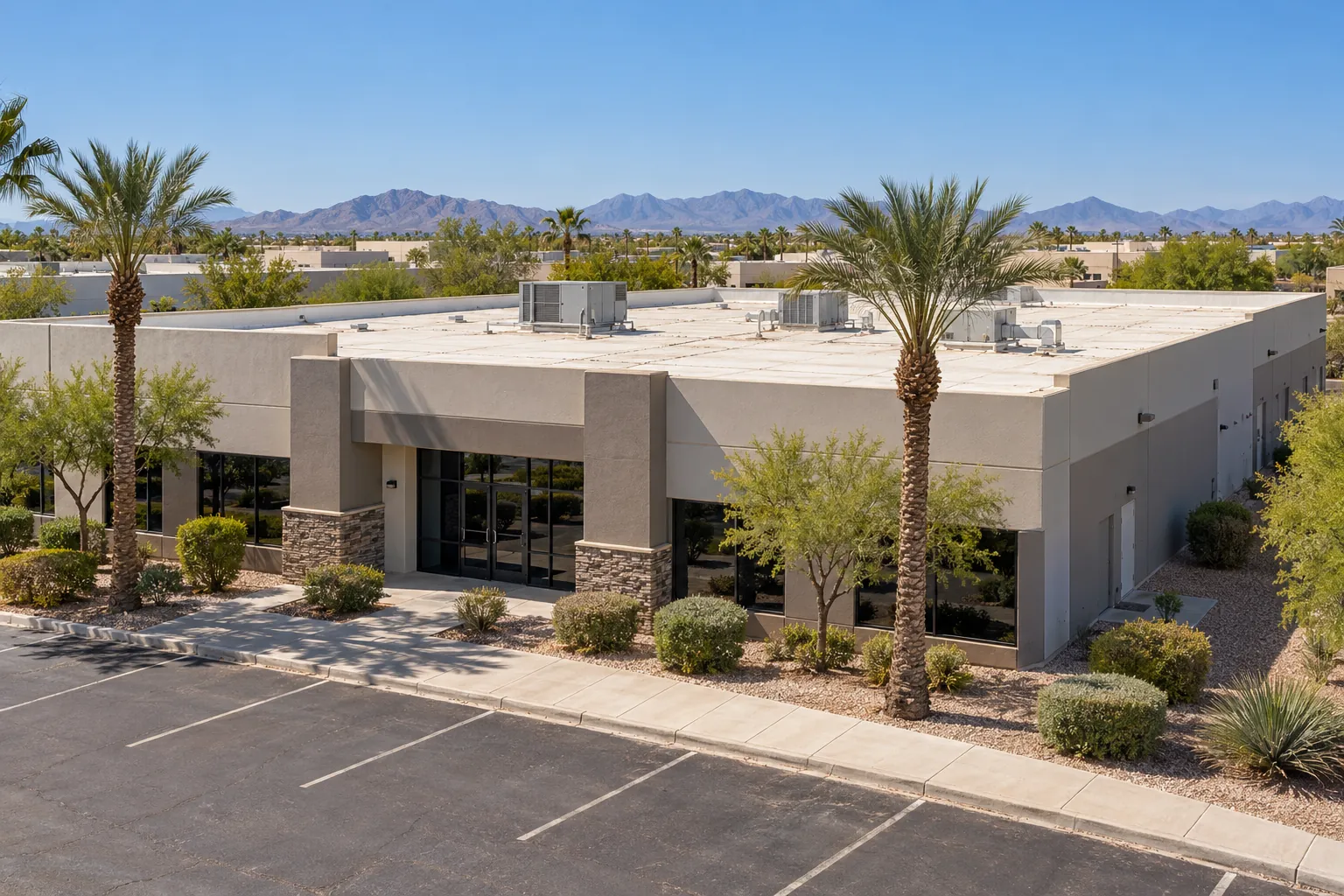
As a Sun Lakes commercial roofing contractor, we repair and replace clubhouse, community building, and commercial roofs in sections that close each day around the people inside.
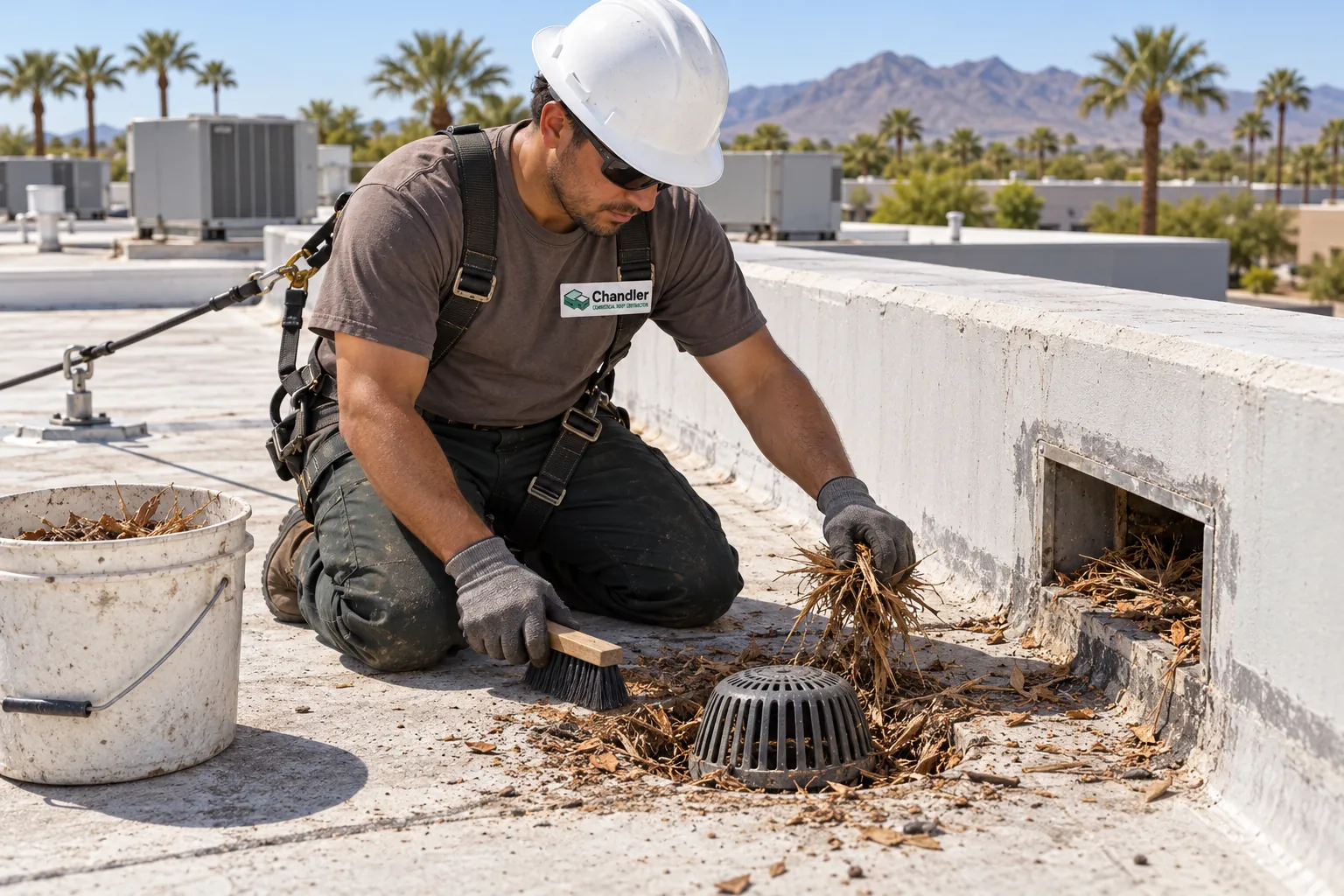
Clubhouses and community buildings in Sun Lakes host members from morning to evening, so roof work has to fit around classes, meals, and events below. We set quiet hours with the building manager and keep entrances, walkways, and parking clear of lifts and dumpsters.
Sun Lakes is unincorporated, so roof permits go through Maricopa County Planning and Development. Trees around community buildings drop debris into drains and scuppers, which we clear on every visit.
Building staff and members usually spot roof trouble inside first. These pairs show where on the roof we look for each sign.
Brown spots appear on tiles over a meeting room after a storm.
A lap seam on the roof has opened after years of heat cycling.
Members mention a damp smell in a hall where nobody has seen a drip.
Wet insulation under the membrane gives under a boot near the low corner.
Electric bills climb while building use stays the same.
The membrane surface has crazed and lost its reflective roof finish.
Rain sheets down onto a doorway instead of draining away from it.
Leaves and fronds block the scupper above the entry.
Staff hear flapping or banging on the roof during storms.
Edge metal has lifted along the windward side of the building.
What a repaired or replaced roof gives a Sun Lakes clubhouse or community building that stays open year-round.
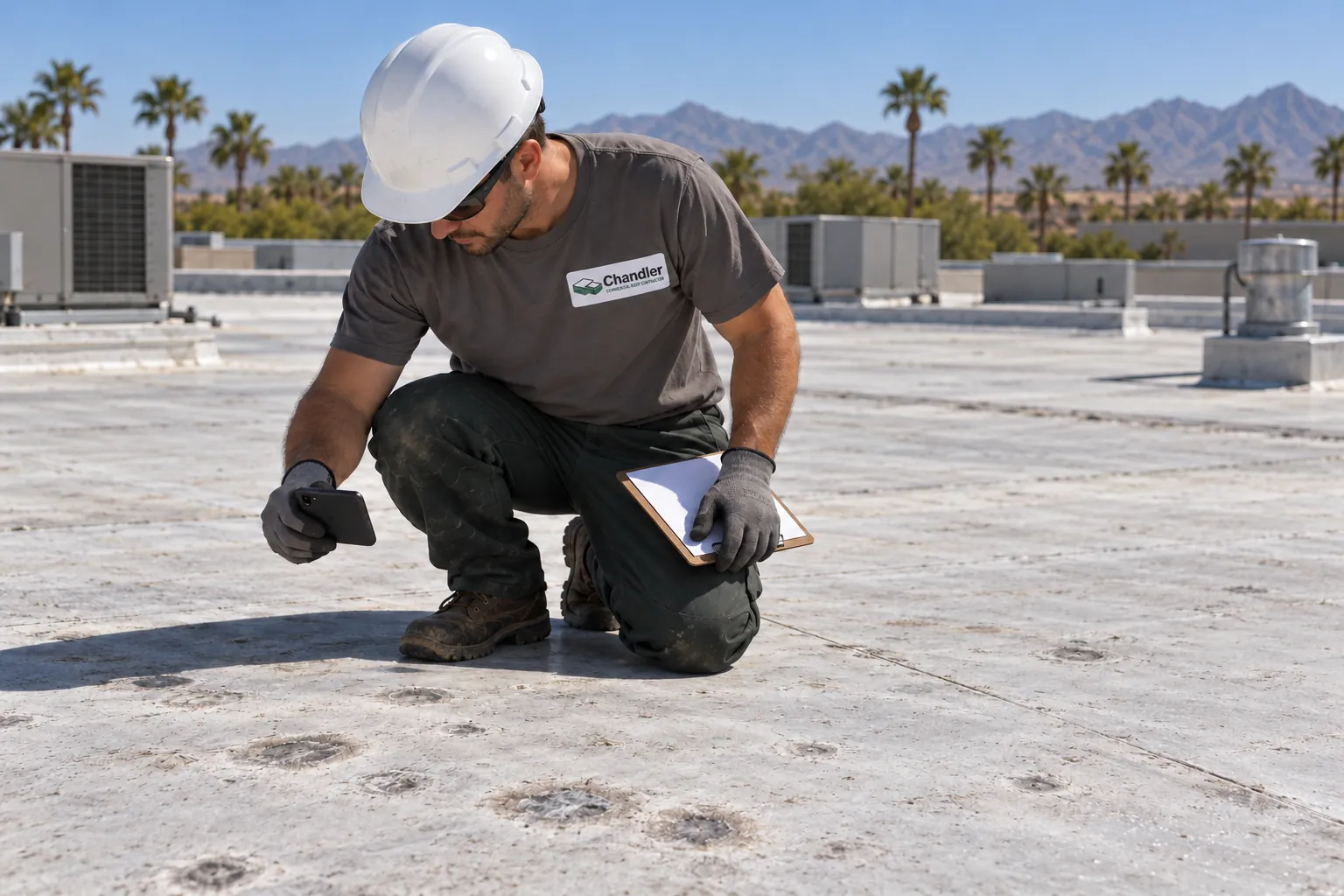
Sealed seams and flashings stop the leaks that force staff to close a meeting room after rain.
Clear scuppers and drains keep water from sheeting onto doorways and walkways below the roof edge.
A white membrane over a large hall reflects much of the sun off the roof surface.
Dated photos of hail bruises or lifted edges, taken after each storm, support insurance claims for the building owner.
Daily roof sections and set quiet hours keep classes and events running in the rooms below.
Clubhouses and community buildings here usually call for one of these two systems.
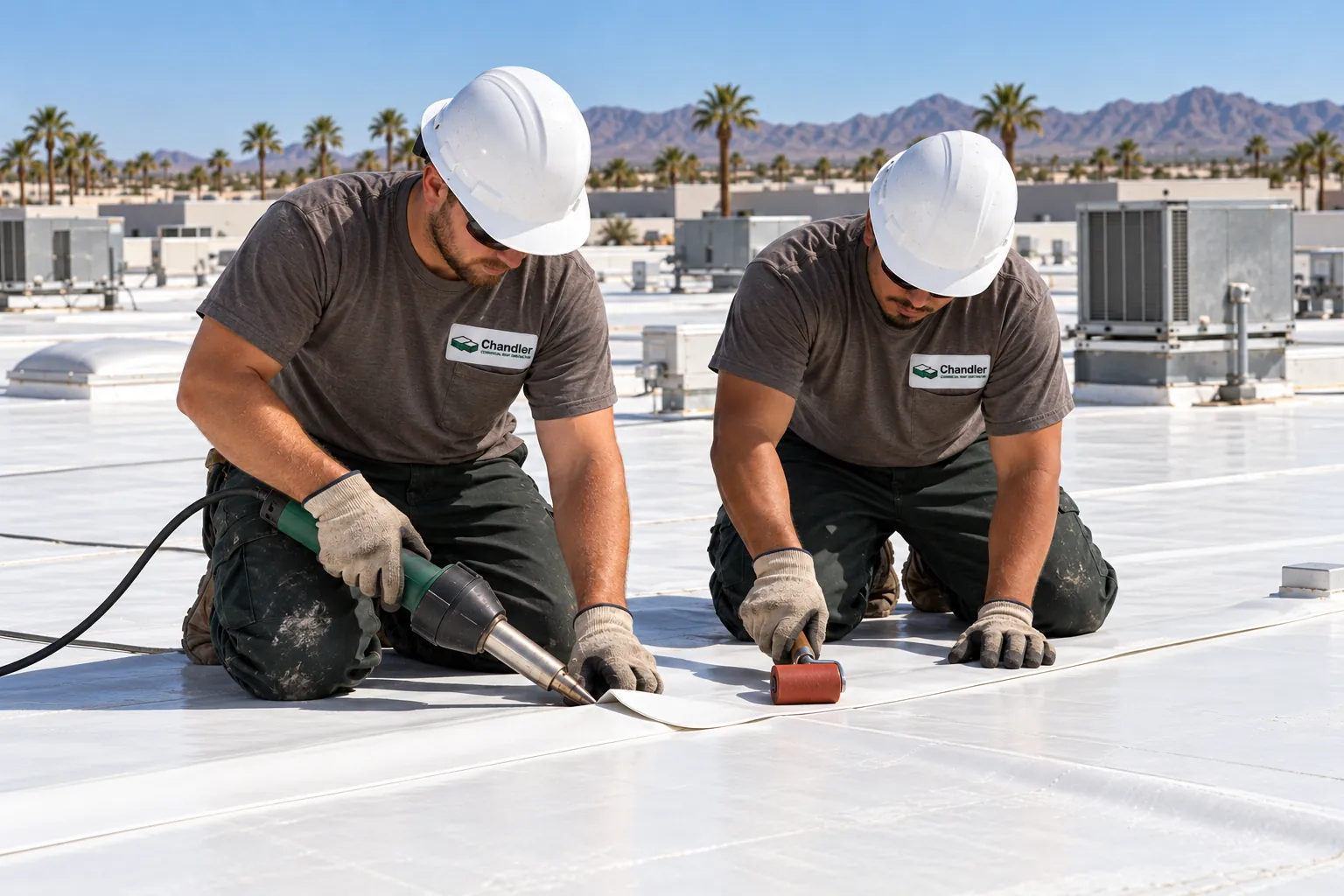
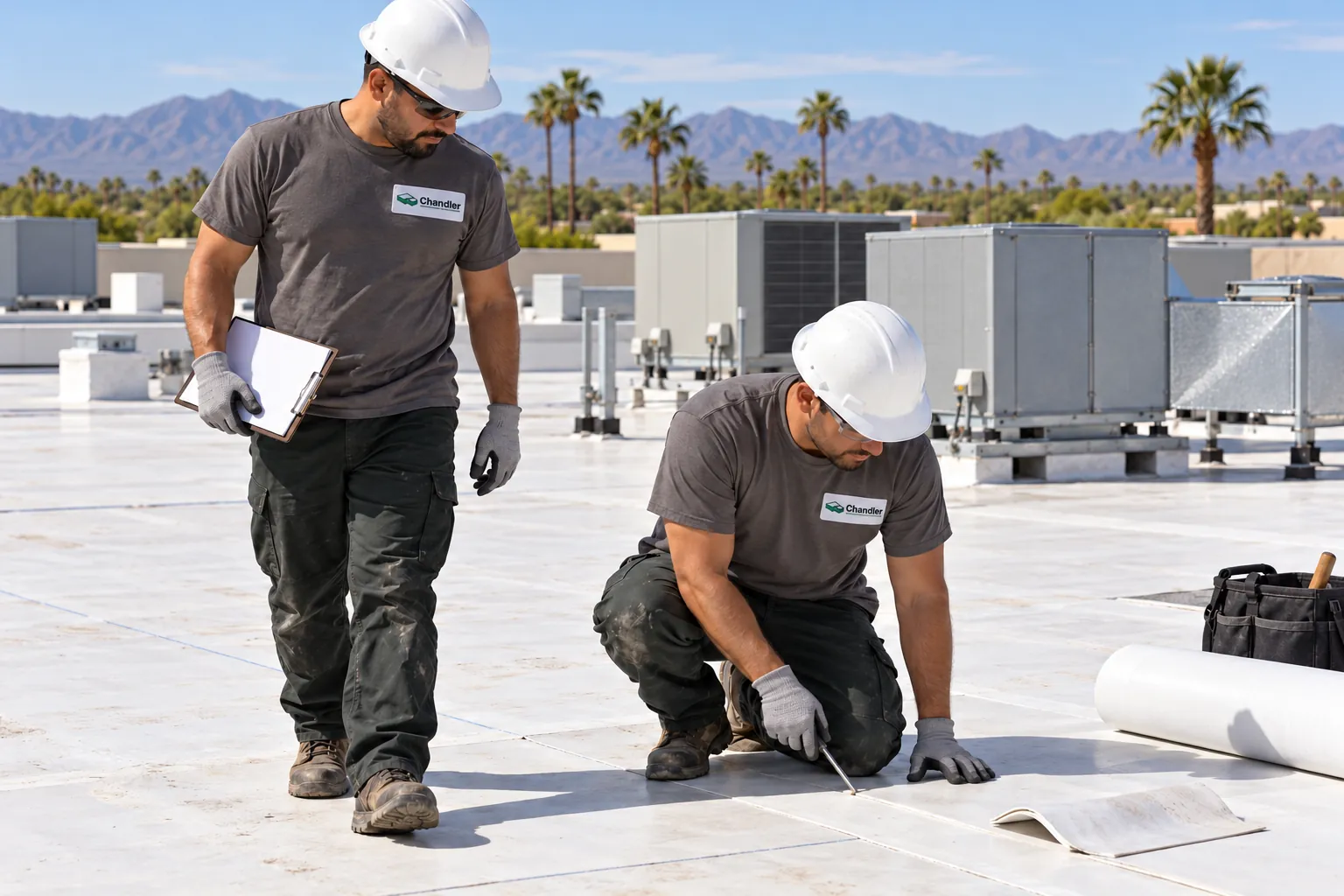
White TPO covers flat roofs over halls and meeting rooms, and its heat-welded seams resist wind-driven monsoon rain. It goes down one section at a time so the rooms below stay in use.
Best for: Flat clubhouse and hall roofs
See TPO roofing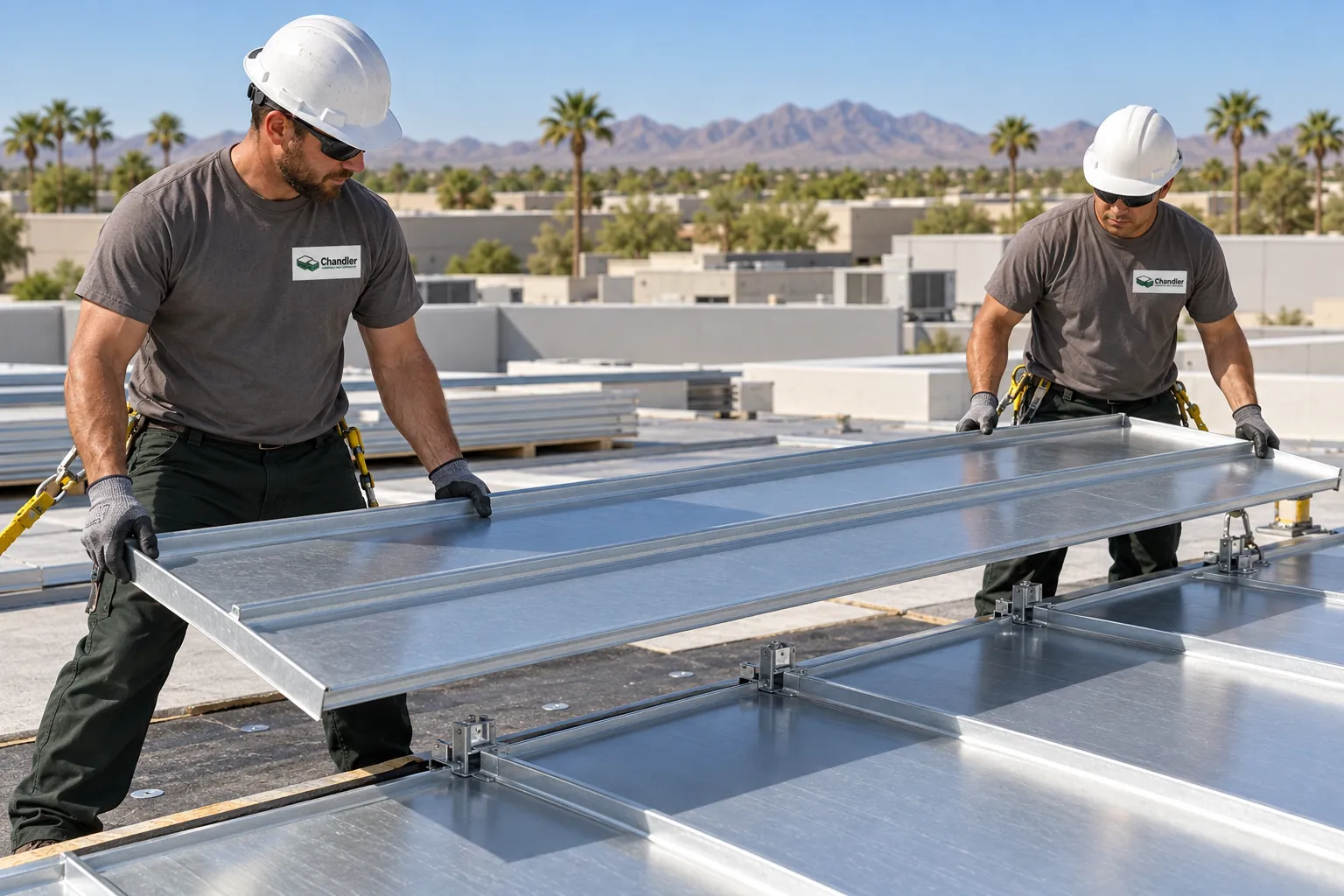
Sloped sections and covered walkways on community buildings often carry metal panels. We replace worn fasteners, reseal trim, and install new standing-seam panels where rust has spread.
Best for: Sloped roofs and covered walkways
See commercial metal roofingCall with the room name, when the stain appeared, and what events are booked there. We will inspect that part of the roof and plan around the schedule.
(623) 310-0186Call UsFive steps for a Sun Lakes clubhouse or community building roof, each planned around the people inside.
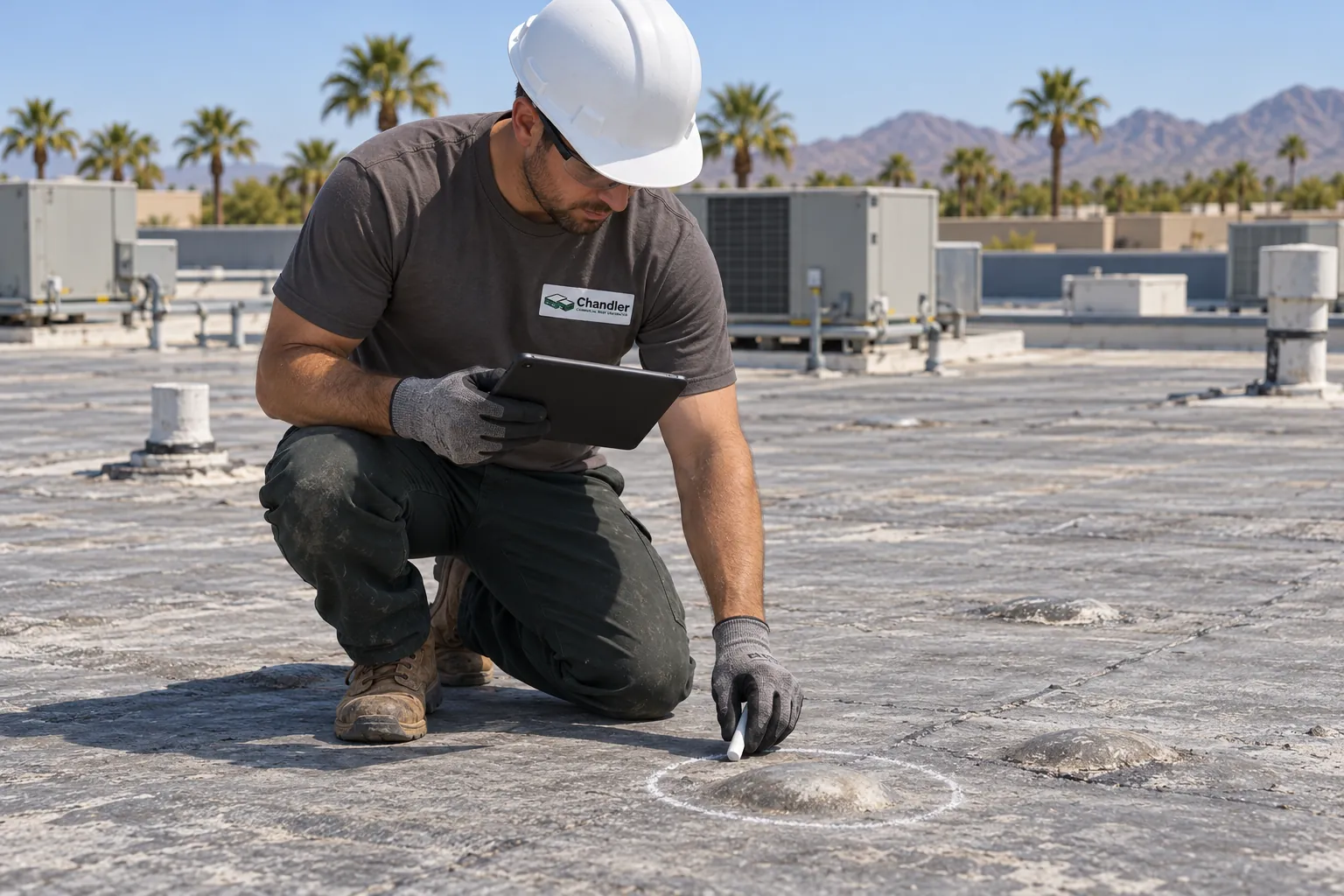
We walk the roof with the building manager's room list, mark open seams, cracked surfaces, and loose edge metal, and take moisture readings near rooms with stains. Drains and scuppers get cleared during the visit.
Roof sections are drawn over specific halls and rooms, so the manager can see which spaces are affected on which dates.
Noisy roof tear-off is booked for times the manager picks, often early mornings before classes start. Lifts and dumpsters stay away from entries and walkways.
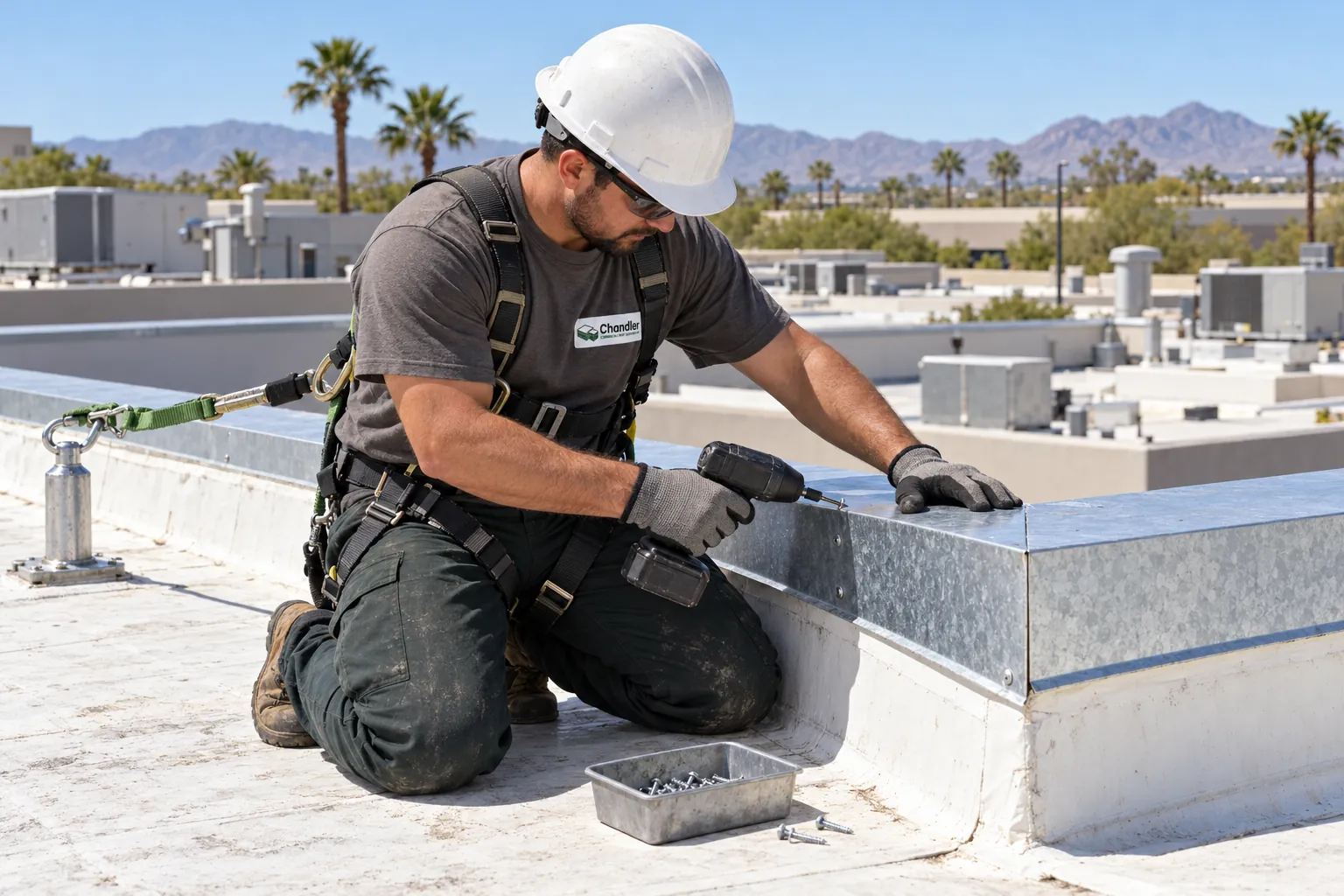
Every section torn off is insulated, covered with new membrane, and flashed at its edges and curbs before the crew leaves for the day.
Final photos, a marked roof plan, and notes on drains and edge metal go to the manager for the spring and fall maintenance checks.
Sun Lakes sits south of Chandler. These are the nearest areas we cover.
Manufacturing and tech roofs to the north, where tear-off waits for intake covers and shift breaks.
Distribution warehouses with wide decks, roofed around truck docks and staging areas.
Metal shops and storage buildings where most work happens at fasteners, laps, and ridge caps.
Newer centers whose leaks usually trace to curbs and pipes added for later tenants.
Answers for managers of clubhouses, community buildings, and commercial sites in Sun Lakes.
Water stains, damaged ceiling tiles, and musty odors inside are the clearest signs. On the roof, look for water that stands more than about two days, bubbles in the membrane, and open seams.
Other signs include cooling bills that rise while building use stays the same, loose edge metal after a monsoon storm, and soft spots that point to wet insulation.
Sun Lakes is an unincorporated community, so roof permits go through Maricopa County Planning and Development. See the county's construction permit information and check requirements before work starts, since rules and fees change. We confirm the permit need during the inspection.
Yes, in most cases. We split the roof into sections over specific rooms, close each one watertight before the crew leaves, and book the noisiest work for hours the manager chooses. Rooms under an active section may need to move events for a day or two.
Entries and walkways stay clear of lifts, dumpsters, and material drops. Where a path runs under the roof edge during tear-off, we mark it closed and route people around it, and the crew ties off near unprotected edges.
Note any new ceiling stains, take photos, and have the roof inspected. Hail bruises on a membrane are hard to see from the ground, and dated photos support an insurance claim. We document bruising and punctures and make temporary repairs where water is getting in.
A white membrane reflects much of the sun, so the roof surface over a large hall runs cooler than a dark or worn one. How much that changes cooling costs depends on insulation, equipment, and how the hall is used, so we avoid promising a number.
Usually, yes. TPO and EPDM repairs use the same membrane type, welded or taped to the cleaned old surface. On very old, chalky membrane we test a patch first, and a section that will not take a patch becomes a candidate for replacement.
Send the room list and where stains have appeared. We will inspect the roof and plan the work around the building calendar.
Leave a name and number and we will call you back about your commercial roof.
Or call now: (623) 310-0186