
Chandler Commercial Roofing FAQ

Our Chandler commercial roofing FAQ answers questions about roof systems, monsoon wear, repair or replacement, permits, taxes, and the towns we serve.

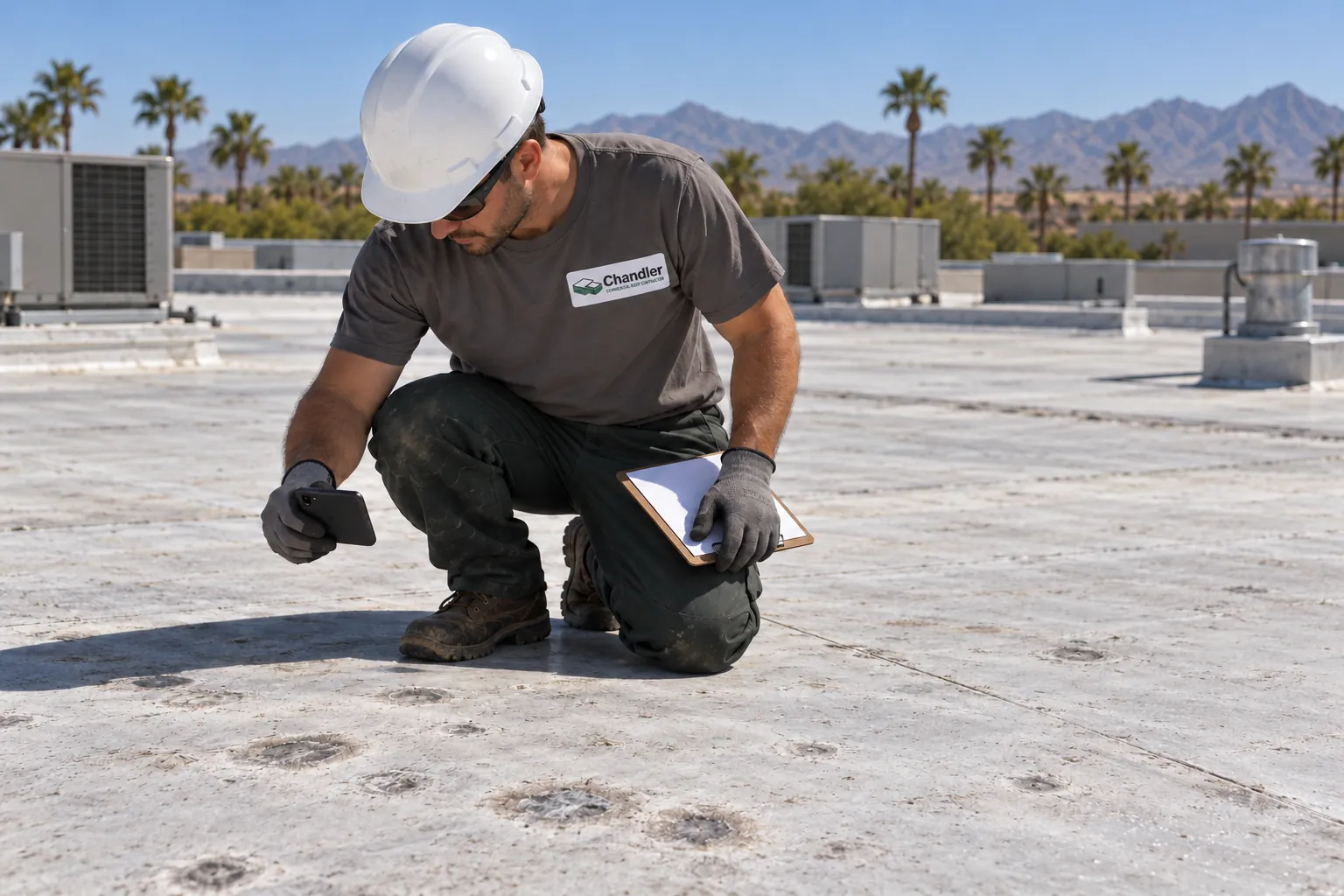
Roofer photographing hail bruises on a roof membrane with a clipboard in hand

Chandler roofs carry long stretches of triple-digit sun, then take sudden monsoon wind and rain each summer. The city’s mix is wide: semiconductor and electronics plants and office campuses along the Price Corridor, tilt-up warehouses and flex suites in West Chandler, and retail centers and medical offices across the city.

Each one puts different demands on a low-slope or metal roof.

Chandler Commercial Roofing FAQ On Roof Systems

Which commercial roof system fits my type of Chandler building?

It depends on the roof slope, the rooftop equipment load, and how much foot traffic the roof gets. Most flat roofs in the city suit a single-ply membrane, and metal works best where the slope sheds water.

Building typeCommon fitWhy it works
Tilt-up warehouse or distribution buildingTPOWide sheets with few seams cover large decks; a white surface reflects sun
Flex suite or light industrial unitTPO or EPDMBoth handle frequent tenant HVAC changes
Manufacturing plant or cleanroom facilityFully adhered TPO, or EPDM with walkway padsHolds up under heavy rooftop equipment and service traffic
Retail center or medical officeTPO or roof coating over a sound existing roofWork can be staged by suite to limit downtime
Pre-engineered metal shop or storage buildingStanding-seam or through-fastened metalMatches the existing frame and lasts for decades

An on-roof inspection confirms the deck, insulation, and drainage before any system is chosen.

Is a TPO roof a good choice for Chandler warehouses?

Yes, in most cases. TPO is a heat-welded single-ply membrane, usually white, that reflects much of the sun’s energy. That keeps the roof surface cooler during long summer stretches.

On large tilt-up buildings in West Chandler, TPO goes down in wide rolls with fewer seams to inspect. The seams are fused with hot air rather than glued, which helps them resist wind-driven monsoon rain.

We check the membrane thickness, attachment pattern, and insulation layer against the building’s wind exposure and rooftop units before installing a TPO roof.

When does an EPDM roof make sense in the East Valley?

EPDM fits roofs that see heavy foot traffic, many penetrations, or frequent equipment changes. It’s a flexible synthetic rubber sheet that stays pliable through big temperature swings between summer days and winter nights.

Black EPDM absorbs heat, so a white or coated EPDM surface is usually the better match for Chandler sun. Older EPDM roofs on flex and office buildings can often be repaired at the seams or flashings rather than replaced.

Good candidates for EPDM:

  • Roofs with many vents, curbs, and pipe penetrations
  • Buildings where tenants often add or move HVAC units
  • Sections that need a membrane with high flexibility over moving joints

What does industrial roofing involve for Price Corridor manufacturing plants?

Industrial roofing covers large-footprint buildings with heavy rooftop equipment, exhaust stacks, and strict rules on dust and downtime. The Price Corridor holds semiconductor, aerospace, and technology campuses where roof work has to be planned around production schedules.

On these buildings, we focus on:

  • Sealing penetrations around exhaust fans, process piping, and HVAC curbs
  • Setting walkway pads so service crews don’t wear through the membrane
  • Phasing tear-off sections so no open area sits exposed overnight
  • Coordinating crane lifts, deliveries, and noisy work with facility managers

We also review fall-protection points and access routes before crews set foot on the roof.

How long do TPO, EPDM, and metal commercial roofs last in Arizona?

With proper installation and routine care, typical ranges are roughly 20 to 30 years for TPO, 25 to 30 years for EPDM, and 40 years or more for metal. Actual life varies with membrane thickness, drainage, foot traffic, and how well the roof is maintained.

SystemTypical lifespanWhat shortens it locally
TPOAbout 20 to 30 yearsLong UV exposure, poor seam welds, ponding water
EPDMAbout 25 to 30 yearsSeam adhesive breakdown, punctures from foot traffic
Metal40+ yearsLoose fasteners, failed sealant, rust at cut edges

Treat these as general ranges rather than promises. An inspection gives a clearer picture of how much service life a specific roof has left.

Roof Condition And Storm Damage

How do Chandler’s heat and monsoon storms affect a flat roof?

Sun and heat age a membrane fastest, and monsoon storms test every weak spot at once. The National Weather Service Phoenix office defines Arizona’s monsoon season as June 15 through September 30.

During that window, outflow winds can top 50 mph and dust storms can roll in quickly, according to NWS Phoenix. On a roof, that typically shows up as:

  • Lifted membrane edges and loose metal flashing
  • Debris and dust clogging drains and scuppers
  • Ponding water where the deck has sagged
  • Water forced under seams by wind-driven rain

After the season ends, a fall inspection catches storm damage before winter rains arrive.

Are metal roofs practical for commercial buildings in Chandler’s heat?

Yes. Metal roofs reflect sunlight well, especially with light-colored or coated finishes, and they shed monsoon rain quickly on sloped buildings. They’re common on shops, storage buildings, and pre-engineered structures.

Metal does expand and contract in the heat. Over time, fasteners can loosen and seams can open, so through-fastened panels need regular checks. Common metal roof work includes:

  • Replacing worn fasteners and washers
  • Resealing seams, ridge caps, and trim
  • Applying a coating system over a structurally sound metal roof
  • Installing new standing-seam panels where the old roof is past repair

Should I repair or replace my commercial roof?

Repair is usually the right call when the damage is limited and the deck and insulation are dry. Replacement makes more sense when leaks keep returning, wet insulation is widespread, or the membrane is near the end of its service life.

Repair often fits whenReplacement often fits when
Leaks trace to a few seams, flashings, or penetrationsMoisture has spread through much of the insulation
The membrane still flexes and holds a weld or adhesiveBrittle, cracked, or shrinking membrane covers large areas
Damage is limited to one storm eventPatches keep failing season after season
The roof has years of rated life leftTwo roof layers already exist and code limits another overlay

A moisture survey and core samples show what’s under the surface before you commit to either path.

Can a roof coating extend the life of an older flat roof?

Sometimes. A coating can add years to a roof whose membrane and insulation are still sound, and a reflective coating lowers surface heat. It won’t fix wet insulation, a sagging deck, or failed drainage.

We test adhesion and check for trapped moisture before recommending a coating. Silicone, acrylic, and other coating types each handle ponding water and sun differently, so the choice depends on the roof’s existing surface.

What maintenance does a commercial roof need in the Chandler area?

Plan for at least two inspections a year: one in spring before the monsoon, and one in fall after it ends. Add a check after any major storm with high winds or hail.

A routine maintenance visit typically includes:

  • Clearing drains, scuppers, and gutters of dust and debris
  • Checking seams, flashings, and penetration seals
  • Looking for blisters, punctures, and UV cracking
  • Tightening or replacing loose metal fasteners and trim
  • Noting ponding areas and any damage from rooftop service crews

Keeping a dated record of each visit helps you track wear and supports warranty or insurance claims.

What are the warning signs of a failing commercial roof?

Interior water stains, ceiling tile damage, and musty odors are the clearest signals. On the roof itself, watch for ponding water that lingers more than about two days, bubbles in the membrane, and open seams.

Other signs worth a call:

  • Rising cooling bills on a building that hasn’t changed its use
  • Rust streaks or lifted panels on a metal roof
  • Loose edge metal after a monsoon storm
  • Soft spots underfoot, which can point to wet insulation

Planning The Work

Can roof work happen while my business stays open?

Yes, on most projects. Crews can section the roof, work in phases, and close each area watertight before the end of the day so tenants and production keep running.

Planning usually covers:

  • Work hours that avoid peak customer or shift-change times
  • Protecting HVAC intakes from fumes and dust, critical in cleanrooms and labs
  • Staging materials and dumpsters away from entrances and loading docks
  • Advance notice to tenants before noisy tear-off days
  • Crane lifts scheduled for early mornings or weekends

Summer heat also shapes the schedule. Crews often start before sunrise to finish heavy work before the afternoon peak.

How do I get started with a commercial roof project?

Call us or request a free estimate to set up a commercial roof inspection. A crew walks the roof, documents what it finds, and explains which options fit the building.

The inspection checks:

  • Membrane or panel condition, including seams, blisters, and UV wear
  • Flashings, edge metal, and every rooftop penetration
  • Drains, scuppers, and areas where water ponds
  • Signs of wet insulation or soft decking
  • Damage from past storms or rooftop service traffic
  • Access, safety, and staging needs for any future work

Permits, Taxes, And Utilities

Do I need a permit to replace a commercial roof in Chandler or nearby towns?

Plan on it. Commercial roof replacement usually goes through the local building authority, and the right office depends on whether the property sits inside a city or town or in an unincorporated county area. Check with the office before work starts, since requirements and fees change.

LocationBuilding authorityOfficial page
Chandler, including the Price Corridor and West ChandlerCity of Chandler Development Services, Building SafetyBuilding Safety: Plan Review, Permits and Inspections
GilbertTown of Gilbert Development ServicesPermits and Applications
Queen Creek, both its Maricopa and Pinal County portionsTown of Queen Creek Development Services, Building SafetyBuilding Safety
San Tan ValleyTown of San Tan Valley, incorporated in 2025, with some building services handled through agreements with Pinal County since July 1, 2026Pinal County notice on the San Tan Valley transition
Sun Lakes, unincorporated Maricopa CountyMaricopa County Planning and DevelopmentConstruction Permit Information

Chandler plans submitted on or after July 1, 2025, follow the city’s amended 2024 International Codes. Gilbert also requires an Arizona-licensed contractor for work in commercial buildings. Contractor licenses can be checked with the Arizona Registrar of Contractors.

Does the Section 179 deduction apply to a new commercial roof?

It can. Under federal tax rules, roofs installed on existing nonresidential buildings can count as qualified real property for the Section 179 deduction. For tax years beginning in 2026, the maximum deduction is $2,560,000, according to IRS Publication 946.

A few limits to know:

  • Property used in residential rental buildings is excluded.
  • The roof must be placed in service on a building already in use, rather than as part of new construction.
  • Deduction phase-outs and business income limits can reduce the amount.

Tax situations differ, so talk with a CPA or tax advisor before planning around this deduction.

Does SRP offer incentives for cool roofs on commercial buildings?

SRP, the main electric utility for much of the Chandler area, has listed cool roof coatings among the measures in its business rebate program for the current fiscal year. Programs, amounts, and eligibility change, so confirm current terms before counting on a rebate.

Confirm your utility first, since service providers vary across the region. Then check:

  • Whether the program is open and funded when the work is scheduled
  • Pre-approval rules, since some programs require sign-off before installation
  • Which product ratings are required; many programs ask for coatings listed in the CRRC Rated Products Directory
  • What documentation, such as invoices and product data sheets, the utility asks for

See SRP’s business rebate summary for current details.

Service Areas

What areas do you serve around Chandler?

We serve commercial and industrial properties throughout Chandler and the surrounding southeast Valley.

  • Chandler: citywide, including downtown and the south Chandler business parks
  • Price Corridor: technology, manufacturing, and office campuses inside Chandler
  • West Chandler: warehouses, flex buildings, and light industrial sites inside Chandler
  • Gilbert: retail centers, medical offices, and business parks
  • Queen Creek: commercial sites in both the Maricopa and Pinal County portions of town
  • San Tan Valley: shopping centers, offices, and service buildings in the newly incorporated town
  • Sun Lakes: clubhouses, community buildings, and commercial sites in the unincorporated community

Storm Damage On Your Roof?

Call with what you see inside and up on the roof. We will answer what we can on the phone and set up an inspection for the rest.

(623) 310-0186Call Us

Ask About Your Roof

Tell us the building, the roof type, and the problem. We will inspect it and answer the questions specific to your roof.

Call Us (623) 310-0186