Water Under A New Unit
Ceiling tiles stain right below the spot where a tenant's new unit went in.
Caulked Curb
The curb was set and caulked instead of flashed, and the caulk has split at the corners.

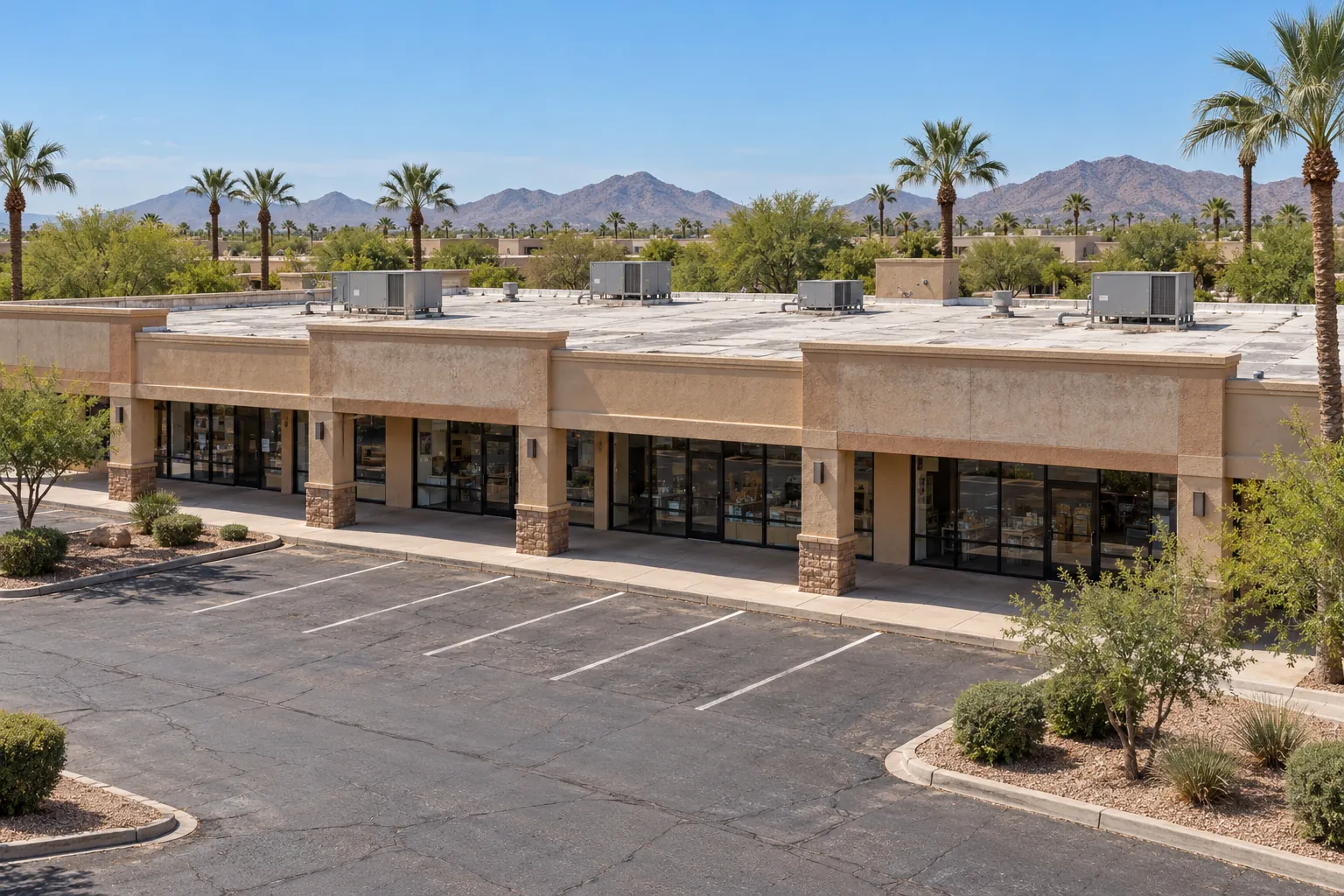
As a San Tan Valley commercial roofing contractor, we flash new rooftop units into existing roofs on shopping centers, offices, and service buildings, and repair leaks at older curbs.
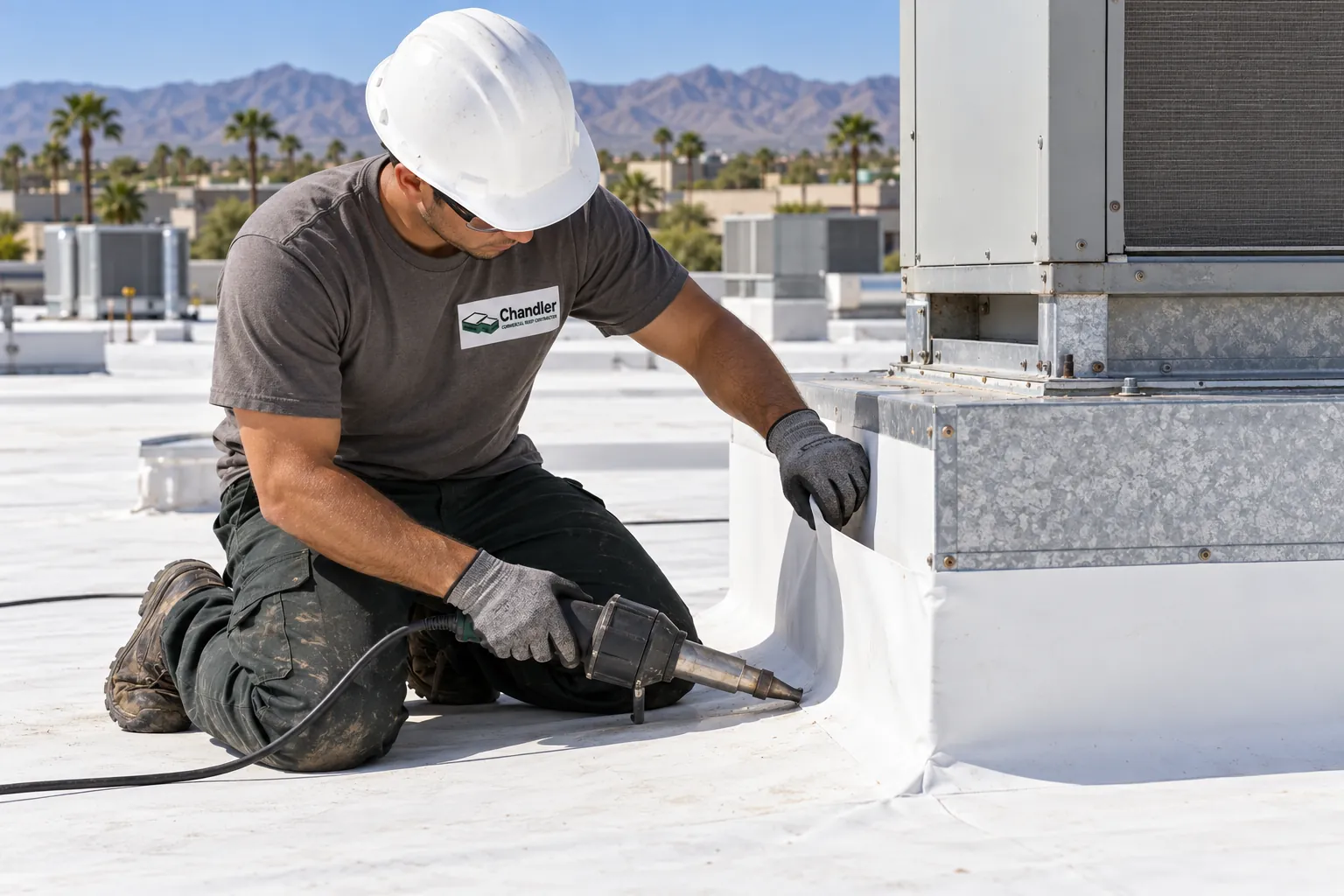
Newer San Tan Valley shopping centers and service buildings change as tenants move in. A restaurant adds an exhaust fan, a clinic adds a unit, and each one means a new curb or pipe cut through a roof that was built without it.
We flash each addition into the existing membrane and check the older ones nearby. San Tan Valley incorporated in 2025, and since July 1, 2026 some building services run through agreements with Pinal County, so we confirm the permit path for each job.
Most leaks on newer centers start where something was added after the roof went on. Each pair links the tenant complaint to the added detail above it.
Ceiling tiles stain right below the spot where a tenant's new unit went in.
The curb was set and caulked instead of flashed, and the caulk has split at the corners.
Food service tenants find water near the hood line after rain.
The fan curb has no cricket, so water pools uphill of it and works under the flashing.
Problems start the week after an HVAC tech worked on the roof.
Dropped screws and boots wore through the membrane beside a unit with no walk pad.
Marks follow a gas or condensate line across the ceiling.
A new pipe was run through an old boot that was never sized or sealed for it.
Back offices smell damp even in dry weeks.
Condensate lines empty onto the roof and keep one area of insulation wet.
What owners of newer San Tan Valley centers get when every added curb and pipe is flashed into the roof.
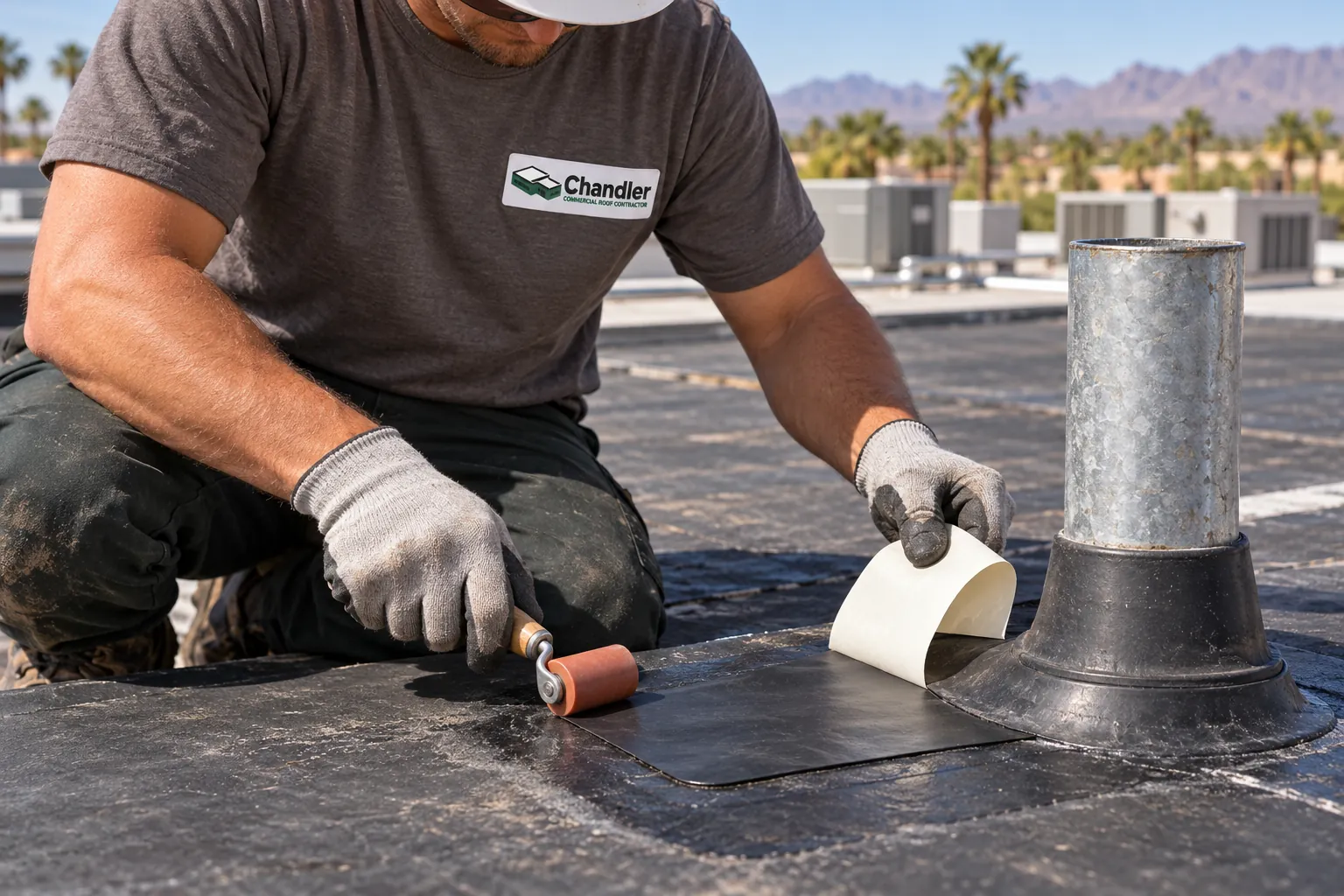
Each new tenant's equipment goes in with flashing that matches the roof system, so a turnover leaves no open curbs behind.
Walk pads on service paths keep HVAC techs from wearing through the membrane next to busy units.
Condensate lines routed to drains keep water off the roof surface and out of the insulation.
Knowing which office handles the roof permit during the town handover keeps the job moving.
A roof plan with each curb, pipe, and fan marked shows the next tenant where equipment can go.
Newer centers here usually have one of these membranes. We repair and extend whichever one is already on the roof.
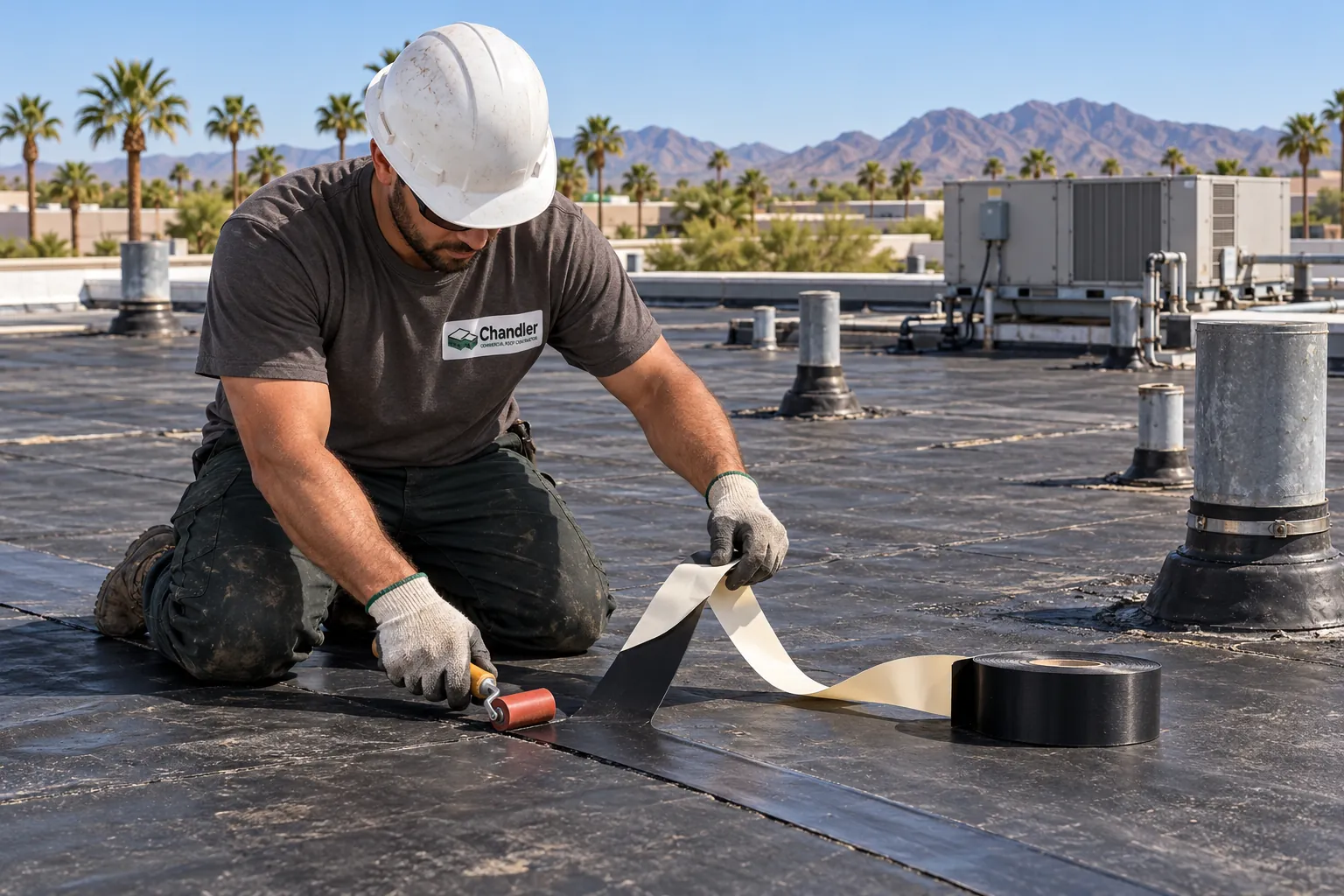
EPDM takes frequent equipment changes well because the rubber sheet stretches around new curbs and pipes. We patch, tape, and flash additions into existing EPDM and leave good sections in place.
Best for: Buildings where tenants keep adding units
See EPDM roofing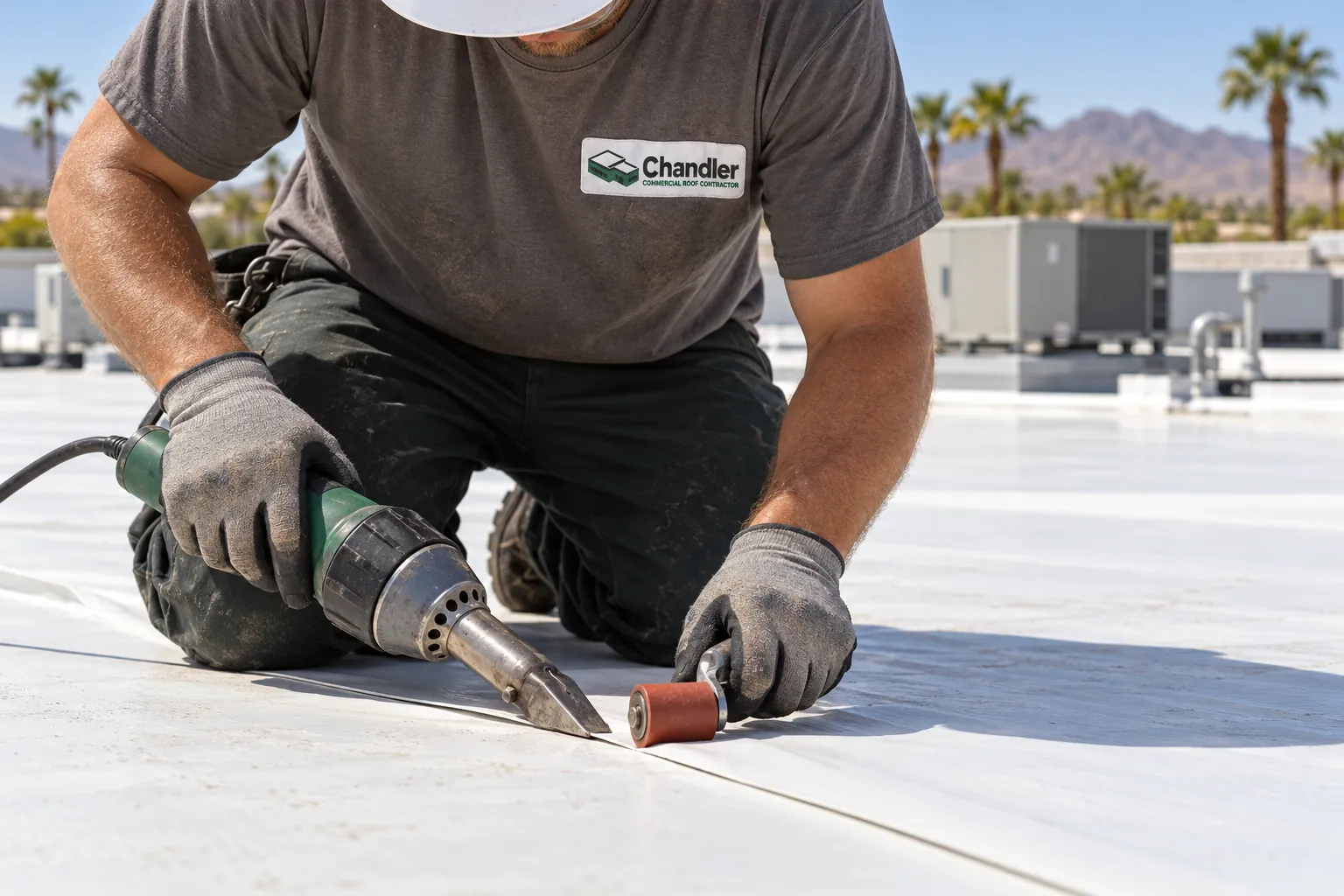
White TPO on newer centers accepts new curb flashing welded with hot air, so the added seam holds like the rest of the roof. We match membrane thickness to the existing sheet.
Best for: Shopping centers with white membrane roofs
See TPO roofingCall and tell us when the equipment went in and which suite shows water. We will check that curb and the pipes around it.
(623) 310-0186Call UsFive steps for flashing new or leaking equipment into a San Tan Valley roof.
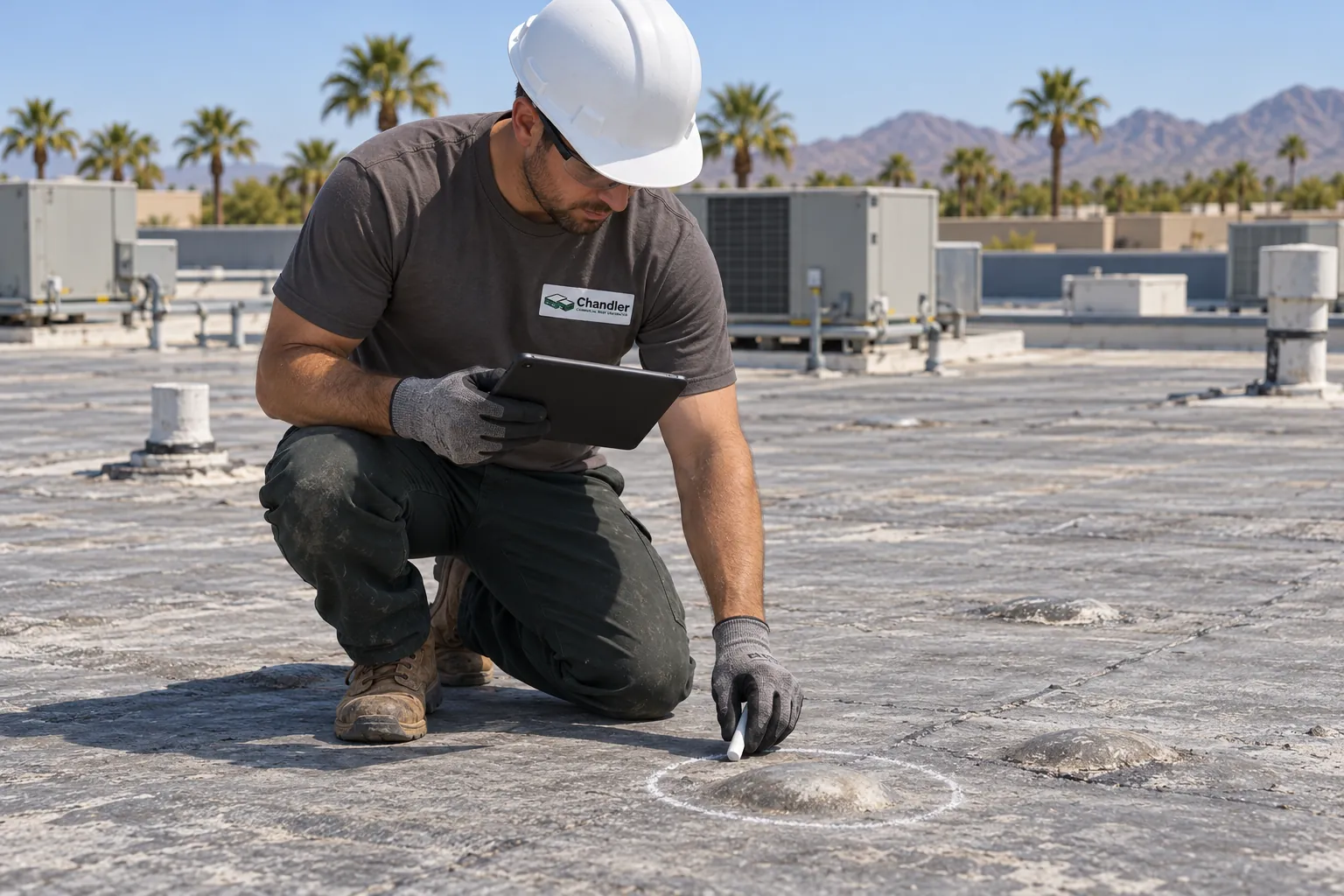
We find every curb, fan, and pipe on the roof, note which ones were added later, and check each flashing corner, boot, and caulk joint. Moisture readings around new equipment show whether water has reached the insulation.
Roof permits here can run through the town or its Pinal County agreements. We confirm which office handles the job before any curb is cut.
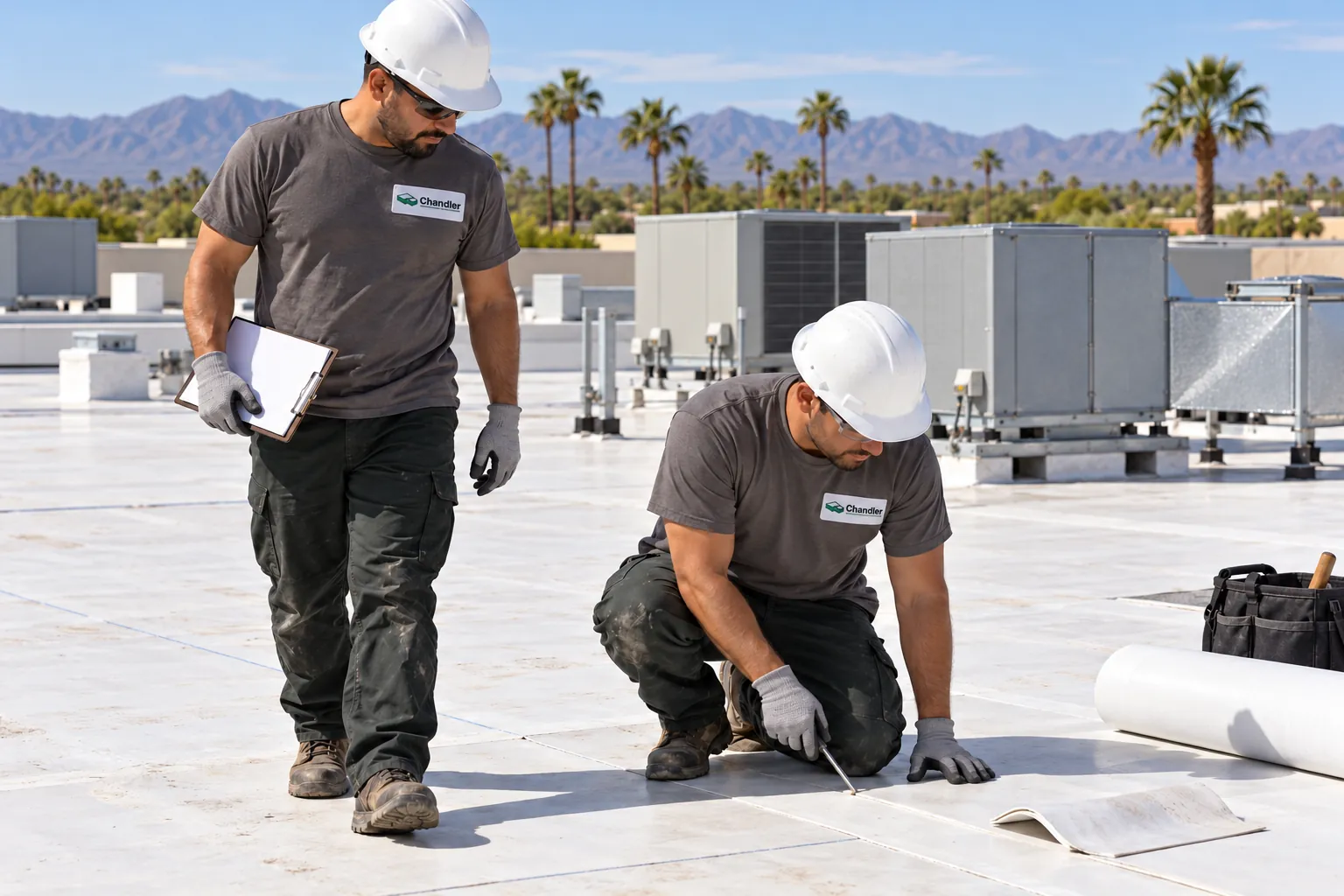
Tenant mechanical contractors set or disconnect units on dates we agree on, so curbs are flashed before the equipment goes back and the roof opening is closed quickly.
Membrane flashing is welded or taped up each curb wall, boots are fitted to each new pipe, and crickets go uphill of wide curbs so water runs around them.
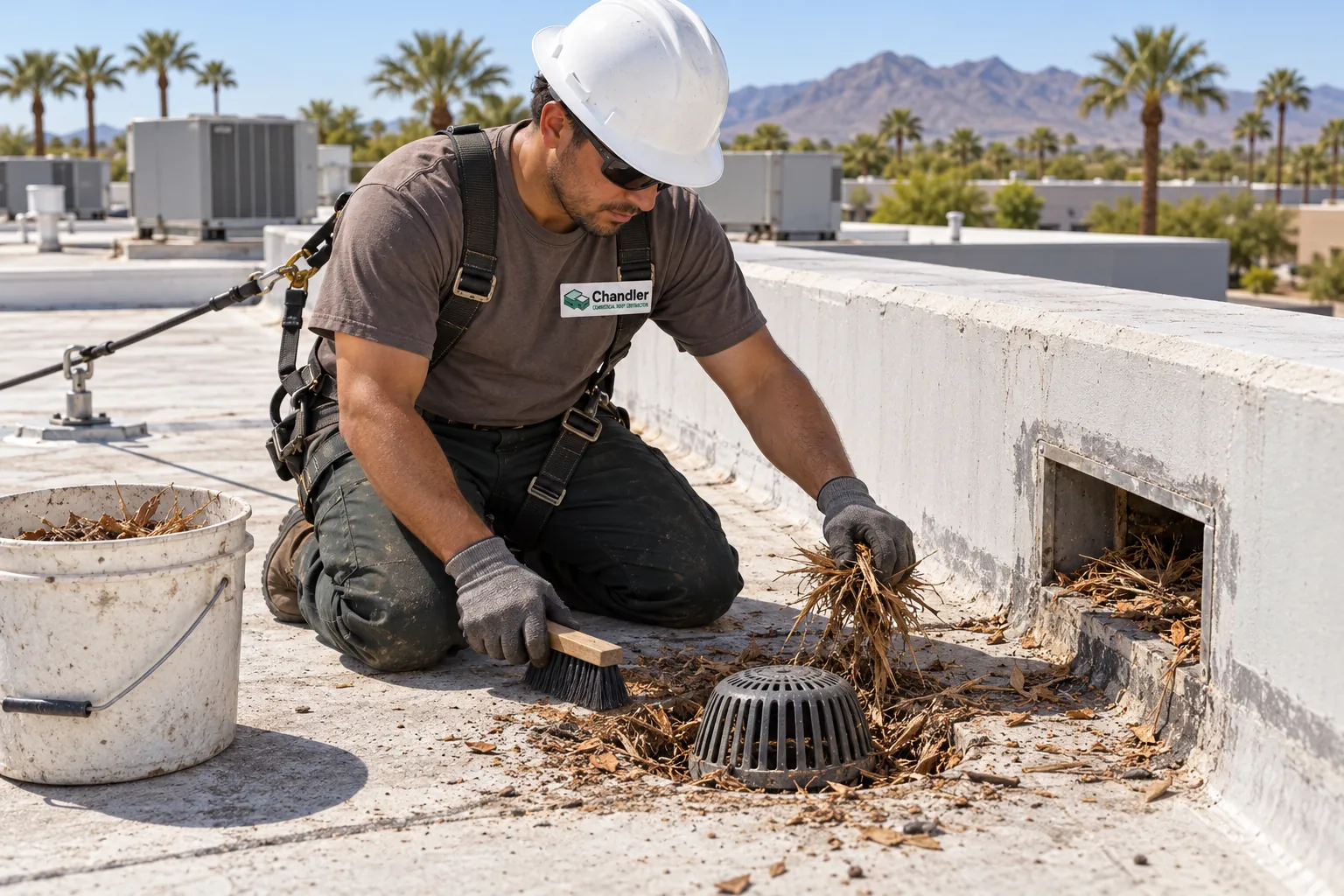
Service paths to busy units get walk pads, condensate lines are routed to drains, and every curb is logged on a roof plan with photos.
These service areas sit closest to San Tan Valley, from Queen Creek next door to the Chandler business districts.
Next door, where shop and storage owners deal with loose fasteners and rusted panel laps.
Medical offices and retail strips that need work windows set for each tenant suite.
Community buildings and clubhouses where each roof section closes before members return.
Plant and lab roofs where intake covers go on before tear-off near makeup-air units.
Questions from owners and managers of newer shopping centers, offices, and service buildings.
Plan on two inspections a year, one in spring before the monsoon and one in fall after it, plus a check after any storm with high wind or hail.
Each visit should clear drains and scuppers, check seams, flashings, and penetration seals, tighten loose metal trim, and note ponding or damage from rooftop service crews. Keep a dated record of every visit.
San Tan Valley incorporated in 2025, and since July 1, 2026 some building services are handled through agreements with Pinal County. Read the Pinal County notice and confirm with the town before work starts, since the arrangement and fees can change.
They can set the unit, but the curb flashing should match the roof system and be tied into the membrane by a roofer. Caulk-only curbs are the most common leak we see on newer centers. We work to the mechanical schedule so the unit goes back on a finished curb.
To a roof drain or gutter, or into the building plumbing where code allows. Lines that empty onto the membrane keep one spot wet all summer, grow algae, and wear the surface early. We reroute them during curb work so the water leaves the roof.
Walk pads go down along the paths HVAC techs use and around the service side of each unit. They spread foot traffic and catch dropped screws and tools, which cause most of the punctures next to equipment on newer roofs.
Repaired, in nearly every case. A roof on a newer center usually has years of rated life left, and its leaks trace to added curbs, pipes, and walk paths. We fix those details and leave the rest of the membrane in service.
Give us the suite, the date the equipment went in, the mechanical contractor if you know it, and where the water shows inside. That lets the inspection start at the right curb and check the pipes run to it.
Tell us which units are going in or which suites are leaking now. We will inspect the curbs and pipes and lay out the flashing work.
Leave a name and number and we will call you back about your commercial roof.
Or call now: (623) 310-0186